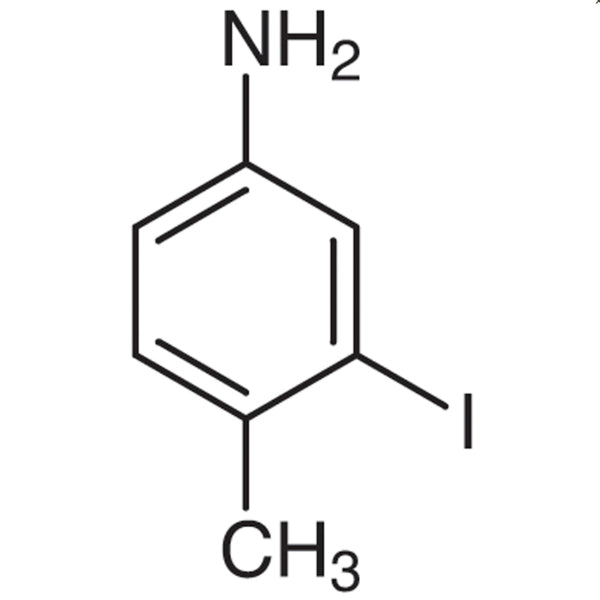
3-Iodo-4-methylaniline is a chemical compound widely used as a building block in various laboratory applications, particularly in the synthesis of complex molecules. This compound is a key reagent in organic chemistry due to its aromatic structure and the presence of both iodine and methyl substituents. These functional groups contribute to its reactivity and specificity in chemical reactions, making it a valuable tool for researchers. In laboratory settings, it serves as a foundational material for the development of heterocyclic compounds, pharmaceuticals, and industrial chemicals.
The compound's stability and reactivity make it a preferred choice for substitution and electrophilic reactions. Its ability to participate in a wide range of chemical transformations is due to its molecular structure, which allows for versatile synthetic pathways. Additionally, its solubility in organic solvents enhances its usability in various synthetic processes. These properties ensure that 3-Iodo-4-methylaniline remains a reliable and efficient reagent in chemical synthesis.
In Indonesian laboratories, 3-Iodo-4-methylaniline is extensively used in organic chemistry research, especially in the development of new chemical compounds. It is commonly employed in academic and research institutions for experimental purposes and product development. Its consistent chemical and physical properties make it a go-to material for a variety of laboratory applications, supporting both educational and industrial research efforts.
- Heterocyclic Compound Synthesis: This compound is ideal for creating heterocyclic structures due to its reactive iodine and methyl groups, enabling efficient ring formation and functional group modifications.
- Pharmaceutical Research: Its structural versatility makes it a valuable reagent in the development of new drug molecules, supporting medicinal chemistry studies and compound optimization.
- Industrial Chemical Production: The compound's reactivity and solubility in organic solvents make it suitable for large-scale chemical manufacturing processes.
- Organic Chemistry Education: It is frequently used in teaching laboratories for demonstrating synthetic techniques and reaction mechanisms in undergraduate and graduate courses.
- Custom Synthesis Projects: Its ability to participate in multiple reaction types makes it a preferred choice for custom synthesis tasks requiring high reactivity and specificity.
| Brand | TCI |
|---|---|
| CAS number | 35944-64-0 |
| Molecular formula | — |
| Purity | — |
| Category | Chemistry > Building Blocks > Non-Heterocyclic Building Blocks |
| Pack sizes | Available in various quantities as per standard laboratory supply |
| Physical form | Solid |
| Storage | Store in a cool, dry place away from light and moisture |
This compound should be stored in a cool, dry environment, away from direct sunlight and moisture to maintain its stability and reactivity. It is recommended to use airtight containers made of materials such as glass or polyethylene to prevent contamination and degradation. Due to its chemical nature, it should be handled in a well-ventilated area, and appropriate personal protective equipment, including gloves and safety goggles, should be worn. Avoid contact with incompatible substances such as strong oxidizing agents. Regular monitoring of storage conditions is essential to ensure the compound remains in optimal condition for laboratory use.
—
Produk Terkait
-
2-Bromo-5-methylaniline TCI B4507
Regular price From Rp 980.700,00Regular price -
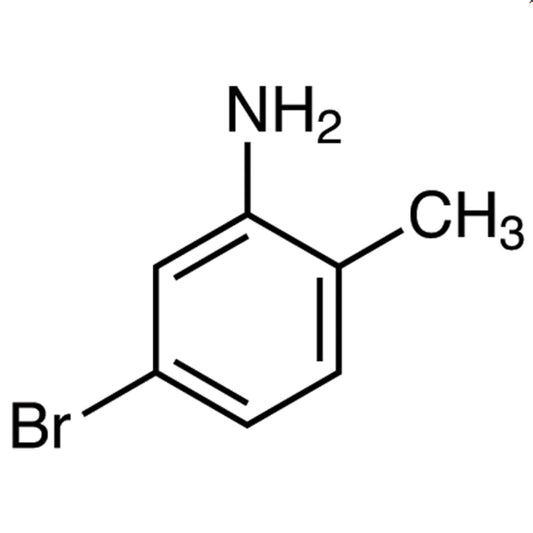
5-Bromo-2-methylaniline TCI B3687
Regular price From Rp 530.250,00Regular price -
3-Bromo-2-methylaniline TCI B3482
Regular price From Rp 3.021.900,00Regular price -
3-Bromo-4-methylaniline TCI B2354
Regular price From Rp 1.167.600,00Regular price -
4-Bromo-3-methylaniline TCI B1990
Regular price From Rp 689.850,00Regular price -
4-Bromo-2-methylaniline TCI B1281
Regular price Rp 1.378.650,00Regular price -
2-Bromo-4-methylaniline TCI B0540
Regular price From Rp 664.650,00Regular price -
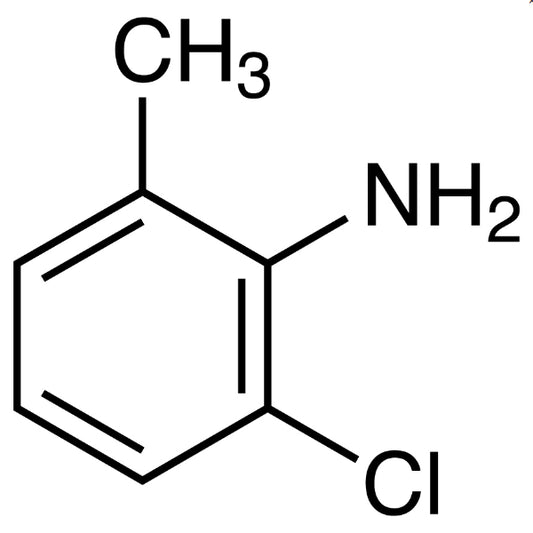
2-Chloro-6-methylaniline TCI A1959
Regular price From Rp 1.431.150,00Regular price