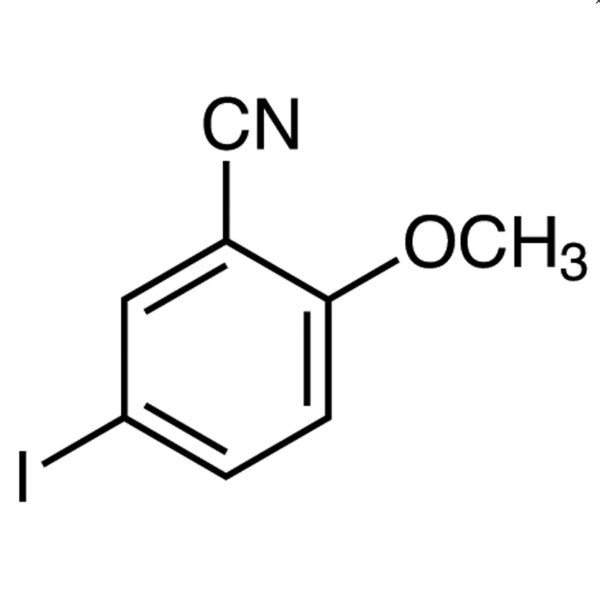
5-Iodo-2-methoxybenzonitrile is a chemical compound widely used as a foundational building block in organic synthesis. This versatile reagent plays a critical role in the development of complex organic molecules, particularly in laboratory settings where precise chemical transformations are required. Its presence in various chemical reactions highlights its importance in the field of synthetic chemistry, enabling researchers to create new compounds with tailored properties. As a key component in the category of non-heterocyclic building blocks, it supports the creation of a wide range of chemical structures.
The compound's chemical stability and reactivity make it a preferred choice for synthetic chemists. It is capable of participating in multiple reaction types, including substitution and coupling reactions, which are essential for constructing more complex molecular frameworks. Its ability to interact with various functional groups allows for the synthesis of diverse compounds, making it a valuable asset in both academic and industrial research. The compound’s solubility in organic solvents further enhances its utility, facilitating efficient purification and isolation processes.
In Indonesian laboratories, 5-Iodo-2-methoxybenzonitrile is commonly used in scientific research, especially in organic chemistry and pharmaceutical development. Researchers rely on this compound to explore new synthetic pathways and to develop compounds with potential applications in medicine and materials science. Its availability through suppliers like AMI Scientific ensures that it remains a critical tool for advancing chemical research in the region.
Related TCI products
- TCI T3285 43020-38-8 2,3,4-Trimethoxybenzonitrile
- TCI T3244 1885-35-4 3,4,5-Trimethoxybenzonitrile
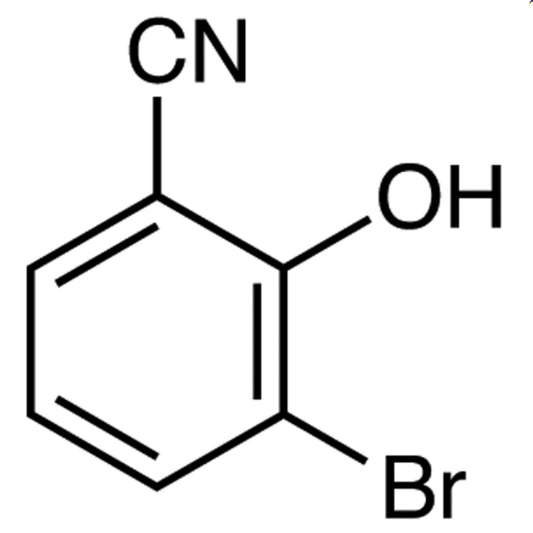
- TCI B5273 13073-28-4 3-Bromo-2-hydroxybenzonitrile
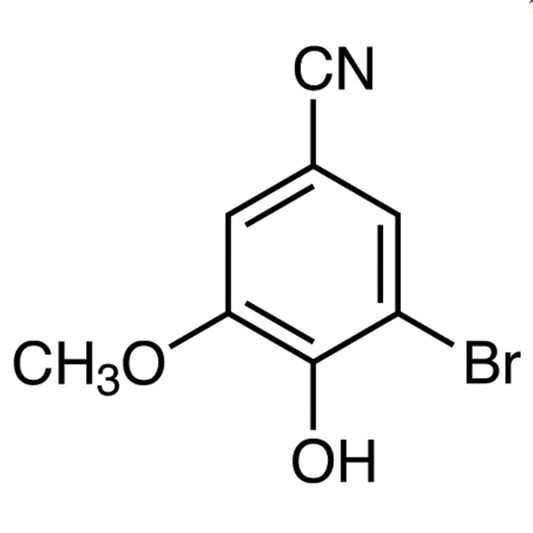
- TCI B4757 52805-45-5 3-Bromo-4-hydroxy-5-methoxybenzonitrile
- TCI B3124 117572-79-9 3-Bromo-4-methoxybenzonitrile
- TCI B3123 144649-99-0 5-Bromo-2-methoxybenzonitrile
- Organic synthesis is a primary application where this compound serves as a versatile building block for creating complex molecular structures.
- Drug development benefits from its use in synthesizing pharmaceutical compounds with specific functional groups and biological activities.
- Material science research utilizes this compound to design new materials with tailored chemical properties and structural features.
- Analytical chemistry applications include its use as a standard for calibration and as a reagent in various analytical techniques.
- Environmental chemistry studies may employ this compound to investigate chemical reactions under different environmental conditions.
| Brand | TCI |
|---|---|
| CAS number | 933672-32-3 |
| Molecular formula | — |
| Purity | — |
| Category | Chemistry > Building Blocks > Non-Heterocyclic Building Blocks |
| Pack sizes | Available in various quantities as per supplier specifications |
| Physical form | Solid or liquid depending on the specific product variant |
| Storage | Store in a cool, dry place away from direct sunlight and incompatible materials |
This compound should be stored in a cool, dry environment to maintain its chemical stability. It is recommended to use airtight containers to prevent exposure to moisture and air, which could affect its reactivity. Proper labeling of containers is essential to ensure safe handling and prevent accidental use. Due to its chemical nature, it should be stored away from incompatible substances such as strong oxidizers or acids. In laboratory settings, personal protective equipment should be worn when handling this compound to minimize exposure. Regular monitoring of storage conditions ensures that the compound remains in optimal condition for use in chemical experiments.
—
Produk Terkait
-
2,3,4-Trimethoxybenzonitrile TCI T3285
Regular price From Rp 1.458.450,00Regular price -
3,4,5-Trimethoxybenzonitrile TCI T3244
Regular price From Rp 1.485.750,00Regular price -
3-Bromo-2-hydroxybenzonitrile TCI B5273
Regular price From Rp 1.220.100,00Regular price -
3-Bromo-4-hydroxy-5-methoxybenzonitrile TCI B4757
Regular price From Rp 689.850,00Regular price -
3-Bromo-4-methoxybenzonitrile TCI B3124
Regular price Rp 1.829.100,00Regular price -
5-Bromo-2-methoxybenzonitrile TCI B3123
Regular price From Rp 1.140.300,00Regular price -
4-Bromo-2-hydroxybenzonitrile TCI B3120
Regular price From Rp 1.246.350,00Regular price -
5-Bromo-2-hydroxybenzonitrile TCI B2214
Regular price From Rp 3.100.650,00Regular price