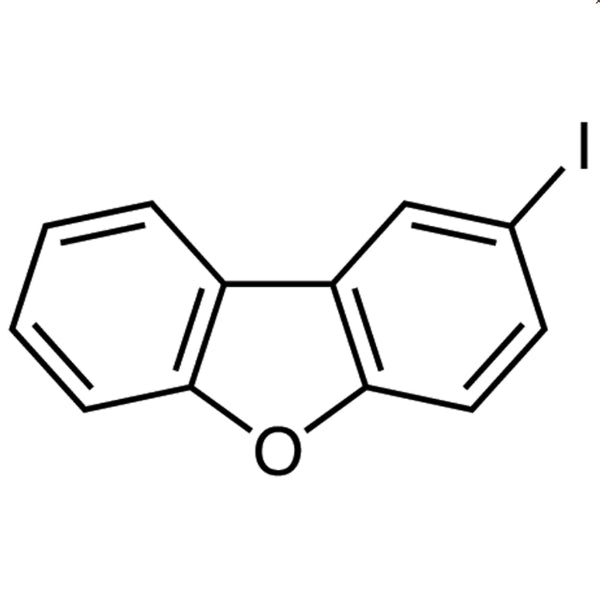
2-Iododibenzofuran is an organic compound widely utilized in scientific research, particularly in the development of organic semiconductor materials. As a small molecule semiconductor building block, it plays a crucial role in the synthesis of complex compounds with applications in display technologies, solar cells, and optical sensors. In laboratory settings, it serves as a foundational material for constructing molecular structures with unique electronic properties. Its presence enables researchers to explore new avenues in material science by providing a versatile platform for chemical modification and functionalization.
The compound is favored for its stable aromatic structure and good solubility in organic solvents. These properties make it an ideal choice for chemical reactions requiring both stability and controlled reactivity. The presence of iodine at a specific position allows for flexible substitution, enabling researchers to tailor the chemical and physical properties of the compound according to specific application needs. This adaptability enhances its utility in various synthetic pathways and material development projects.
In Indonesian laboratories, 2-Iododibenzofuran is commonly used in semiconductor material research and the development of new materials for technological applications. Researchers from educational institutions and research organizations frequently employ this compound for experiments requiring compounds with specific optical and electronic characteristics. Its role in advancing material science is integral to the innovation of next-generation technologies.
- Organic Semiconductor Development: This compound is essential for creating organic semiconductors used in flexible electronics and optoelectronic devices due to its stable aromatic structure and tunable electronic properties.
- Display Technology Research: It is widely used in the synthesis of materials for organic light-emitting diodes (OLEDs) because of its optical properties and ability to be modified for specific light emission characteristics.
- Solar Cell Material Innovation: The compound contributes to the development of organic photovoltaic materials, where its electronic properties are crucial for efficient light absorption and charge transport.
- Optical Sensor Fabrication: Its chemical versatility allows for the creation of materials used in optical sensors, where precise control over molecular structure is necessary for sensor performance.
- Material Science Research: It serves as a building block for synthesizing new materials with unique electronic and optical properties, supporting a wide range of scientific investigations.
| Brand | TCI |
|---|---|
| CAS number | 5408-56-0 |
| Molecular formula | — |
| Purity | — |
| Category | Materials Science > Material Building Blocks > Small Molecule Semiconductor Building Blocks |
| Pack sizes | Available in various quantities as per supplier specifications |
| Physical form | Solid |
| Storage | Store in a cool, dry place away from light and moisture |
This compound should be stored in a cool, dry environment, away from direct light and moisture to maintain its stability and prevent degradation. It is recommended to use airtight containers made of glass or high-density polyethylene to minimize exposure to air and moisture. Due to its chemical nature, it should be handled with appropriate personal protective equipment, including gloves and safety goggles, to ensure laboratory safety. Proper ventilation is essential when working with this material to avoid inhalation of vapors. Regular monitoring of storage conditions is advised to ensure the integrity of the compound remains uncompromised.
—
Produk Terkait
-
4-Iododibenzofuran TCI I0972
Regular price From Rp 2.359.350,00Regular price -
4-(4,4,5,5-Tetramethyl-1,3,2-dioxaborolan-2-yl)dibenzofuran TCI T3602
Regular price From Rp 1.908.900,00Regular price -
4-(4-Bromophenyl)dibenzofuran TCI B4884
Regular price From Rp 3.683.400,00Regular price -
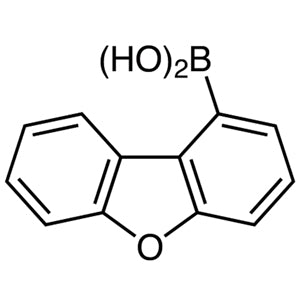
Dibenzofuran-1-boronicAcid(containsvaryingamountsofAnhydride) TCI D5758
Regular price From Rp 2.704.800,00Regular price -
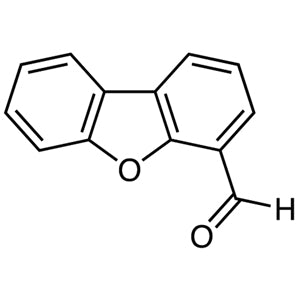
Dibenzofuran-4-carboxaldehyde TCI D4771
Regular price From Rp 1.724.100,00Regular price -
Dibenzofuran-2-carboxaldehyde TCI D4759
Regular price From Rp 4.240.950,00Regular price -
Dibenzofuran-4-boronicAcid(containsvaryingamountsofAnhydride) TCI D4567
Regular price From Rp 664.650,00Regular price -
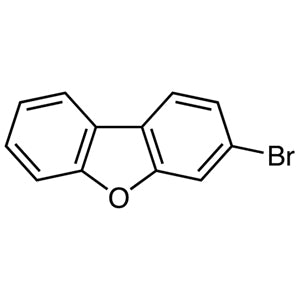
3-Bromodibenzofuran TCI B5451
Regular price From Rp 1.115.100,00Regular price