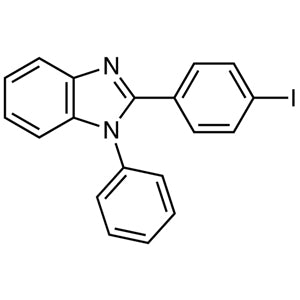
2-(4-Iodophenyl)-1-phenylbenzimidazole is a chemical compound widely used in laboratory settings for the synthesis of complex organic molecules. It belongs to the class of heterocyclic building blocks, which are essential in organic chemistry for constructing diverse molecular structures. This compound features a unique combination of aromatic rings and a benzimidazole ring, making it a versatile tool for chemical modification and functional group introduction. Its structural complexity and reactivity make it a valuable component in synthetic pathways, particularly in the development of bioactive compounds.
The compound's chemical stability and ability to react under controlled conditions make it a preferred choice for researchers. Its capacity to form covalent bonds with various functional groups allows for flexible molecular tailoring, which is critical in drug discovery and materials science. The molecule's iodine-containing aromatic ring enhances its reactivity, enabling it to participate in a range of chemical transformations. These properties make it an ideal candidate for applications requiring precise chemical manipulation and structural diversity.
In Indonesian laboratories, 2-(4-Iodophenyl)-1-phenylbenzimidazole is commonly used in research focused on pharmaceutical development and organic synthesis. It is frequently employed in academic and industrial settings to explore new chemical structures and biological activities. Its role in advancing scientific research is significant, particularly in fields such as pharmacology and biochemistry, where the synthesis of novel compounds is essential.
TCI brochures (PDF)
- Building Blocks for Organic Semiconductor 2026-03-24 · p. 17
Related TCI products
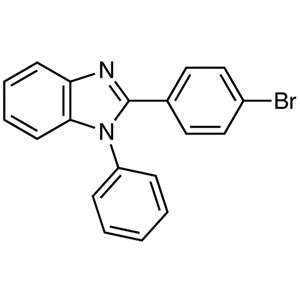
- TCI B4479 2620-76-0 2-(4-Bromophenyl)-1-phenylbenzimidazole
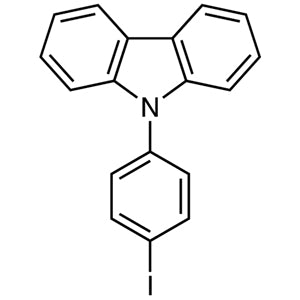
- TCI I0961 57103-15-8 9-(4-Iodophenyl)carbazole
- TCI I0067 146-68-9 2-(4-Iodophenyl)-3-(4-nitrophenyl)-5-phenyltetrazolium Chloride
- TCI D3488 6478-79-1 5,6-Dichloro-2-methylbenzimidazole
- TCI D2556 3237-62-5 5,6-Dichloro-1-ethyl-2-methylbenzimidazole
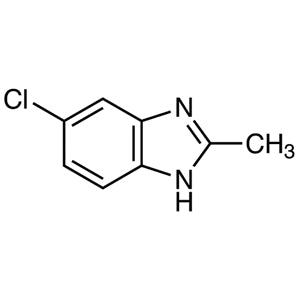
- TCI C0766 2818-69-1 5-Chloro-2-methylbenzimidazole
- Organic synthesis is a key application where this compound serves as a building block for creating complex molecules with potential pharmaceutical applications.
- Drug discovery projects benefit from its ability to undergo various chemical transformations, making it useful in the development of new therapeutic agents.
- Pharmacological research utilizes this compound to study the effects of modified molecular structures on biological systems and cellular processes.
- Material science applications leverage its structural versatility for the creation of advanced organic materials with specific functional properties.
- Biochemical experiments often incorporate this compound to investigate its interactions with enzymes and other biomolecules in controlled environments.
| Brand | TCI |
|---|---|
| CAS number | 760212-42-8 |
| Molecular formula | — |
| Purity | — |
| Category | Chemistry > Building Blocks > Heterocyclic Building Blocks |
| Pack sizes | Available in various quantities as per standard laboratory supply |
| Physical form | Solid |
| Storage | Store in a cool, dry place away from direct light and moisture |
This compound should be stored in a cool, dry environment, away from direct sunlight and sources of heat. It is recommended to keep it in a sealed container to prevent moisture absorption and contamination. Due to its chemical reactivity, it should be handled with appropriate personal protective equipment, including gloves and safety goggles. It is important to ensure proper ventilation in the laboratory when working with this compound. Avoid exposure to incompatible substances such as strong oxidizing agents. Regular inspection of storage conditions is advised to maintain the integrity and stability of the compound.
—
Produk Terkait
-
2-(4-Bromophenyl)-1-phenylbenzimidazole TCI B4479
Regular price Rp 1.298.850,00Regular price -
9-(4-Iodophenyl)carbazole TCI I0961
Regular price From Rp 3.180.450,00Regular price -
2-(4-Iodophenyl)-3-(4-nitrophenyl)-5-phenyltetrazoliumChloride TCI I0067
Regular price From Rp 1.167.600,00Regular price -
5,6-Dichloro-2-methylbenzimidazole TCI D3488
Regular price From Rp 1.644.300,00Regular price -
5,6-Dichloro-1-ethyl-2-methylbenzimidazole TCI D2556
Regular price Rp 3.207.750,00Regular price -
5-Chloro-2-methylbenzimidazole TCI C0766
Regular price Rp 2.332.050,00Regular price -
2-(2-Bromophenyl)-1H-benzimidazole TCI B6092
Regular price From Rp 955.500,00Regular price -
2-Phenylbenzimidazole TCI P1105
Regular price Rp 848.400,00Regular price