

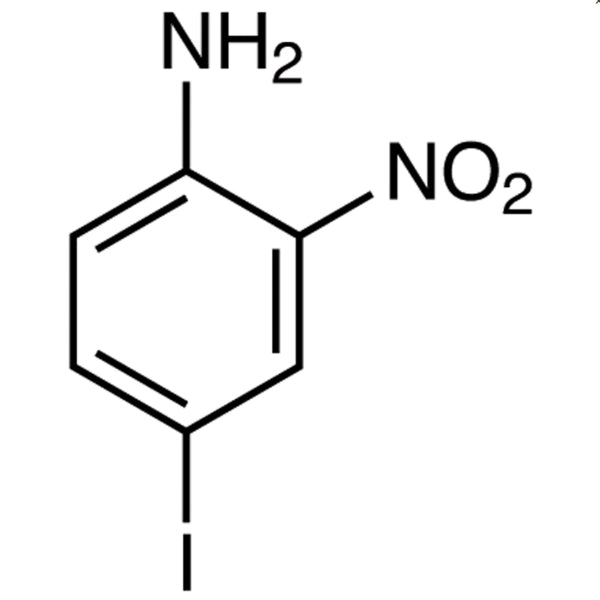
4-Iodo-2-nitroaniline is a chemical compound widely used as a building block in the synthesis of complex molecules. It is a key reagent in organic chemistry due to its versatile functional groups, which include both an iodine and a nitro group. These substituents contribute to the molecule’s reactivity and make it a valuable resource for chemists working in various research fields. In the laboratory, it plays a crucial role in the development of new compounds, particularly in pharmaceutical and industrial applications. Its chemical structure allows it to participate in multiple reaction mechanisms, making it an essential tool for synthetic chemists.
The compound's unique properties stem from the presence of the nitro and iodine groups, which influence its chemical behavior. The nitro group acts as an electron-withdrawing group, while the iodine atom enhances the molecule’s reactivity. This combination provides stability and reactivity in a balanced manner, making it ideal for substitution reactions and other organic transformations. Its chemical versatility allows it to be used in a wide range of experimental setups, from academic research to industrial production.
In Indonesian laboratories, 4-Iodo-2-nitroaniline is commonly used in educational institutions and research centers. It is particularly popular in organic chemistry and pharmaceutical laboratories, where it serves as an intermediate in the synthesis of various compounds. Its availability and reliability make it a preferred choice for researchers and students alike, supporting both teaching and research activities.
- Organic synthesis is a key application where 4-Iodo-2-nitroaniline is used as a building block for creating complex molecules due to its reactive functional groups.
- Pharmaceutical research benefits from this compound as it is often used in the development of new drugs and medicinal compounds.
- Industrial chemistry applications include its use in the production of various chemical intermediates and specialty chemicals.
- Teaching laboratories utilize it for demonstrating substitution reactions and functional group chemistry in undergraduate courses.
- Research institutions employ it for advanced synthetic pathways and chemical modification studies in organic chemistry.
| Brand | TCI |
|---|---|
| CAS number | 20691-72-9 |
| Molecular formula | — |
| Purity | — |
| Category | Chemistry > Building Blocks > Non-Heterocyclic Building Blocks |
| Pack sizes | Available in various quantities as per supplier specifications |
| Physical form | Solid |
| Storage | Store in a cool, dry place away from light and incompatible materials |
4-Iodo-2-nitroaniline should be stored in a cool, dry place, away from direct light and sources of heat. It is recommended to keep it in a sealed container to prevent moisture absorption. Due to its chemical reactivity, it should be stored separately from strong oxidizing agents and incompatible substances. Proper ventilation is essential when handling this compound to minimize exposure. Laboratory personnel should wear appropriate personal protective equipment, including gloves and safety goggles, to ensure safe handling. The compound is not flammable but may cause irritation if inhaled or contacted with skin. Regular monitoring of storage conditions is advised to maintain its stability and ensure safe laboratory practices.
—
Produk Terkait
-
2-Iodo-4-nitroaniline TCI I0878
Regular price From Rp 1.246.350,00Regular price -
4-Bromo-3-nitroaniline TCI B4876
Regular price From Rp 637.350,00Regular price -
2-Bromo-4-nitroaniline TCI B4873
Regular price From Rp 1.220.100,00Regular price -
4-Bromo-2-methyl-6-nitroaniline TCI B3730
Regular price From Rp 717.150,00Regular price -
4-Bromo-2-nitroaniline TCI B3033
Regular price From Rp 689.850,00Regular price -
2-Bromo-6-chloro-4-nitroaniline TCI B1771
Regular price Rp 477.750,00Regular price -
2-Bromo-4,6-dinitroaniline TCI B0814
Regular price From Rp 717.150,00Regular price -
2-Methyl-4-nitroaniline TCI N0529
Regular price Rp 1.644.300,00Regular price


