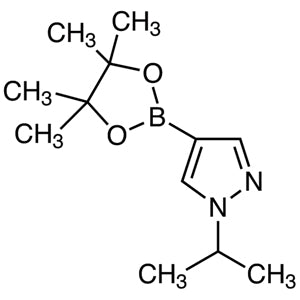
1-Isopropyl-4-(4,4,5,5-tetramethyl-1,3,2-dioxaborolan-2-yl)-1H-pyrazole is a chemical compound widely used in organic reactions, particularly in the synthesis of complex molecules involving boron-based reactions. This compound belongs to the class of organoboron reagents, which are essential in modern synthetic chemistry. Its unique structure and functional groups make it a valuable tool for creating carbon-carbon bonds with high selectivity and efficiency. In laboratory settings, it plays a crucial role in facilitating precise and controlled chemical transformations, especially in advanced organic synthesis.
The compound is known for its high reactivity and stability under specific conditions, which are key factors in its popularity among chemists. The presence of a boronic acid group enhances its ability to participate in coupling reactions, such as the Suzuki-Miyaura and Kumada-Corriu reactions. These reactions are fundamental in the development of pharmaceuticals, agrochemicals, and materials science. The compound's ability to form stable intermediates and its compatibility with various organic substrates make it a preferred choice for researchers aiming for high-yield and reproducible results.
In Indonesian laboratories, this compound is commonly used in organic chemistry research, particularly in academic and research institutions. Its application spans across various fields, including drug discovery, polymer science, and catalytic processes. Due to its versatility and effectiveness, it is a go-to reagent for scientists working on complex synthetic pathways that require precision and reliability. Its role in enabling advanced chemical transformations makes it an essential component in the toolkit of many researchers in Indonesia.
TCI brochures (PDF)
- Suzuki-Miyaura Cross Coupling Reaction 2025-12-01 · p. 19
Related TCI products
- TCI T3829 844501-71-9 3-(4,4,5,5-Tetramethyl-1,3,2-dioxaborolan-2-yl)-1H-pyrazole
- TCI T3668 1040377-03-4 1-(Tetrahydro-2H-pyran-4-yl)-4-(4,4,5,5-tetramethyl-1,3,2-dioxaborolan-2-yl)-1H-pyrazole
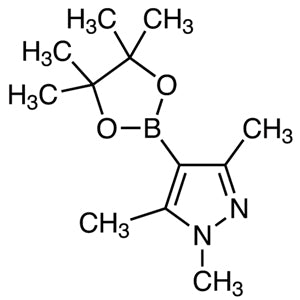
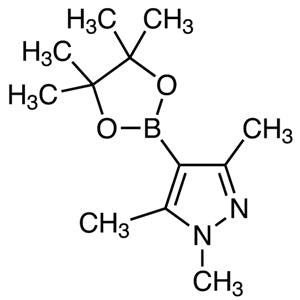
- TCI T3409 844891-04-9 1,3,5-Trimethyl-4-(4,4,5,5-tetramethyl-1,3,2-dioxaborolan-2-yl)pyrazole
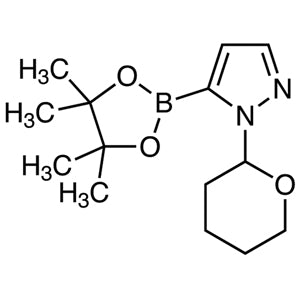
- TCI T3215 903550-26-5 1-(Tetrahydropyran-2-yl)-5-(4,4,5,5-tetramethyl-1,3,2-dioxaborolan-2-yl)pyrazole
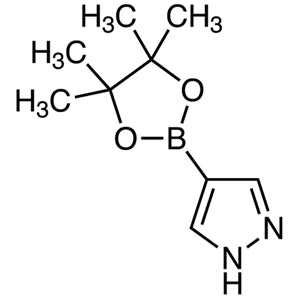
- TCI T2756 269410-08-4 4-(4,4,5,5-Tetramethyl-1,3,2-dioxaborolan-2-yl)pyrazole
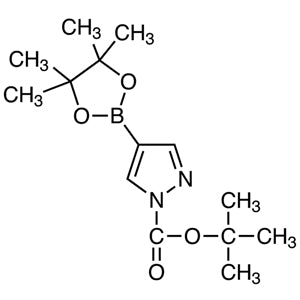
- TCI B5203 552846-17-0 1-(tert-Butoxycarbonyl)-4-(4,4,5,5-tetramethyl-1,3,2-dioxaborolan-2-yl)pyrazole
- Organic synthesis applications benefit from this compound's ability to form stable carbon-carbon bonds with high selectivity, making it ideal for creating complex molecular structures.
- In pharmaceutical research, it is used to develop new drugs by facilitating the synthesis of bioactive compounds with specific functional groups.
- For polymer science, the compound contributes to the formation of functionalized polymers through its reactivity in coupling reactions.
- In catalytic processes, its role in promoting efficient and selective reactions supports the development of sustainable chemical methods.
- Academic and research institutions rely on it for advanced studies in organic chemistry, where precision and reproducibility are critical.
| Brand | TCI |
|---|---|
| CAS number | 879487-10-2 |
| Molecular formula | — |
| Purity | — |
| Category | Chemistry > Organometallic Reagents > Organoboron [Organometallic Reagents] |
| Pack sizes | Available in various sizes as per supplier specifications |
| Physical form | Solid or liquid, depending on supplier packaging |
| Storage | Store in a cool, dry place away from moisture and direct sunlight |
This compound should be stored in a cool, dry place, away from moisture and direct sunlight to maintain its stability and reactivity. It is recommended to use airtight containers made of glass or polyethylene to prevent contamination and degradation. Due to its chemical nature, it should be handled with appropriate personal protective equipment, such as gloves and safety goggles, to ensure laboratory safety. It is important to keep the compound in a well-ventilated area to minimize exposure to vapors. Avoid contact with incompatible materials, and ensure proper disposal according to local regulations. Regular inspection of storage conditions is advised to maintain the integrity of the compound throughout its shelf life.
—
Produk Terkait
-
3-(4,4,5,5-Tetramethyl-1,3,2-dioxaborolan-2-yl)-1H-pyrazole TCI T3829
Regular price From Rp 1.936.200,00Regular price -
1-(Tetrahydro-2H-pyran-4-yl)-4-(4,4,5,5-tetramethyl-1,3,2-dioxaborolan-2-yl)-1H-pyrazole TCI T3668
Regular price From Rp 769.650,00Regular price -
1,3,5-Trimethyl-4-(4,4,5,5-tetramethyl-1,3,2-dioxaborolan-2-yl)pyrazole TCI T3409
Regular price From Rp 955.500,00Regular price -
1-(Tetrahydropyran-2-yl)-5-(4,4,5,5-tetramethyl-1,3,2-dioxaborolan-2-yl)pyrazole TCI T3215
Regular price From Rp 928.200,00Regular price -
4-(4,4,5,5-Tetramethyl-1,3,2-dioxaborolan-2-yl)pyrazole TCI T2756
Regular price From Rp 1.776.600,00Regular price -
1-(tert-Butoxycarbonyl)-4-(4,4,5,5-tetramethyl-1,3,2-dioxaborolan-2-yl)pyrazole TCI B5203
Regular price From Rp 1.273.650,00Regular price -
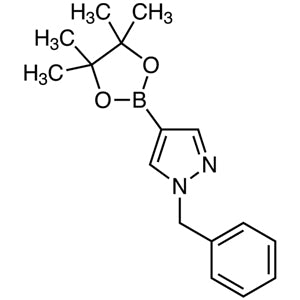
1-Benzyl-4-(4,4,5,5-tetramethyl-1,3,2-dioxaborolan-2-yl)pyrazole TCI B4364
Regular price From Rp 1.670.550,00Regular price -
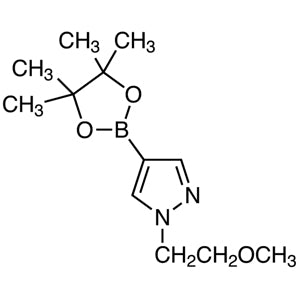
1-(2-Methoxyethyl)-4-(4,4,5,5-tetramethyl-1,3,2-dioxaborolan-2-yl)-1H-pyrazole TCI M3232
Regular price From Rp 928.200,00Regular price