![243-59-4 6H-Indolo[2,3-b]quinoxaline - AMI Scientific](http://amiscientific.com/cdn/shop/files/TCI2510I1098.jpg?v=1767120775&width=1946)
![243-59-4 6H-Indolo[2,3-b]quinoxaline - AMI Scientific](http://amiscientific.com/cdn/shop/files/TCI2510I1098.jpg?v=1767120775&width=1445)
TCI I1098 243-59-4 6H-Indolo[2,3-b]quinoxaline is a chemical compound that plays a crucial role in laboratory settings, particularly in the field of organic chemistry and pharmaceutical research. As a heterocyclic building block, it serves as a foundational material for the synthesis of complex molecules. Its unique molecular structure allows for targeted substitution and functionalization, making it a versatile tool for chemists. This compound is widely used in the development of new compounds with specific biological activities, such as pharmaceuticals and industrial chemicals. Its importance lies in its ability to participate in various synthetic pathways, enabling the creation of advanced chemical structures.
The properties of 6H-Indolo[2,3-b]quinoxaline make it a preferred choice in laboratory applications. It exhibits good solubility in organic solvents, which facilitates purification and reaction processes. Its chemical stability under certain conditions ensures reliable performance in synthetic reactions. Additionally, the compound demonstrates controlled reactivity, allowing for precise manipulation in chemical synthesis. These characteristics contribute to its effectiveness in both academic and industrial research environments. The compound’s ability to react under various conditions, including specific temperatures and catalysts, further enhances its utility in diverse chemical applications.
In Indonesian laboratories, 6H-Indolo[2,3-b]quinoxaline is commonly used as a starting material for the synthesis of bioactive compounds. It is particularly valuable in pharmaceutical research, where it contributes to the development of new drugs. Its application extends to academic research, where it is used to explore novel chemical structures and reaction mechanisms. The compound’s reliability and versatility make it a key component in the chemical toolkit of Indonesian laboratories.
TCI brochures (PDF)
- Building Blocks for Organic Semiconductor 2026-03-24 · p. 34
- Organic synthesis applications benefit from this compound’s structural versatility, enabling the creation of complex molecules with specific biological activities.
- Pharmaceutical research utilizes it as a building block for developing new drug candidates with targeted therapeutic effects.
- Industrial chemical synthesis relies on its stability and reactivity to produce high-value compounds efficiently.
- Academic research employs it to study reaction mechanisms and explore new synthetic pathways in heterocyclic chemistry.
- Bioactive compound development leverages its unique structure to design molecules with enhanced biological properties.
| Brand | TCI |
|---|---|
| CAS number | 243-59-4 |
| Molecular formula | — |
| Purity | — |
| Category | Chemistry > Building Blocks > Heterocyclic Building Blocks |
| Pack sizes | Available in various quantities as per supplier specifications |
| Physical form | Solid (as per standard product description) |
| Storage | Store in a cool, dry place away from direct sunlight |
This compound should be stored in a cool, dry environment to maintain its chemical stability. It is recommended to keep it in a sealed container to prevent exposure to moisture and air. Suitable containers include glass or high-density polyethylene vessels that are resistant to chemical reactions. General laboratory precautions include handling with care to avoid inhalation or skin contact. Proper ventilation should be ensured when working with this compound. It is important to follow standard safety protocols to ensure safe handling and storage in laboratory settings.
—
Produk Terkait
-
Indolo[3,2,1-jk]carbazole TCI I1061
Regular price From Rp 2.386.650,00Regular price -
1,2,3,4-Tetrahydroquinoxaline TCI T2999
Regular price From Rp 743.400,00Regular price -
5,6,7,8-Tetrahydroquinoxaline TCI T1403
Regular price From Rp 848.400,00Regular price -
Benzo[g]quinoxaline TCI B4540
Regular price Rp 2.016.000,00Regular price -
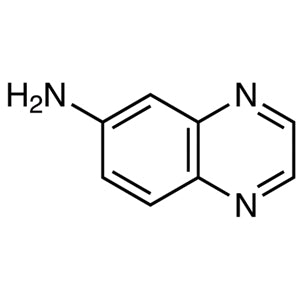
6-Aminoquinoxaline TCI A2490
Regular price From Rp 1.298.850,00Regular price -
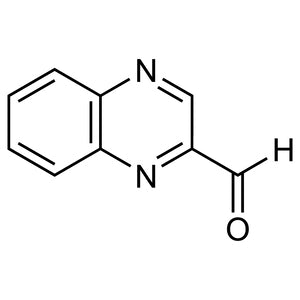
Quinoxaline-2-carbaldehyde TCI Q0121
Regular price From Rp 875.700,00Regular price -
Quinoxaline1,4-Dioxide TCI Q0110
Regular price From Rp 2.359.350,00Regular price -
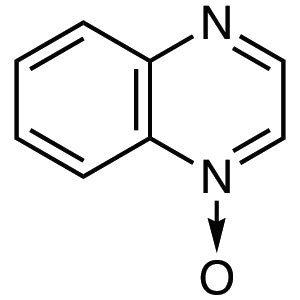
Quinoxaline1-Oxide TCI Q0108
Regular price From Rp 1.618.050,00Regular price
![205-95-8 Indolo[3,2,1-jk]carbazole - AMI Scientific](http://amiscientific.com/cdn/shop/files/TCI2510I1061.jpg?v=1767120729&width=533)


![260-50-4 Benzo[g]quinoxaline - AMI Scientific](http://amiscientific.com/cdn/shop/files/TCI2510B4540.jpg?v=1767091332&width=533)