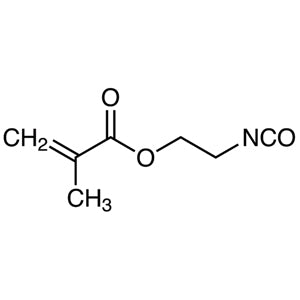
2-Isocyanatoethyl Methacrylate (stabilized with BHT) is a versatile chemical compound used in various laboratory applications to construct complex molecules. This compound contains both isocyanate and methacrylate functional groups, which contribute to its high reactivity and ability to form bonds with different components. Its unique structure makes it a valuable tool in organic synthesis, particularly in the development of polymers and methacrylate-based materials. Due to its stabilization with BHT, it exhibits enhanced resistance to oxidation, which significantly extends its shelf life and ensures consistent performance in chemical reactions.
The compound’s reactivity and compatibility with a wide range of functional groups make it a preferred choice for synthetic chemists. Its ability to participate in diverse reactions, such as polymerization and cross-linking, allows for the creation of advanced materials with tailored properties. The stabilization with BHT also enhances its stability under normal laboratory conditions, reducing the risk of degradation and ensuring reliable results over time. These properties make it an essential component in both academic and industrial research settings.
In Indonesian laboratories, this compound is widely used in chemical research, particularly in the synthesis of organic compounds and the development of new materials. It is commonly found in educational institutions and research centers where high reactivity and functional versatility are required. Its stability and reactivity make it a reliable choice for experiments that demand precision and consistency in chemical synthesis processes.
TCI brochures (PDF)
- Biomaterials Research Reagents 2025-02-19 · p. 9
- Monomers 2025-05-28 · p. 7
Related TCI products
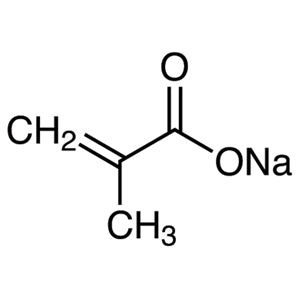
- TCI S0987 5536-61-8 Sodium Methacrylate (stabilized with MEHQ)
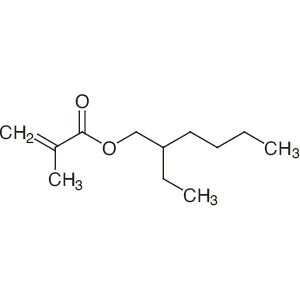
- TCI M0591 688-84-6 2-Ethylhexyl Methacrylate (stabilized with MEHQ)
- TCI M0512 27813-02-1 Hydroxypropyl Methacrylate (mixture of 2-Hydroxypropyl and 2-Hydroxy-1-methylethyl Methacrylate) (stabilized with MEHQ)
- TCI M0326 585-07-9 tert-Butyl Methacrylate Monomer (stabilized with MEHQ)
- TCI M0132 97-86-9 Isobutyl Methacrylate (stabilized with HQ)
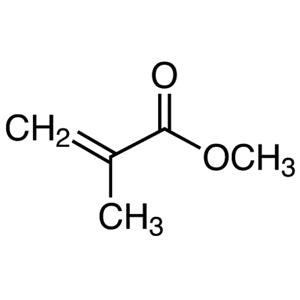
- TCI M0087 80-62-6 Methyl Methacrylate (stabilized with 6-tert-Butyl-2,4-xylenol)
- Organic synthesis is a key application where this compound is used to build complex molecules due to its reactive isocyanate and methacrylate groups.
- Polymer development benefits from its ability to form cross-linked structures, making it ideal for creating advanced polymer materials.
- Material science research utilizes this compound to design new materials with specific mechanical and chemical properties.
- Chemical reaction optimization leverages its high reactivity to enhance the efficiency of synthetic pathways in laboratory settings.
- Educational research in chemistry laboratories relies on this compound to teach and demonstrate the principles of functional group reactivity and polymer formation.
| Brand | TCI |
|---|---|
| CAS number | 30674-80-7 |
| Molecular formula | — |
| Purity | — |
| Category | Chemistry > Building Blocks > Non-Heterocyclic Building Blocks |
| Pack sizes | Available in various quantities as per standard laboratory supply |
| Physical form | Liquid |
| Storage | Store in a cool, dark place away from heat and direct sunlight |
This compound should be stored in a cool, dark environment to maintain its stability and prevent degradation. It is recommended to keep it in a tightly sealed container to minimize exposure to air and moisture. Due to its reactive nature, it should be handled in a well-ventilated area, preferably under a fume hood, to ensure safety. Avoid contact with incompatible substances such as strong bases or oxidizing agents. Regular monitoring of storage conditions is essential to maintain its integrity and effectiveness in laboratory applications. Proper labeling and safe handling practices are crucial to prevent accidents and ensure compliance with laboratory safety standards.
—
Product Categories
Produk Terkait
-
SodiumMethacrylate(stabilizedwithMEHQ) TCI S0987
Regular price Rp 1.644.300,00Regular priceRp 1.149.750,00Sale price Rp 1.644.300,00 -
2-EthylhexylMethacrylate(stabilizedwithMEHQ) TCI M0591
Regular price Rp 505.050,00Regular priceRp 352.800,00Sale price Rp 505.050,00 -
HydroxypropylMethacrylate(mixtureof2-Hydroxypropyland2-Hydroxy-1-methylethylMethacrylate)(stabilizedwithMEHQ) TCI M0512
Regular price Rp 505.050,00Regular priceRp 352.800,00Sale price Rp 505.050,00 -
tert-ButylMethacrylateMonomer(stabilizedwithMEHQ) TCI M0326
Regular price Rp 505.050,00Regular priceRp 352.800,00Sale price Rp 505.050,00 -
IsobutylMethacrylate(stabilizedwithHQ) TCI M0132
Regular price Rp 477.750,00Regular priceRp 333.900,00Sale price Rp 477.750,00 -
MethylMethacrylate(stabilizedwith6-tert-Butyl-2,4-xylenol) TCI M0087
Regular price Rp 452.550,00Regular priceRp 316.050,00Sale price Rp 452.550,00 -
2-HydroxyethylMethacrylate(stabilizedwithMEHQ) TCI M0085
Regular price Rp 505.050,00Regular priceRp 352.800,00Sale price Rp 505.050,00 -
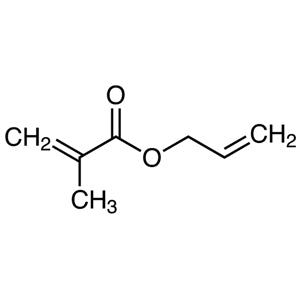
AllylMethacrylate(stabilizedwithMEHQ) TCI M0075
Regular price Rp 477.750,00Regular priceRp 333.900,00Sale price Rp 477.750,00