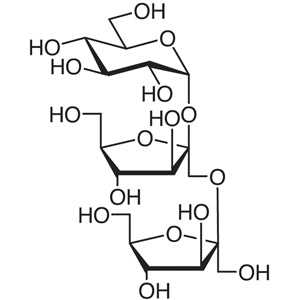
1-Kestose is a chemical compound classified under glycosides, widely used in chemical biology and glycoscience research. It plays a crucial role in laboratories as a key component in the synthesis of complex molecules and as a substrate in enzymatic reactions. This compound is essential for studying enzyme activity and molecular interactions, making it a fundamental tool in biochemical investigations. Its presence in various research fields highlights its importance in advancing scientific understanding of carbohydrate-based structures and their biological functions.
The stability and controllability of 1-Kestose under specific conditions make it a preferred choice for laboratory use. It exhibits chemical stability in non-extreme environmental conditions, which simplifies handling and storage. Additionally, its solubility in organic solvents such as ethyl acetate and methanol expands its applicability across a wide range of experimental setups. These properties ensure that 1-Kestose remains a reliable and versatile reagent in both academic and industrial research environments.
In Indonesian laboratories, 1-Kestose is commonly utilized in chemical biology research, particularly in studies related to molecular interactions. Its structural diversity allows it to be employed in both fundamental research and applied projects. Researchers in Indonesia rely on this compound for its consistent performance and adaptability, making it an essential material for advancing scientific inquiry in the field of glycoscience.
- Enzymatic Reaction Studies - 1-Kestose serves as a substrate for enzyme activity analysis, enabling researchers to study catalytic mechanisms and substrate specificity.
- Glycoside Synthesis - Its complex molecular structure makes it ideal for the synthesis of other glycosides, supporting the development of new compounds with potential pharmaceutical applications.
- Molecular Interaction Research - The compound is used to investigate how carbohydrates interact with proteins and other biomolecules, aiding in the understanding of biological processes.
- Biochemical Assays - Its stability and solubility allow it to be incorporated into various biochemical assays, providing reliable results in analytical experiments.
- Structural Analysis of Carbohydrates - 1-Kestose is frequently used in structural studies to characterize the composition and arrangement of carbohydrate-based molecules.
| Brand | TCI |
|---|---|
| CAS number | 470-69-9 |
| Molecular formula | — |
| Purity | — |
| Category | Chemistry > Chemical Biology > Glycoscience |
| Pack sizes | Available in various quantities as per standard laboratory requirements |
| Physical form | Powder or crystalline solid |
| Storage | Store in a cool, dry place away from direct sunlight |
1-Kestose should be stored in a cool, dry environment to maintain its chemical stability and prevent degradation. It is recommended to keep the compound in a sealed container to minimize exposure to moisture and air. Suitable storage containers include glass or plastic vessels with tight-fitting lids to ensure airtight conditions. Laboratory personnel should handle the material with care, using appropriate personal protective equipment such as gloves and safety goggles. Since it is a chemical compound, it should be stored away from incompatible substances and in a well-ventilated area. Regular inspection of storage conditions is advised to ensure the integrity of the material remains unaffected over time.
—
Produk Terkait
-
TCI B5774 5,10-Bis(4,4,5,5-tetramethyl-1,3,2-dioxaborolan-2-yl)naphtho[1,2-c:5,6-c']bis([1,2,5]oxadiazole)
Regular price Rp 10.255.350,00Regular price -
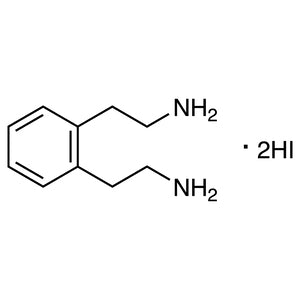
Dihydroiodide TCI B6569
Regular price From Rp 1.936.200,00Regular price -
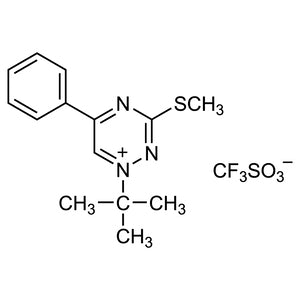
Trifluoromethanesulfonate TCI B7003
Regular price From Rp 1.936.200,00Regular price
![5,10-Bis(4,4,5,5-tetramethyl-1,3,2-dioxaborolan-2-yl)naphtho[1,2-c:5,6-c']bis([1,2,5]oxadiazole) - TCI B5774 - AMI Scientific](http://amiscientific.com/cdn/shop/files/TCI2510B5774.jpg?v=1769180228&width=533)