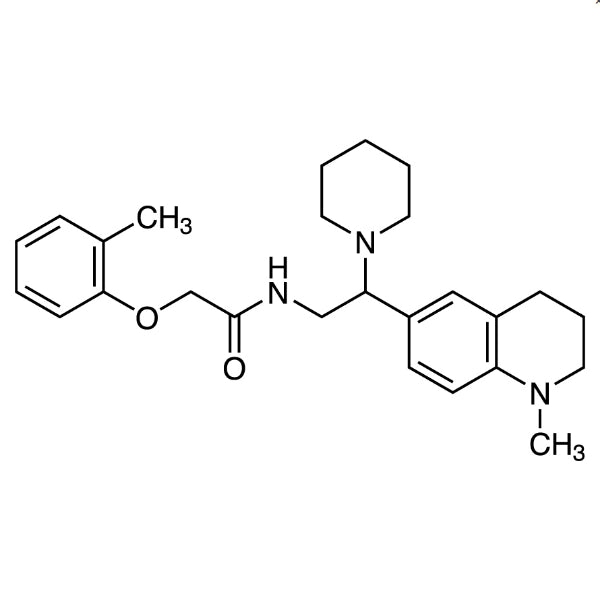
TCI K0077, also identified as KN3014 with CAS number 921902-48-9, is a small-molecule compound supplied as a research reagent for studies of the immune system, inflammation, and allergy. In the published literature, this compound is reported as an inhibitor of the interaction between IRE1α and TRAF2, a protein pair that links the endoplasmic reticulum stress response to inflammatory signalling pathways. Because the relationship between endoplasmic reticulum stress and the activation of immune responses is an expanding area of research, this compound serves as a pharmacological tool for interrupting one specific node within that signalling network and observing the consequences at the cellular level.
The characteristic that makes KN3014 a preferred choice is that it acts as a protein–protein interaction inhibitor rather than a general inhibitor of enzymatic activity. This approach allows researchers to probe the role of one particular branch of a pathway without shutting down the entire function of the parent protein, so that the resulting data can be interpreted more sharply. As a synthetic compound of low molecular weight, the material can be dissolved in organic solvents commonly used in cell culture work, added to culture medium across an adjustable range of concentrations, and combined with stress-inducing agents in experimental designs that require controlled activation of the pathway under study.
In Indonesian laboratories, this reagent is typically used in university research groups, biomedical institutes, and immunology or molecular biology laboratories that run cell-based experiments. It is normally handled in small quantities, prepared as a concentrated stock solution in an organic solvent, and then diluted into culture medium immediately before treatment. Work of this kind is usually carried out alongside cell culture facilities, incubators, and downstream analysis platforms used to read out signalling and inflammatory responses.
- Endoplasmic reticulum stress signalling studies — the compound targets the IRE1α–TRAF2 interaction directly, allowing researchers to interrupt one defined branch point of the stress response and follow what happens downstream in treated cells.
- Inflammation research — because the IRE1α–TRAF2 pair connects stress sensing to inflammatory signalling, this reagent lets investigators test how much of an observed inflammatory output actually depends on that specific coupling.
- Immune system investigations — as a pharmacological tool compound, it supports experiments that ask whether immune activation in a given cell model requires the endoplasmic reticulum stress route rather than an independent pathway.
- Allergy-related cellular studies — the compound can be applied to cultured cells within the category of allergy research, where the contribution of stress-linked inflammatory signalling to the observed phenotype is being examined.
- Protein–protein interaction pharmacology — the material serves as a reference example of an interaction inhibitor, useful in method development work comparing interaction blockade against conventional enzyme activity inhibition strategies.
| Brand | TCI |
|---|---|
| CAS number | 921902-48-9 |
| Molecular formula | — |
| Purity | — |
| Category | Life Science > Cell Biology > Immune System, Inflammation, Allergy Research |
| Pack sizes | available in the research-scale pack sizes listed by the manufacturer for this catalogue item |
| Physical form | — |
| Storage | store according to the conditions stated on the manufacturer's label and accompanying documentation |
- Product identity: K0077, also referred to as KN3014
Store the compound in its original tightly closed container under the conditions specified on the manufacturer's label, protected from moisture and from prolonged exposure to light. Stock solutions prepared in organic solvent should be kept in tightly sealed, chemically compatible vials, clearly labelled with the compound name, solvent, concentration, and preparation date, and divided into aliquots to limit repeated freeze–thaw cycles. Handle the material in a well-ventilated area or within a fume hood, using gloves, safety glasses, and a laboratory coat. Weighing and solution preparation should follow standard laboratory practice for research chemicals of unknown toxicological profile, and the accompanying safety data sheet should be consulted before first use and before disposal of residues.
—
Produk Terkait
-
TCI B5774 5,10-Bis(4,4,5,5-tetramethyl-1,3,2-dioxaborolan-2-yl)naphtho[1,2-c:5,6-c']bis([1,2,5]oxadiazole)
Regular price Rp 10.255.350,00Regular price -
Dihydroiodide TCI B6569
Regular price From Rp 1.936.200,00Regular price -
Trifluoromethanesulfonate TCI B7003
Regular price From Rp 1.936.200,00Regular price
![5,10-Bis(4,4,5,5-tetramethyl-1,3,2-dioxaborolan-2-yl)naphtho[1,2-c:5,6-c']bis([1,2,5]oxadiazole) - TCI B5774 - AMI Scientific](http://amiscientific.com/cdn/shop/files/TCI2510B5774.jpg?v=1769180228&width=533)