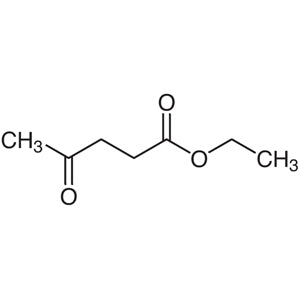
Ethyl Levulinate (TCI L0120), with CAS number 539-88-8, is a chemical compound widely used in laboratory settings for its versatility in organic synthesis and chemical reactions. As a building block in the field of chemistry, it serves as a fundamental component in the development of more complex organic molecules. Its unique molecular structure and stability make it a valuable tool for researchers and chemists aiming to explore various synthetic pathways. Ethyl Levulinate is particularly useful in esterification and substitution reactions, where its reactivity and stability contribute to the success of experimental processes.
One of the key attributes of Ethyl Levulinate is its excellent solubility in organic solvents such as ethyl acetate and ethanol. This property allows it to be easily incorporated into a wide range of chemical procedures. Additionally, its relatively high boiling point facilitates efficient heating and distillation processes in the laboratory. The compound’s chemical stability ensures that it remains effective throughout various reaction steps without significant degradation, making it a reliable choice for both research and industrial applications.
In Indonesian laboratories, Ethyl Levulinate is commonly used in chemical research, especially in the synthesis of organic compounds and the development of pharmaceutical products. It is also frequently employed in educational settings and laboratory testing to enhance understanding of chemical reactions and their mechanisms. Its widespread use in both academic and industrial contexts highlights its importance in the chemical sciences.
TCI brochures (PDF)
- Lipids 2025-12-17 · p. 10
- Organic synthesis applications benefit from Ethyl Levulinate due to its role in esterification and substitution reactions, making it ideal for creating complex organic molecules.
- Pharmaceutical research utilizes Ethyl Levulinate as a building block in the development of new drug compounds, supporting the synthesis of bioactive molecules.
- Educational laboratories use Ethyl Levulinate to teach fundamental chemical reactions and molecular structures, providing hands-on experience for students.
- Industrial chemical processes incorporate Ethyl Levulinate for its stability and reactivity, enhancing the efficiency of production and reaction optimization.
- Analytical testing laboratories rely on Ethyl Levulinate for its consistent properties, ensuring reliable results in chemical analysis and quality control.
| Brand | TCI |
|---|---|
| CAS number | 539-88-8 |
| Molecular formula | — |
| Purity | — |
| Category | Chemistry > Building Blocks > Non-Heterocyclic Building Blocks |
| Pack sizes | Available in various quantities as per standard laboratory supply |
| Physical form | Liquid |
| Storage | Store in a cool, dry place away from direct sunlight and incompatible materials |
Ethyl Levulinate should be stored in a cool, dry environment to maintain its chemical stability and prevent degradation. It is recommended to keep the compound in a sealed container made of glass or high-density polyethylene to minimize exposure to air and moisture. Due to its reactivity, it should be stored away from strong oxidizing agents and incompatible substances. In laboratory settings, proper ventilation is essential when handling Ethyl Levulinate to ensure safe working conditions. Always use appropriate personal protective equipment, such as gloves and safety goggles, to prevent direct contact with the substance. Regular monitoring of storage conditions is advised to ensure the integrity of the material remains unaffected over time.
—
Produk Terkait
-
PropylLevulinate TCI P2631
Regular price From Rp 1.670.550,00Regular price -
ButylLevulinate TCI L0138
Regular price From Rp 557.550,00Regular price -
MethylLevulinate TCI L0044
Regular price From Rp 928.200,00Regular price -
Methyl5-AminolevulinateHydrochloride TCI A1411
Regular price From Rp 584.850,00Regular price