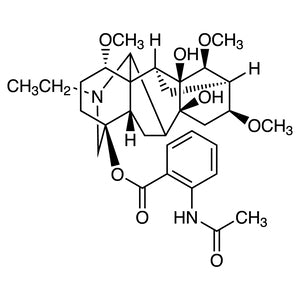
Lappaconitine is an alkaloid compound widely utilized in scientific research across various fields of life sciences and chemistry. As a key component in biochemical studies, it plays a crucial role in laboratory settings where researchers investigate biological mechanisms and chemical properties. This compound is particularly valuable for its ability to serve as a building block in the synthesis of other compounds, enabling deeper exploration of molecular interactions and functional activities. Its presence in research laboratories is essential for both qualitative and quantitative analyses, supporting a wide range of experimental approaches.
Lappaconitine is favored for its complex molecular structure, which allows for in-depth studies of its chemical and biological properties. Its stability under certain conditions makes it a reliable material for laboratory use, while its sensitivity to temperature and humidity necessitates careful handling. These characteristics make it a preferred choice for researchers aiming to maintain the integrity of their experiments. The compound’s neurotoxic properties also make it a valuable tool in pharmacological studies, offering insights into the effects of alkaloids on biological systems.
In Indonesian laboratories, Lappaconitine is commonly used in pharmacology, organic chemistry, and biochemistry research. It is a staple in academic and research institutions across the country, where it supports studies on drug development, toxicology, and molecular biology. Its versatility and relevance in scientific inquiry ensure its continued use in both academic and industrial research settings.
- Pharmacological research benefits from Lappaconitine’s ability to study the effects of alkaloids on neural pathways and receptor interactions.
- Organic chemistry experiments utilize Lappaconitine as a key reagent in the synthesis of complex molecules and structural analysis.
- Biochemical studies employ Lappaconitine to investigate its role in enzyme interactions and metabolic pathways.
- Toxicology research uses Lappaconitine to assess the impact of neurotoxic compounds on cellular and physiological functions.
- Analytical chemistry applications rely on Lappaconitine for quantitative and qualitative analysis in chromatography and spectroscopy techniques.
| Brand | TCI |
|---|---|
| CAS number | 32854-75-4 |
| Molecular formula | — |
| Purity | — |
| Category | Life Science > Biochemicals and Reagents > Alkaloids |
| Pack sizes | Available in various quantities as per standard laboratory requirements |
| Physical form | Solid |
| Storage | Requires controlled temperature and humidity conditions |
Lappaconitine should be stored in a cool, dry place away from direct sunlight and sources of heat. It is recommended to use airtight containers made of glass or high-density polyethylene to prevent exposure to moisture and air. Due to its sensitivity to environmental conditions, it is essential to maintain a stable storage environment to preserve its chemical integrity. Researchers should wear appropriate personal protective equipment, including gloves and safety goggles, when handling this compound. Proper ventilation is necessary to minimize inhalation risks, and all operations should be conducted in a fume hood to ensure safety. Regular monitoring of storage conditions is advised to maintain the compound’s effectiveness and safety in laboratory settings.
—
Produk Terkait
-
TCI B5774 5,10-Bis(4,4,5,5-tetramethyl-1,3,2-dioxaborolan-2-yl)naphtho[1,2-c:5,6-c']bis([1,2,5]oxadiazole)
Regular price Rp 10.255.350,00Regular price -
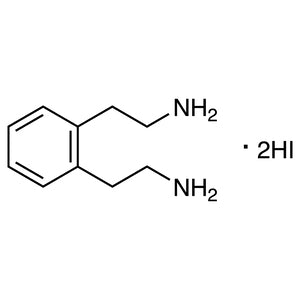
Dihydroiodide TCI B6569
Regular price From Rp 1.936.200,00Regular price -
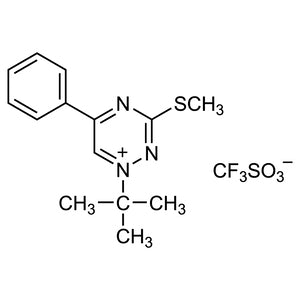
Trifluoromethanesulfonate TCI B7003
Regular price From Rp 1.936.200,00Regular price
![5,10-Bis(4,4,5,5-tetramethyl-1,3,2-dioxaborolan-2-yl)naphtho[1,2-c:5,6-c']bis([1,2,5]oxadiazole) - TCI B5774 - AMI Scientific](http://amiscientific.com/cdn/shop/files/TCI2510B5774.jpg?v=1769180228&width=533)