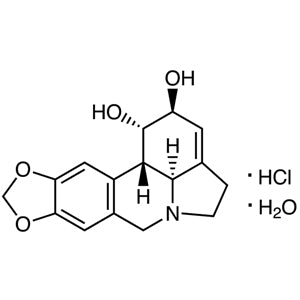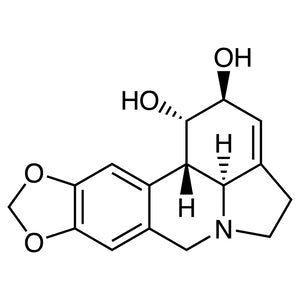
Lycorine is a bioactive alkaloid widely used in scientific research, particularly in the fields of biochemistry and pharmacology. As a key compound in natural product studies, it plays a vital role in understanding the mechanisms of action of various substances. Its presence in plant-derived compounds makes it a valuable resource for researchers exploring the potential of natural extracts. In laboratory settings, Lycorine is often utilized as a starting material for the synthesis of other compounds or as a test substance in experimental protocols. Its versatility and relevance in biological research make it an essential component in many scientific investigations.
Lycorine is valued for its chemical stability and solubility in specific organic solvents, which facilitate its use in a wide range of chemical reactions and isolation processes. Its complex molecular structure also supports advanced analytical techniques such as spectroscopy and chromatography, making it suitable for high-precision studies. These properties ensure that Lycorine remains a reliable and effective reagent in both basic and applied research. Its ability to be incorporated into various experimental designs enhances its utility in diverse scientific applications.
In Indonesian laboratories, Lycorine is commonly used in biochemical, pharmacological, and environmental research. It is frequently employed in studies involving plant extracts, drug development, and toxicological assessments. Its role in analyzing the biological effects of natural compounds makes it a preferred choice for researchers aiming to explore the therapeutic potential of plant-derived substances.
- Biochemical Research: Lycorine is used to study the biochemical pathways and interactions of natural compounds, aiding in the understanding of cellular processes.
- Pharmacological Studies: It serves as a model compound for investigating the pharmacological effects and mechanisms of action of alkaloids.
- Toxicological Analysis: Lycorine is employed to assess the toxicity of natural extracts and evaluate their safety profiles in biological systems.
- Drug Development: It is utilized in the synthesis of new compounds and in screening for potential therapeutic applications.
- Environmental Research: Lycorine is used to analyze the impact of plant-derived compounds on ecological systems and their interactions with environmental factors.
| Brand | TCI |
|---|---|
| CAS number | 476-28-8 |
| Molecular formula | — |
| Purity | — |
| Category | Life Science > Biochemicals and Reagents > Alkaloids |
| Pack sizes | Available in various quantities as per standard laboratory requirements |
| Physical form | Solid |
| Storage | Store in a cool, dry place away from light and moisture |
Lycorine should be stored in a cool, dry environment, away from direct light and moisture to maintain its chemical stability. It is recommended to use airtight containers made of glass or high-density polyethylene to prevent contamination and degradation. Due to its alkaloid nature, it is important to handle it with care, using appropriate personal protective equipment such as gloves and safety goggles. Avoid exposure to incompatible substances and ensure proper ventilation in the laboratory. Regular monitoring of storage conditions is advised to ensure the integrity of the compound over time. Proper labeling and secure storage are essential to prevent accidental use or spillage.
—
Product Categories
Produk Terkait
-
LycorineHydrochlorideMonohydrate TCI L0319
Regular price From Rp 4.133.850,00Regular price -
Tetrahydropalmatine TCI T3650
Regular price From Rp 1.590.750,00Regular price -
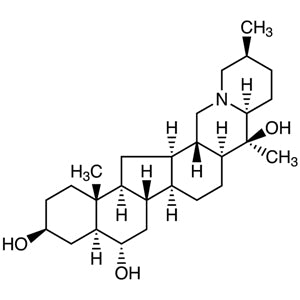
Peimine TCI P2610
Regular price From Rp 1.565.550,00Regular price -
Piperlongumine TCI P2361
Regular price Rp 2.041.200,00Regular price -
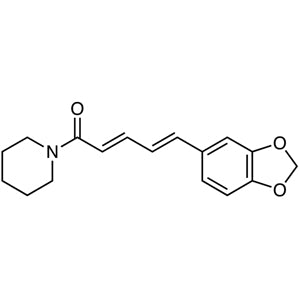
Piperine TCI P0460
Regular price From Rp 769.650,00Regular price -
SophocarpineMonohydrate TCI O0505
Regular price From Rp 2.466.450,00Regular price -
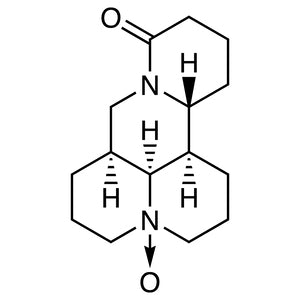
Oxymatrine TCI O0465
Regular price Rp 1.326.150,00Regular price -
Sophoridine TCI M3093
Regular price From Rp 1.405.950,00Regular price