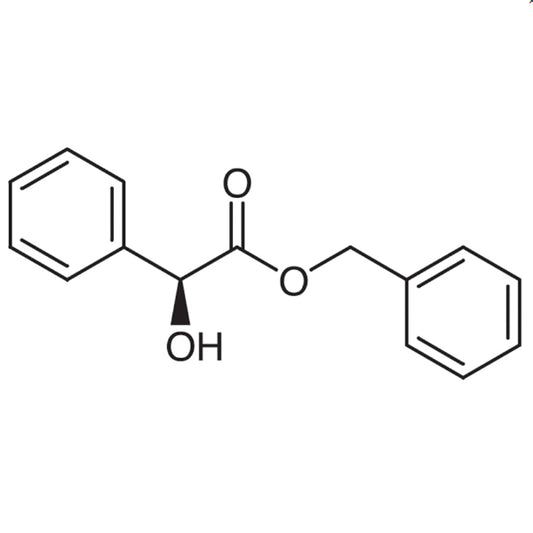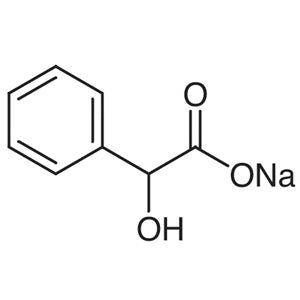
Sodium DL-Mandelate (TCI M0041) is a chemical compound widely used in laboratory settings for its versatility in organic synthesis and chemical reactions. As a building block in the field of chemistry, it plays a crucial role in the development of complex molecules. Its unique molecular structure allows it to participate in various types of chemical transformations, making it an essential reagent for researchers. This compound is particularly valuable for its ability to interact with a wide range of reagents, enabling the synthesis of aromatic and heterocyclic compounds. Its presence in the laboratory is vital for both academic and industrial research.
One of the key properties that make Sodium DL-Mandelate a preferred choice is its solubility in organic solvents, which simplifies the process of purification and reaction execution. It also exhibits chemical stability under controlled conditions, although it remains sensitive to moisture and high temperatures. These characteristics ensure that it can be used effectively in a variety of experimental setups. Additionally, its reactivity allows it to be a key player in substitution and redox reactions, making it a valuable asset in synthetic chemistry.
In Indonesian laboratories, Sodium DL-Mandelate is commonly used in pharmaceutical, organic chemistry, and analytical research. It is a fundamental component in the synthesis of drug compounds, contributing to the development of new therapeutic agents. Its application extends to various scientific investigations, supporting the advancement of chemical knowledge and innovation in the field.
- Organic synthesis where Sodium DL-Mandelate is used for its reactivity in substitution and redox reactions, enabling the creation of complex aromatic and heterocyclic compounds.
- Pharmaceutical research as a key reagent in the development of new drug compounds, supporting the synthesis of therapeutic agents.
- Analytical chemistry applications where its solubility and chemical stability aid in the accurate analysis of organic compounds.
- Teaching and research in chemistry laboratories, where it serves as an essential building block for student experiments and academic studies.
- Industrial chemical processes that require reliable and efficient reagents for the production of specialty chemicals and intermediates.
| Brand | TCI |
|---|---|
| CAS number | 114-21-6 |
| Molecular formula | — |
| Purity | — |
| Category | Chemistry > Building Blocks > Non-Heterocyclic Building Blocks |
| Pack sizes | Available in various quantities as per standard laboratory supply |
| Physical form | Solid |
| Storage | Store in a cool, dry place away from moisture and high temperatures |
Sodium DL-Mandelate should be stored in a cool, dry environment to maintain its chemical stability and prevent degradation. It is recommended to keep it in airtight containers to minimize exposure to moisture and humidity, which can affect its properties. The compound is sensitive to high temperatures, so storage in a controlled room temperature is essential. Laboratory personnel should handle it with care, using appropriate personal protective equipment to ensure safety. It is important to avoid contact with water or moisture during handling to maintain its integrity. Proper storage and handling practices are crucial to ensure the compound remains effective for its intended applications.
—
Produk Terkait
-
IsoamylDL-Mandelate TCI M0716
Regular price Rp 3.843.000,00Regular price -
BenzylDL-Mandelate TCI M0711
Regular price From Rp 1.696.800,00Regular price -
MethylDL-Mandelate TCI M0040
Regular price From Rp 1.353.450,00Regular price -
EthylDL-Mandelate TCI M0039
Regular price From Rp 1.060.500,00Regular price -
Methyl2-Chloro-L-mandelate TCI M2383
Regular price Rp 1.749.300,00Regular price -
Methyl2-Chloro-D-mandelate TCI M2382
Regular price From Rp 1.644.300,00Regular price -
BenzylL-(+)-Mandelate TCI M1355
Regular price From Rp 928.200,00Regular price -
BenzylD-(-)-Mandelate TCI M1354
Regular price From Rp 505.050,00Regular price