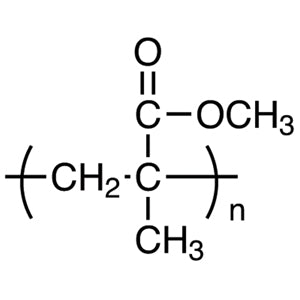
Methyl Methacrylate Polymer (MMAP), with CAS number 9011-14-7, is a versatile chemical compound widely used in scientific experiments related to polymers and macromolecules. As a key material in materials science, it serves as a foundational component in the synthesis and characterization of various polymer-based materials. Its molecular structure allows it to be incorporated into composite materials or used as a building block for other polymer derivatives. In laboratory settings, MMAP is essential for studying polymer behavior, reaction mechanisms, and material properties. Its stability and reactivity make it a valuable tool for researchers in chemistry, engineering, and materials science.
The chemical stability and controlled reactivity of MMAP make it a preferred choice for a wide range of laboratory applications. It exhibits resistance to moisture and can withstand specific temperature ranges, ensuring consistent performance in experimental conditions. These properties allow it to be used in both short-term and long-term studies without significant degradation. Additionally, its non-degradable nature makes it suitable for multiple stages of manufacturing and research processes. Its reliability and consistency contribute to accurate and reproducible results in scientific investigations.
In Indonesian laboratories, MMAP is commonly used in material research, chemical experiments, and engineering applications. Its availability in the local market supports local researchers in conducting experiments without the need for international imports. It plays a critical role in the development of new materials, physical property testing, and polymer-related studies. The widespread use of MMAP in Indonesia highlights its importance in advancing scientific research and technological innovation.
TCI brochures (PDF)
- Biomaterials Research Reagents 2025-02-19 · p. 4
Related TCI products
- TCI M0086 9011-15-8 Isobutyl Methacrylate Polymer
- TCI A0140 9003-05-8 Acrylamide Polymer (containing small amounts of formalin as fungicide) (10% in Water)
- TCI A0260 28107-09-7 4-Aminobenzaldehyde Polymer
- TCI G0264 924-44-7 Ethyl Glyoxylate Polymer form (47% in Toluene)
- TCI P2559 25154-86-3 Poly[2-(Dimethylamino)ethyl Methacrylate] Number Average Molecular Wt. 50000
- TCI P2558 25154-86-3 Poly[2-(Dimethylamino)ethyl Methacrylate] Number Average Molecular Wt. 25000
- Polymer synthesis and characterization for developing new composite materials due to its stable molecular structure and reactivity.
- Material testing and property analysis in chemical and engineering research for evaluating mechanical and thermal characteristics.
- Research in polymer science for studying reaction mechanisms and polymer behavior under different experimental conditions.
- Development of advanced materials in industrial and academic settings for applications in coatings, adhesives, and biomedical fields.
- Educational use in laboratories for teaching polymer chemistry and material science to students and researchers.
| Brand | TCI |
|---|---|
| CAS number | 9011-14-7 |
| Molecular formula | — |
| Purity | — |
| Category | Materials Science > Polymer/Macromolecule Reagents > Polymers |
| Pack sizes | Available in various quantities as per supplier specifications |
| Physical form | Solid or liquid depending on formulation |
| Storage | Store in a cool, dry place away from direct sunlight |
Methyl Methacrylate Polymer should be stored in a cool, dry environment to maintain its chemical stability. It is recommended to keep it in a sealed container to prevent exposure to moisture and contaminants. Avoid direct sunlight and high humidity conditions to ensure long-term integrity. When handling, use appropriate personal protective equipment such as gloves and safety goggles to minimize exposure. Ensure proper ventilation in the workspace to reduce inhalation risks. Store away from incompatible materials such as strong oxidizers or acids to prevent chemical reactions. Regular inspection of storage conditions is advised to maintain the material's quality and safety in the laboratory.
—
Produk Terkait
-
IsobutylMethacrylatePolymer TCI M0086
Regular price From Rp 637.350,00Regular priceRp 445.200,00Sale price From Rp 637.350,00 -
AcrylamidePolymer(containingsmallamountsofformalinasfungicide)(10%inWater) TCI A0140
Regular price Rp 3.075.450,00Regular priceRp 2.150.400,00Sale price Rp 3.075.450,00 -
4-AminobenzaldehydePolymer TCI A0260
Regular price Rp 1.618.050,00Regular priceRp 1.146.600,00Sale price Rp 1.618.050,00 -
EthylGlyoxylatePolymerform(47%inToluene) TCI G0264
Regular price From Rp 1.220.100,00Regular priceRp 868.350,00Sale price From Rp 1.220.100,00 -
Poly[2-(Dimethylamino)ethylMethacrylate]NumberAverageMolecularWt.50000 TCI P2559
Regular price Rp 4.479.300,00Regular priceRp 3.132.150,00Sale price Rp 4.479.300,00 -
Poly[2-(Dimethylamino)ethylMethacrylate]NumberAverageMolecularWt.25000 TCI P2558
Regular price Rp 4.479.300,00Regular priceRp 3.132.150,00Sale price Rp 4.479.300,00 -
Poly[2-(Dimethylamino)ethylMethacrylate]NumberAverageMolecularWt.10000 TCI P2556
Regular price Rp 4.479.300,00Regular priceRp 3.132.150,00Sale price Rp 4.479.300,00 -
Dichloro(1,5-cyclooctadiene)ruthenium(II)Polymer TCI D4792
Regular price From Rp 3.763.200,00Regular priceRp 2.647.050,00Sale price From Rp 3.763.200,00


![TCI P2559 25154-86-3 Poly[2-(Dimethylamino)ethyl Methacrylate] Number Average Molecular Wt. 50000](http://amiscientific.com/cdn/shop/files/TCI2510P2559_6b696b78-752b-471b-aadc-5e76d7673339.jpg?v=1792653640&width=533)
![25154-86-3 Poly[2-(Dimethylamino)ethyl Methacrylate] Number Average Molecular Wt. 50000 - AMI Scientific](http://amiscientific.com/cdn/shop/files/TCI2510P2559.jpg?v=1767136358&width=533)
![TCI P2558 25154-86-3 Poly[2-(Dimethylamino)ethyl Methacrylate] Number Average Molecular Wt. 25000](http://amiscientific.com/cdn/shop/files/TCI2510P2558_4bbff941-94b2-4a7c-bdfa-010112492dd4.jpg?v=1792653637&width=533)
![25154-86-3 Poly[2-(Dimethylamino)ethyl Methacrylate] Number Average Molecular Wt. 25000 - AMI Scientific](http://amiscientific.com/cdn/shop/files/TCI2510P2558.jpg?v=1767136354&width=533)
![TCI P2556 25154-86-3 Poly[2-(Dimethylamino)ethyl Methacrylate] Number Average Molecular Wt. 10000](http://amiscientific.com/cdn/shop/files/TCI2510P2556_3e3625c6-1f26-4110-9888-a07b3213d941.jpg?v=1792653635&width=533)
![25154-86-3 Poly[2-(Dimethylamino)ethyl Methacrylate] Number Average Molecular Wt. 10000 - AMI Scientific](http://amiscientific.com/cdn/shop/files/TCI2510P2556.jpg?v=1767136350&width=533)