TCI D4792 Dichloro(1,5-cyclooctadiene)ruthenium(II) Polymer, CAS 50982-12-2, is a ruthenium catalyst precursor that exists as a coordination polymer, in which ruthenium(II) metal centres are bound to the 1,5-cyclooctadiene diene ligand and bridged by chloride ligands. The material is one of the most practical entry points into ruthenium organometallic chemistry, because both the COD ligand and the chloride ligands are relatively easy to displace with phosphines, N-heterocyclic carbenes, or other donor ligands. In the laboratory it serves as the starting material for preparing active ruthenium catalysts, either generated in situ or isolated as intermediate complexes before further use.
The property that makes this material a preferred choice is its stability as a polymeric solid that is straightforward to handle and store, combined with high ligand lability once it is reacted in a suitable solvent at elevated temperature. The polymeric structure renders it only slightly soluble in common organic solvents, yet the bridging chloride bonds are cleaved when a strong donor ligand is added, releasing soluble, catalytically active mononuclear complexes. Ruthenium itself is recognised as a versatile catalytic metal, contributing to C–H bond activation, transfer hydrogenation, metathesis, and ring-opening polymerisation chemistry.
In Indonesian laboratories this precursor is typically used by synthetic and catalysis research groups at universities and research institutes that build their own ruthenium complexes rather than purchasing each finished catalyst separately. Because a single polymeric solid can be converted into several different catalyst systems simply by changing the donor ligand, it suits method-development work, thesis-level organometallic projects, and screening studies where a range of ruthenium species must be prepared and compared under laboratory conditions.
TCI brochures (PDF)
- C-H Bond Activation Reaction 2025-06-20 · p. 5
Related TCI products
- TCI D2751 52462-29-0 Dichloro(p-cymene)ruthenium(II) Dimer
- TCI T2183 14284-93-6 Tris(2,4-pentanedionato)ruthenium(III)
- TCI R0074 14898-67-0 Ruthenium(III) Chloride Hydrate
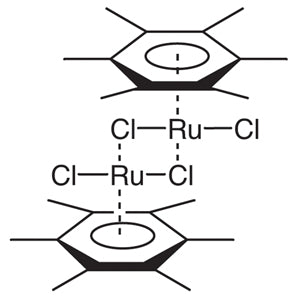
- TCI H1010 67421-02-7 (Hexamethylbenzene)ruthenium(II) Dichloride Dimer
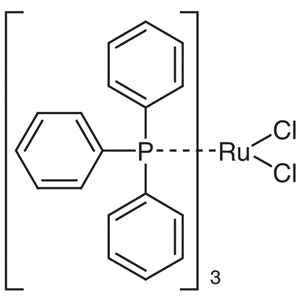
- TCI D1997 15529-49-4 Tris(triphenylphosphine)ruthenium(II) Dichloride
- TCI C3668 2058252-91-6 Chloro(p-cymene)[2-[(di-tert-butylphosphino)methyl]pyridine]ruthenium(II) Triflate
- C–H bond activation studies: the labile COD and chloride ligands open coordination sites at ruthenium(II), allowing the active species needed for direct C–H functionalisation to be generated in situ.
- Preparation of phosphine ruthenium complexes: added phosphine ligands cleave the chloride bridges of the polymer and give soluble mononuclear complexes suitable for isolation and further characterisation.
- Synthesis of N-heterocyclic carbene ruthenium catalysts: the ready displacement of COD by NHC donors makes this precursor a convenient route into carbene-supported ruthenium catalyst families.
- Transfer hydrogenation catalyst development: ruthenium systems derived from this precursor are widely applied in transfer hydrogenation, so the polymer serves as the upstream source of the catalyst.
- Ring-opening and metathesis polymerisation research: ruthenium's versatility in metathesis and polymerisation chemistry lets researchers prepare candidate catalysts from a single stable, easily stored solid precursor.
| Brand | TCI (Tokyo Chemical Industry) |
|---|---|
| CAS number | 50982-12-2 |
| Molecular formula | — |
| Purity | — |
| Category | Chemistry > Catalysis and Inorganic Chemistry > C-H Activation [Catalysis] |
| Pack sizes | available in the standard TCI catalogue pack sizes for this product code (please confirm the required size when ordering) |
| Physical form | solid, coordination polymer; only slightly soluble in common organic solvents |
| Storage | keep as a dry solid in a tightly closed container, away from moisture and heat |
- Product code: D4792
- Chemical name: Dichloro(1,5-cyclooctadiene)ruthenium(II) Polymer
Store the material as a dry solid in its original tightly closed container, protected from moisture, air, and heat, and keep it in a cool, well-ventilated chemical store away from strong donor solvents and incompatible reagents. Amber glass or the supplied original packaging is suitable; for air-sensitive downstream work, transfers are best carried out in a glove box or under an inert atmosphere using a Schlenk line. Weigh and handle the solid in a fume hood while wearing safety glasses, a laboratory coat, and chemical-resistant gloves, avoiding dust formation and skin contact. Keep containers clearly labelled, close them promptly after use, and consult the manufacturer's safety data sheet before first handling and for disposal of residues.
—
Produk Terkait
-
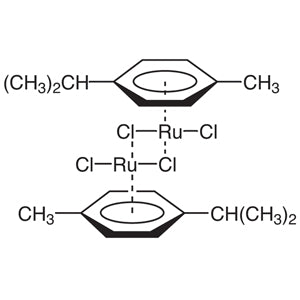
Dichloro(p-cymene)ruthenium(II)Dimer TCI D2751
Regular price Rp 1.565.550,00Regular price -
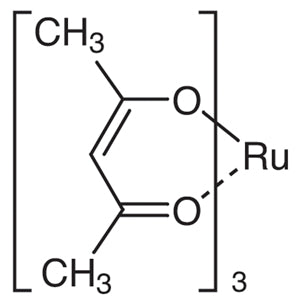
Tris(2,4-pentanedionato)ruthenium(III) TCI T2183
Regular price From Rp 2.359.350,00Regular price -
Ruthenium(III)ChlorideHydrate TCI R0074
Regular price From Rp 1.618.050,00Regular price -
(Hexamethylbenzene)ruthenium(II)DichlorideDimer TCI H1010
Regular price Rp 7.950.600,00Regular price -
Tris(triphenylphosphine)ruthenium(II)Dichloride TCI D1997
Regular price From Rp 1.193.850,00Regular price -
Chloro(p-cymene)[2-[(di-tert-butylphosphino)methyl]pyridine]ruthenium(II)Triflate TCI C3668
Regular price Rp 2.094.750,00Regular price -
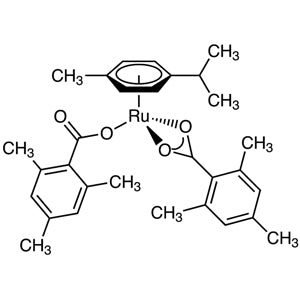
(p-Cymene)bis(mesitylcarboxylato)ruthenium(II) TCI C3456
Regular price Rp 4.771.200,00Regular price -
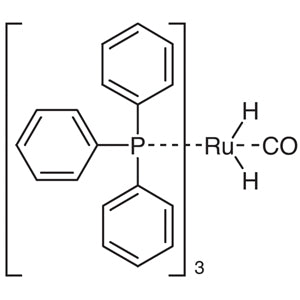
Carbonyl(dihydrido)tris(triphenylphosphine)ruthenium(II) TCI C2251
Regular price From Rp 1.458.450,00Regular price

![Chloro(p-cymene)[2-[(di-tert-butylphosphino)methyl]pyridine]ruthenium(II) Triflate (CAS 2058252-91-6) - TCI C3668 - AMI Scientific](http://amiscientific.com/cdn/shop/files/TCI2510C3668.jpg?v=1767099897&width=533)