Ruthenium(III) Chloride Hydrate (TCI R0074, CAS 14898-67-0) is a chemical compound widely used in catalytic reactions and C-H activation processes. As a key component in inorganic catalysis, it plays a crucial role in facilitating complex chemical transformations by lowering activation energy and enhancing reaction efficiency. This compound is particularly valuable in the field of organometallic chemistry, where it serves as a versatile catalyst for various synthetic pathways. Its ability to mediate C-H bond activation makes it an essential tool for researchers aiming to develop new materials and chemical processes.
The compound exhibits favorable chemical properties that make it a preferred choice for laboratory use. It is stable under specific conditions but remains sensitive to moisture and oxidation, requiring careful handling. Ruthenium(III) Chloride Hydrate has a clear crystalline structure and dissolves readily in organic solvents such as ethylamine and acetone. These characteristics contribute to its effectiveness in catalytic applications, allowing it to be easily incorporated into experimental setups. Its reactivity and solid form also make it a practical option for a wide range of catalytic experiments.
In Indonesian laboratories, Ruthenium(III) Chloride Hydrate is commonly used in chemical research, especially in catalysis and C-H activation studies. It is a key reagent in both organic and inorganic chemistry research, supporting the development of new catalysts and industrial processes. Its significance in advancing chemical innovation makes it a valuable material for academic and industrial research in Indonesia.
TCI brochures (PDF)
- C-H Bond Activation Reaction 2025-06-20 · p. 5
- Metallic Salts 2025-11-06 · p. 4
- Click Chemistry 2026-09-08 · p. 7
- Transition Metal Catalysts 2026-04-10 · p. 8
Related TCI products
- TCI C2201 32993-05-8 Cyclopentadienylbis(triphenylphosphine)ruthenium(II) Chloride
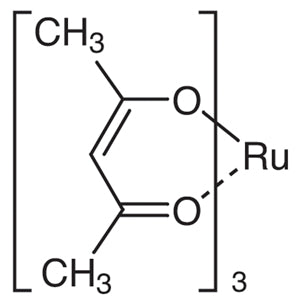
- TCI T2183 14284-93-6 Tris(2,4-pentanedionato)ruthenium(III)
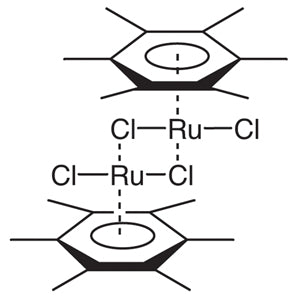
- TCI H1010 67421-02-7 (Hexamethylbenzene)ruthenium(II) Dichloride Dimer
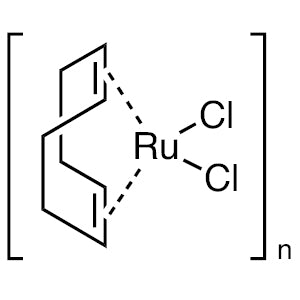
- TCI D4792 50982-12-2 Dichloro(1,5-cyclooctadiene)ruthenium(II) Polymer
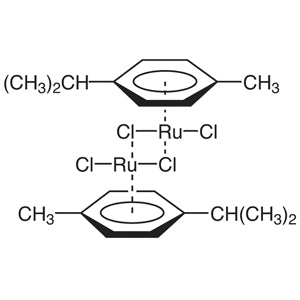
- TCI D2751 52462-29-0 Dichloro(p-cymene)ruthenium(II) Dimer
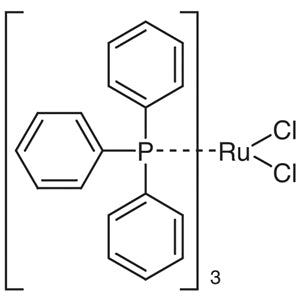
- TCI D1997 15529-49-4 Tris(triphenylphosphine)ruthenium(II) Dichloride
- C-H Activation Research – Ruthenium(III) Chloride Hydrate is ideal for studying C-H bond activation due to its catalytic efficiency and ability to facilitate complex organic transformations.
- Organic Synthesis – The compound is widely used in organic synthesis to promote selective reactions and improve reaction yields in laboratory settings.
- Inorganic Catalysis – Its role in inorganic catalysis makes it suitable for experiments involving transition metal-based catalysts and redox reactions.
- Material Development – Researchers use this compound to develop new materials and explore its potential in advanced chemical processes.
- Industrial Process Optimization – Its catalytic properties make it relevant for optimizing industrial chemical processes and improving production efficiency.
| Brand | TCI |
|---|---|
| CAS number | 14898-67-0 |
| Molecular formula | — |
| Purity | — |
| Category | Chemistry > Catalysis and Inorganic Chemistry > C-H Activation [Catalysis] |
| Pack sizes | — |
| Physical form | Hydrate (solid) |
| Storage | Store in a dry, cool place away from moisture and oxidizing agents |
Ruthenium(III) Chloride Hydrate should be stored in a dry, cool environment to prevent moisture absorption and oxidation. It is recommended to use airtight containers made of materials that resist chemical interaction, such as glass or high-density polyethylene. The compound should be kept away from strong oxidizing agents and direct sunlight to maintain its stability. Laboratory personnel should wear appropriate personal protective equipment, including gloves and safety goggles, when handling this material. Due to its reactivity, it is important to ensure proper ventilation in the workspace and to follow standard laboratory safety protocols to minimize exposure risks.
—
Product Categories
- Catalysis and Inorganic ChemistryC-H Activation [Catalysis]Ruthenium Compounds [C-H Activation]
- Catalysis and Inorganic ChemistryTransition Elements [Catalysis and Inorganic Chemistry]Ruthenium [Catalysis and Inorganic Chemistry]
- Catalysis and Inorganic ChemistryMetallic Salts [Catalysis and Inorganic Chemistry]Chloride Salts [Metallic Salts]
- Chemical BiologyConjugation Chemistry/Click ChemistryCatalysts, Ligands, Reagents [Conjugation Chemistry/Click Chemistry]
Produk Terkait
-
Cyclopentadienylbis(triphenylphosphine)ruthenium(II)Chloride TCI C2201
Regular price From Rp 2.942.100,00Regular priceRp 2.072.700,00Sale price From Rp 2.942.100,00 -
Tris(2,4-pentanedionato)ruthenium(III) TCI T2183
Regular price From Rp 2.411.850,00Regular priceRp 1.702.050,00Sale price From Rp 2.411.850,00 -
(Hexamethylbenzene)ruthenium(II)DichlorideDimer TCI H1010
Regular price Rp 8.003.100,00Regular priceRp 5.612.250,00Sale price Rp 8.003.100,00 -
Dichloro(1,5-cyclooctadiene)ruthenium(II)Polymer TCI D4792
Regular price From Rp 3.763.200,00Regular priceRp 2.647.050,00Sale price From Rp 3.763.200,00 -
Dichloro(p-cymene)ruthenium(II)Dimer TCI D2751
Regular price Rp 1.618.050,00Regular priceRp 1.146.600,00Sale price Rp 1.618.050,00 -
Tris(triphenylphosphine)ruthenium(II)Dichloride TCI D1997
Regular price From Rp 1.246.350,00Regular priceRp 887.250,00Sale price From Rp 1.246.350,00 -
Chloro(p-cymene)[2-[(di-tert-butylphosphino)methyl]pyridine]ruthenium(II)Triflate TCI C3668
Regular price Rp 2.147.250,00Regular priceRp 1.517.250,00Sale price Rp 2.147.250,00 -
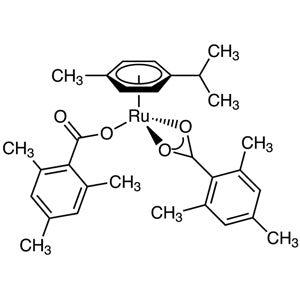
(p-Cymene)bis(mesitylcarboxylato)ruthenium(II) TCI C3456
Regular price Rp 4.823.700,00Regular priceRp 3.388.350,00Sale price Rp 4.823.700,00