

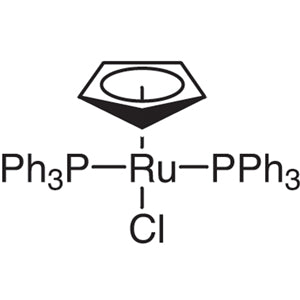
Cyclopentadienylbis(triphenylphosphine)ruthenium(II) Chloride is a ruthenium organometallic complex that binds one cyclopentadienyl ligand, two triphenylphosphine ligands, and one chloride ligand around a single metal center. Half-sandwich complexes of this type are important precatalysts in modern catalytic chemistry, particularly for C–H bond activation reactions that allow direct functionalization of carbon–hydrogen bonds without any need to prefunctionalize the substrate. In the laboratory, this material is used to construct carbon–carbon and carbon–heteroatom bonds through shorter synthetic routes, saving synthetic steps and reducing waste generation.
The characteristics that make this complex valuable are the stability of its coordination environment combined with the ability of the phosphine ligands to dissociate in a controlled manner, generating a vacant coordination site where the substrate binds. The cyclopentadienyl ligand locks the ruthenium center in place and stabilizes a range of oxidation states throughout the catalytic cycle, while the chloride can be replaced by other ligands to tune reactivity. The complex is also stable enough to be handled as a solid on the open bench for short periods, although proper storage remains important for preserving its performance over time.
In Indonesian laboratories, this precatalyst is typically used by university research groups, graduate-level synthetic chemistry programmes, and industrial R&D units working on the preparation of fine chemicals and pharmaceutical intermediates. It suits work where step economy matters, where researchers want to reach a target scaffold with fewer transformations, and where reproducible catalytic behaviour is needed across repeated runs. It is normally handled together with standard inert-atmosphere equipment and stored alongside other air-sensitive organometallic reagents.
TCI brochures (PDF)
- C-H Bond Activation Reaction 2025-06-20 · p. 6
- Transition Metal Catalysts 2026-04-10 · p. 8
- Biomaterials Research Reagents 2025-02-19 · p. 28
Related TCI products
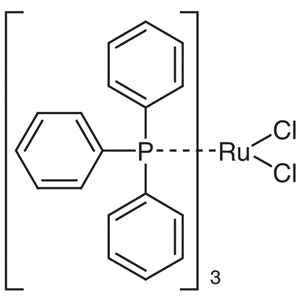
- TCI D1997 15529-49-4 Tris(triphenylphosphine)ruthenium(II) Dichloride
- TCI R0074 14898-67-0 Ruthenium(III) Chloride Hydrate
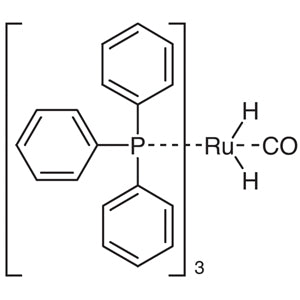
- TCI C2251 25360-32-1 Carbonyl(dihydrido)tris(triphenylphosphine)ruthenium(II)
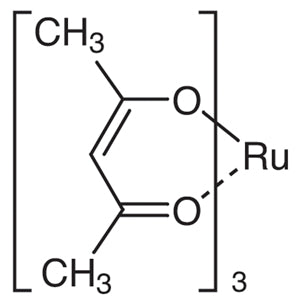
- TCI T2183 14284-93-6 Tris(2,4-pentanedionato)ruthenium(III)
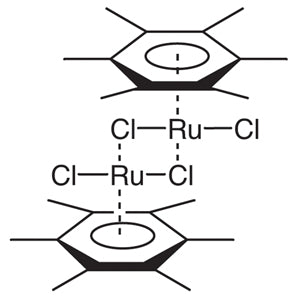
- TCI H1010 67421-02-7 (Hexamethylbenzene)ruthenium(II) Dichloride Dimer
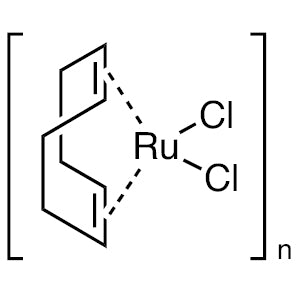
- TCI D4792 50982-12-2 Dichloro(1,5-cyclooctadiene)ruthenium(II) Polymer
- C–H bond activation reactions: the complex generates a vacant coordination site upon controlled phosphine loss, allowing the ruthenium center to engage carbon–hydrogen bonds directly for functionalization.
- Carbon–carbon bond formation: the stable coordination environment supports catalytic cycles that couple fragments without prefunctionalized partners, shortening synthetic routes toward complex target molecules.
- Carbon–heteroatom bond construction: the tunable ruthenium center accommodates substrates bearing nitrogen, oxygen, and other heteroatoms, enabling direct bond formation along a more economical pathway.
- Precatalyst screening and reaction development: the chloride ligand can be exchanged for other ligands, so researchers may systematically tune reactivity while keeping the same ruthenium core.
- Step-economical synthesis of intermediates: by avoiding substrate prefunctionalization, the complex reduces the number of synthetic operations required and lowers the quantity of waste generated per target compound.
| Brand | TCI |
|---|---|
| CAS number | 32993-05-8 |
| Molecular formula | — |
| Purity | — |
| Category | Chemistry > Catalysis and Inorganic Chemistry > C-H Activation [Catalysis] |
| Pack sizes | — |
| Physical form | solid, stable enough for short-term open-bench handling |
| Storage | keep under appropriate storage conditions to preserve catalytic performance |
- Product Code: TCI C2201
Store the complex in a tightly closed original container, kept cool, dry, and away from direct sunlight and heat sources. Although the solid is stable enough for brief handling on the open bench, prolonged exposure to air and moisture should be avoided, and storage under an inert atmosphere is recommended for long-term preservation of catalytic activity. Weigh and transfer the material using clean, dry spatulas and glassware, and return the container promptly after use. Handle the material in a well-ventilated area or fume hood, wearing gloves, safety goggles, and a laboratory coat. Keep the complex separate from strong oxidizing agents, and consult the manufacturer's safety data sheet before use and prior to any waste disposal.
—
Product Categories
- Polymer/Macromolecule ReagentsPolymerization ReagentsControlled Radical Polymerization Reagents
- Biomaterials/Biocompatible Materials Research ReagentsPolymerization Reagents (Initiators, Catalysts, Ligands) [Biomaterials/Biocompatible Materials Research Reagents]Atom Transfer Radical Polymerization (ATRP) Reagents
Produk Terkait
-
Tris(triphenylphosphine)ruthenium(II)Dichloride TCI D1997
Regular price From Rp 1.193.850,00Regular price -
Ruthenium(III)ChlorideHydrate TCI R0074
Regular price From Rp 1.618.050,00Regular price -
Carbonyl(dihydrido)tris(triphenylphosphine)ruthenium(II) TCI C2251
Regular price From Rp 1.458.450,00Regular price -
Tris(2,4-pentanedionato)ruthenium(III) TCI T2183
Regular price From Rp 2.359.350,00Regular price -
(Hexamethylbenzene)ruthenium(II)DichlorideDimer TCI H1010
Regular price Rp 7.950.600,00Regular price -
Dichloro(1,5-cyclooctadiene)ruthenium(II)Polymer TCI D4792
Regular price From Rp 3.710.700,00Regular price -
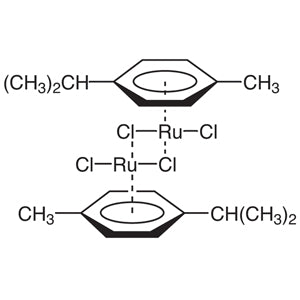
Dichloro(p-cymene)ruthenium(II)Dimer TCI D2751
Regular price Rp 1.565.550,00Regular price -
Chloro(p-cymene)[2-[(di-tert-butylphosphino)methyl]pyridine]ruthenium(II)Triflate TCI C3668
Regular price Rp 2.094.750,00Regular price

![Chloro(p-cymene)[2-[(di-tert-butylphosphino)methyl]pyridine]ruthenium(II) Triflate (CAS 2058252-91-6) - TCI C3668 - AMI Scientific](http://amiscientific.com/cdn/shop/files/TCI2510C3668.jpg?v=1767099897&width=533)