


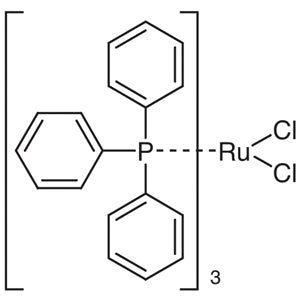
Tris(triphenylphosphine)ruthenium(II) Dichloride (TCI D1997, CAS 15529-49-4) is a chemical compound widely used in catalytic reactions, particularly in C-H activation processes. This compound is a metal complex of ruthenium, playing a crucial role in both organic and inorganic chemical reactions. Its unique structure and reactivity make it an essential reagent in modern synthetic chemistry. In laboratory settings, it is employed as a catalyst for various transformations, including substitution, oxidation, and reduction reactions. Its ability to activate carbon-hydrogen bonds makes it particularly valuable in the development of new catalytic methodologies.
The compound’s high reactivity and structural stability under controlled conditions make it a preferred choice for researchers. Its complex structure, featuring three tripheylphosphine ligands and two chloride ions, contributes to its catalytic efficiency. This composition allows it to participate effectively in a wide range of chemical transformations. The compound is also known for its stability in certain environments, which simplifies its handling and storage. These properties make it a reliable and versatile material for advanced chemical research.
In Indonesian laboratories, Tris(triphenylphosphine)ruthenium(II) Dichloride is commonly used in organic chemistry, catalysis, and the synthesis of complex compounds. Its availability in the local market and growing demand for research in these fields have made it a popular choice among scientists. It is frequently used in academic and industrial research settings to support the development of new chemical processes and materials.
TCI brochures (PDF)
- Precise Polymerization Reagents 2025-01-24 · p. 1
- Oxidizing Agents 2025-06-11 · p. 9
- C-H Bond Activation Reaction 2025-06-20 · p. 6
- Transition Metal Catalysts 2026-04-10 · p. 8
- Biomaterials Research Reagents 2025-02-19 · p. 28
Related TCI products
- TCI C2201 32993-05-8 Cyclopentadienylbis(triphenylphosphine)ruthenium(II) Chloride
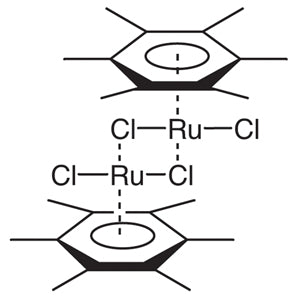
- TCI H1010 67421-02-7 (Hexamethylbenzene)ruthenium(II) Dichloride Dimer
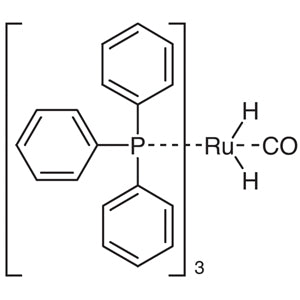
- TCI C2251 25360-32-1 Carbonyl(dihydrido)tris(triphenylphosphine)ruthenium(II)
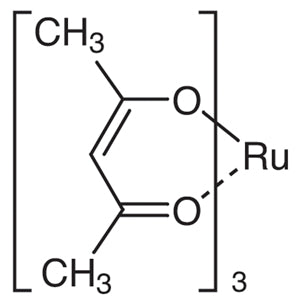
- TCI T2183 14284-93-6 Tris(2,4-pentanedionato)ruthenium(III)
- TCI R0074 14898-67-0 Ruthenium(III) Chloride Hydrate
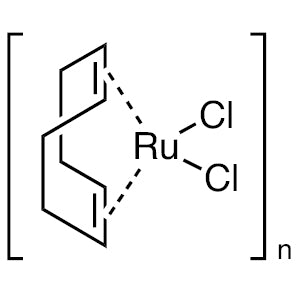
- TCI D4792 50982-12-2 Dichloro(1,5-cyclooctadiene)ruthenium(II) Polymer
- Organic chemistry research benefits from this compound due to its role in C-H activation, enabling the synthesis of complex organic molecules with high selectivity.
- Catalytic reactions in the laboratory rely on this material for its ability to facilitate substitution and oxidation processes efficiently.
- In inorganic chemistry, it is used to study the behavior of ruthenium complexes and their reactivity in various chemical environments.
- The compound supports the development of new catalytic methods, making it valuable for innovation in chemical synthesis.
- Indonesian laboratories use it extensively for the synthesis of complex compounds, where its catalytic properties are essential for achieving desired chemical outcomes.
From the TCI brochure
- living radical polymerization of a methacrylate-type monomer with a benzoyl-type initiator (structures drawn)
| Brand | TCI |
|---|---|
| CAS number | 15529-49-4 |
| Molecular formula | — |
| Purity | — |
| Category | Chemistry > Catalysis and Inorganic Chemistry > C-H Activation [Catalysis] |
| Pack sizes | Available in various quantities as per supplier specifications |
| Physical form | Solid powder |
| Storage | Store in a cool, dry place away from moisture and light |
This compound should be stored in a cool, dry environment to maintain its stability and effectiveness. It is recommended to use airtight containers to prevent exposure to moisture and air, which may affect its reactivity. Due to its chemical nature, it should be handled with appropriate personal protective equipment, such as gloves and safety goggles, to ensure laboratory safety. It is important to store it away from incompatible substances to avoid any potential chemical reactions. Proper labeling and storage conditions are essential to ensure its safe use and long-term availability in laboratory settings.
—
Product Categories
- Catalysis and Inorganic ChemistryC-H Activation [Catalysis]Ruthenium Compounds [C-H Activation]
- Catalysis and Inorganic ChemistryOxidation [Catalysis]Metal Catalysts for Oxidation
- Catalysis and Inorganic ChemistryTransition Elements [Catalysis and Inorganic Chemistry]Ruthenium [Catalysis and Inorganic Chemistry]
- Polymer/Macromolecule ReagentsPolymerization ReagentsControlled Radical Polymerization Reagents
- Biomaterials/Biocompatible Materials Research ReagentsPolymerization Reagents (Initiators, Catalysts, Ligands) [Biomaterials/Biocompatible Materials Research Reagents]Atom Transfer Radical Polymerization (ATRP) Reagents
Produk Terkait
-
Cyclopentadienylbis(triphenylphosphine)ruthenium(II)Chloride TCI C2201
Regular price From Rp 2.942.100,00Regular priceRp 2.072.700,00Sale price From Rp 2.942.100,00 -
(Hexamethylbenzene)ruthenium(II)DichlorideDimer TCI H1010
Regular price Rp 8.003.100,00Regular priceRp 5.612.250,00Sale price Rp 8.003.100,00 -
Carbonyl(dihydrido)tris(triphenylphosphine)ruthenium(II) TCI C2251
Regular price From Rp 1.510.950,00Regular priceRp 1.072.050,00Sale price From Rp 1.510.950,00 -
Tris(2,4-pentanedionato)ruthenium(III) TCI T2183
Regular price From Rp 2.411.850,00Regular priceRp 1.702.050,00Sale price From Rp 2.411.850,00 -
Ruthenium(III)ChlorideHydrate TCI R0074
Regular price From Rp 1.670.550,00Regular priceRp 1.183.350,00Sale price From Rp 1.670.550,00 -
Dichloro(1,5-cyclooctadiene)ruthenium(II)Polymer TCI D4792
Regular price From Rp 3.763.200,00Regular priceRp 2.647.050,00Sale price From Rp 3.763.200,00 -
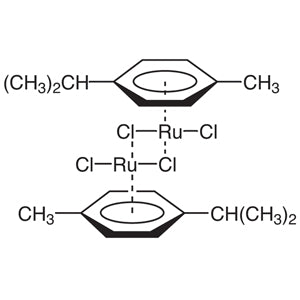
Dichloro(p-cymene)ruthenium(II)Dimer TCI D2751
Regular price Rp 1.618.050,00Regular priceRp 1.146.600,00Sale price Rp 1.618.050,00 -
Chloro(p-cymene)[2-[(di-tert-butylphosphino)methyl]pyridine]ruthenium(II)Triflate TCI C3668
Regular price Rp 2.147.250,00Regular priceRp 1.517.250,00Sale price Rp 2.147.250,00







![TCI C3668 2058252-91-6 Chloro(p-cymene)[2-[(di-tert-butylphosphino)methyl]pyridine]ruthenium(II) Triflate](http://amiscientific.com/cdn/shop/files/TCI2510C3668_2baa3440-02ad-49c1-8602-e7bd64ee94b5.jpg?v=1792635472&width=533)
![Chloro(p-cymene)[2-[(di-tert-butylphosphino)methyl]pyridine]ruthenium(II) Triflate (CAS 2058252-91-6) - TCI C3668 - AMI Scientific](http://amiscientific.com/cdn/shop/files/TCI2510C3668.jpg?v=1767099897&width=533)