

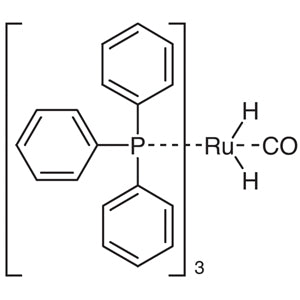
TCI C2251 Carbonyl(dihydrido)tris(triphenylphosphine)ruthenium(II) is a low-valent ruthenium complex bearing one carbonyl ligand, two hydride ligands, and three triphenylphosphine ligands around the metal centre. It is one of the best known catalysts in C–H bond activation chemistry, particularly as the catalyst for the Murai reaction, which allows aromatic C–H bonds to be added directly across olefins with the assistance of a directing group. In modern synthetic laboratories, a catalyst of this kind opens routes to carbon–carbon bond formation without first having to install a leaving group or prepare a stoichiometric organometallic reagent.
The advantage that makes this complex the preferred choice lies in its two hydride ligands, which are readily released to generate a coordinatively unsaturated ruthenium species that is highly active within the catalytic cycle. The carbonyl ligand stabilises the metal centre in a low oxidation state, while the triphenylphosphine ligands supply electron density together with the steric bulk that governs reaction selectivity. This combination yields a catalyst with high activity at low loading and good functional group tolerance, so complex substrates can be carried through a coupling step without extensive protecting-group strategies.
As a solid, the complex can be handled briefly in air, which makes it practical for use in Indonesian research laboratories, university organic synthesis groups, and industrial R&D units that do not operate a glovebox for every procedure. It is typically weighed out for directed C–H functionalisation experiments, method development work, and the preparation of intermediates on a research scale, where a well-characterised commercial catalyst removes the need to prepare a ruthenium precursor in-house.
Advantages (TCI brochure)
- Catalyzes direct addition of aromatic ketone C-H bonds to olefins
- Used in catalytic amount, no halogenated compounds needed
TCI brochures (PDF)
- C-H Bond Activation Reaction 2025-06-20 · p. 2
- Transition Metal Catalysts 2026-04-10 · p. 8
Related TCI products
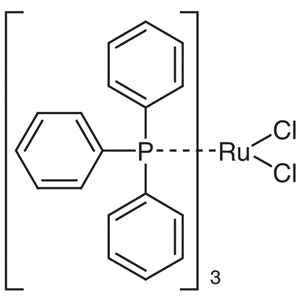
- TCI D1997 15529-49-4 Tris(triphenylphosphine)ruthenium(II) Dichloride
- TCI C2201 32993-05-8 Cyclopentadienylbis(triphenylphosphine)ruthenium(II) Chloride
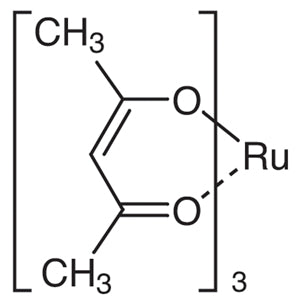
- TCI T2183 14284-93-6 Tris(2,4-pentanedionato)ruthenium(III)
- TCI R0074 14898-67-0 Ruthenium(III) Chloride Hydrate
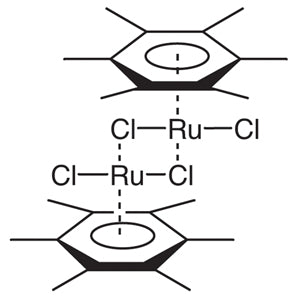
- TCI H1010 67421-02-7 (Hexamethylbenzene)ruthenium(II) Dichloride Dimer
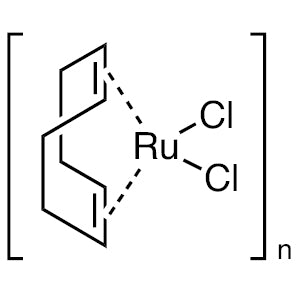
- TCI D4792 50982-12-2 Dichloro(1,5-cyclooctadiene)ruthenium(II) Polymer
- Murai reaction catalysis: the complex is the classical catalyst for directed addition of aromatic C–H bonds to olefins, giving reliable conversion under established, widely reproduced reaction conditions.
- Directed C–H functionalisation studies: the coordinatively unsaturated ruthenium species formed after hydride loss engages substrates bearing directing groups, enabling regioselective bond formation on aromatic rings.
- Carbon–carbon bond construction: researchers use it to couple fragments without preparing leaving groups or stoichiometric organometallic reagents, shortening synthetic sequences and reducing overall waste generation.
- Synthetic methodology development: its high activity at low catalyst loading makes it a useful benchmark when screening new directing groups, olefin partners, or solvent and temperature regimes.
- Preparation of functionalised intermediates: good functional group tolerance allows elaborate substrates to be carried through a catalytic step without extensive protection and deprotection sequences beforehand.
From the TCI brochure
- Direct addition of C-H bonds of aromatic ketones to olefins
| Brand | TCI, product code C2251 |
|---|---|
| CAS number | 25360-32-1 |
| Molecular formula | — |
| Purity | — |
| Category | Chemistry > Catalysis and Inorganic Chemistry > C-H Activation [Catalysis] |
| Pack sizes | available in the catalogue pack sizes offered by TCI for this product code |
| Physical form | solid |
| Storage | keep in a tightly closed container, cool and away from air and moisture for long-term storage |
Data from the TCI brochure
| Loading katalis | 2 mol% (Toluene, reflux, 2 h) |
|---|
Source: TCI brochure R5107 (2025-06-20)
Store the complex in its original tightly closed container, in a cool, dry place away from light, oxidising agents, and sources of ignition. Although the solid can be handled briefly in air, prolonged exposure to air and moisture should be avoided; for long-term storage keep the container sealed, and use inert gas protection or a glovebox when transferring material for sensitive catalytic work. Weigh and handle the compound in a fume hood while wearing safety glasses, gloves, and a laboratory coat. Close the container immediately after use, label all transfer vessels clearly, and dispose of residues and contaminated consumables as chemical waste in accordance with the applicable institutional procedures.
—
Produk Terkait
-
Tris(triphenylphosphine)ruthenium(II)Dichloride TCI D1997
Regular price From Rp 1.193.850,00Regular price -
Cyclopentadienylbis(triphenylphosphine)ruthenium(II)Chloride TCI C2201
Regular price From Rp 2.889.600,00Regular price -
Tris(2,4-pentanedionato)ruthenium(III) TCI T2183
Regular price From Rp 2.359.350,00Regular price -
Ruthenium(III)ChlorideHydrate TCI R0074
Regular price From Rp 1.618.050,00Regular price -
(Hexamethylbenzene)ruthenium(II)DichlorideDimer TCI H1010
Regular price Rp 7.950.600,00Regular price -
Dichloro(1,5-cyclooctadiene)ruthenium(II)Polymer TCI D4792
Regular price From Rp 3.710.700,00Regular price -
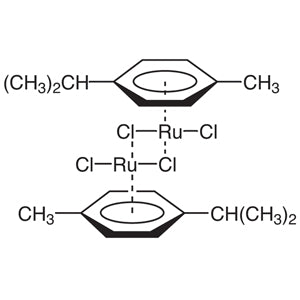
Dichloro(p-cymene)ruthenium(II)Dimer TCI D2751
Regular price Rp 1.565.550,00Regular price -
Chloro(p-cymene)[2-[(di-tert-butylphosphino)methyl]pyridine]ruthenium(II)Triflate TCI C3668
Regular price Rp 2.094.750,00Regular price


![Chloro(p-cymene)[2-[(di-tert-butylphosphino)methyl]pyridine]ruthenium(II) Triflate (CAS 2058252-91-6) - TCI C3668 - AMI Scientific](http://amiscientific.com/cdn/shop/files/TCI2510C3668.jpg?v=1767099897&width=533)