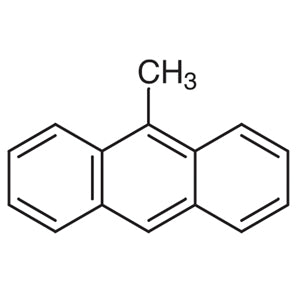
9-Methylanthracene is a chemical compound that plays a crucial role in laboratory settings, particularly in organic chemistry research. As a non-heterocyclic building block, it serves as a fundamental component in the synthesis of complex organic molecules. Its structural stability and reactivity make it a versatile tool for chemists aiming to develop new compounds with specific properties. This compound is widely used in academic and industrial laboratories to explore chemical reactions and create novel materials with tailored characteristics.
The unique properties of 9-Methylanthracene, including its non-polar nature and ability to participate in various chemical reactions such as substitution, reduction, and oxidation, make it a preferred choice for synthetic chemists. Its molecular structure allows it to act as a reliable starting material in the creation of compounds with high stability and functional groups. These characteristics are essential for applications in pharmaceutical research, material science, and chemical engineering, where precise control over molecular structure is required.
In Indonesian laboratories, 9-Methylanthracene is commonly used by researchers and students working on organic synthesis projects. It is an essential reagent in both basic and applied chemistry programs, supporting the development of new compounds and materials. Its relevance extends to various research fields, including pharmaceuticals and polymer science, where it contributes to the advancement of scientific knowledge and technological innovation.
- Organic synthesis is a key application where 9-Methylanthracene is used to build complex molecular structures due to its stable and reactive nature.
- Pharmaceutical research benefits from this compound as it is used in the development of antitumor agents and other bioactive molecules.
- Polymer science utilizes 9-Methylanthracene as a building block for creating specialized materials with desired physical and chemical properties.
- Material characterization studies often incorporate this compound to analyze its behavior under different chemical and physical conditions.
- Educational institutions use 9-Methylanthracene in teaching laboratories to demonstrate fundamental chemical reactions and synthetic techniques.
| Brand | TCI |
|---|---|
| CAS number | 779-02-2 |
| Molecular formula | — |
| Purity | — |
| Category | Chemistry > Building Blocks > Non-Heterocyclic Building Blocks |
| Pack sizes | Available in various quantities as per standard laboratory supply |
| Physical form | Solid |
| Storage | Store in a cool, dry place away from light and incompatible materials |
9-Methylanthracene should be stored in a cool, dry environment, away from direct sunlight and sources of heat. It is recommended to keep it in a tightly sealed container to prevent contamination and maintain its chemical integrity. Due to its non-polar nature, it is advisable to store it in airtight glass or plastic containers that are resistant to chemical reactions. In laboratory settings, it should be handled with appropriate personal protective equipment, such as gloves and safety goggles, to ensure safety. Proper labeling of storage containers is essential to avoid accidental exposure and ensure safe handling. Regular inspection of storage conditions is necessary to maintain the quality and usability of the compound.
—
Produk Terkait
-
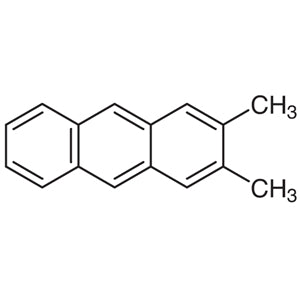
2,3-Dimethylanthracene TCI D2979
Regular price Rp 5.830.650,00Regular price -
9,10-Dimethylanthracene TCI D0252
Regular price From Rp 1.087.800,00Regular price -
10,10-Dimethylanthracen-9(10H)-one TCI D5841
Regular price From Rp 1.829.100,00Regular price -
9-Vinylanthracene TCI V0130
Regular price From Rp 2.545.200,00Regular price -
2-tert-Butylanthracene TCI B3541
Regular price From Rp 2.227.050,00Regular price -
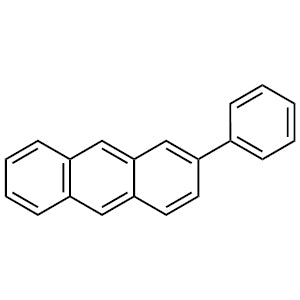
2-Phenylanthracene TCI P2783
Regular price Rp 3.472.350,00Regular price -
9-Phenylanthracene TCI P0138
Regular price From Rp 1.829.100,00Regular price -
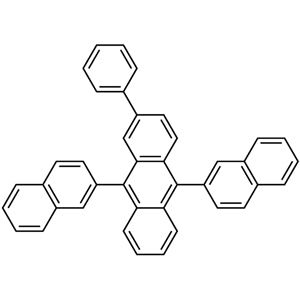
9,10-Di(naphthalen-2-yl)-2-phenylanthracene TCI D5627
Regular price Rp 5.539.800,00Regular price