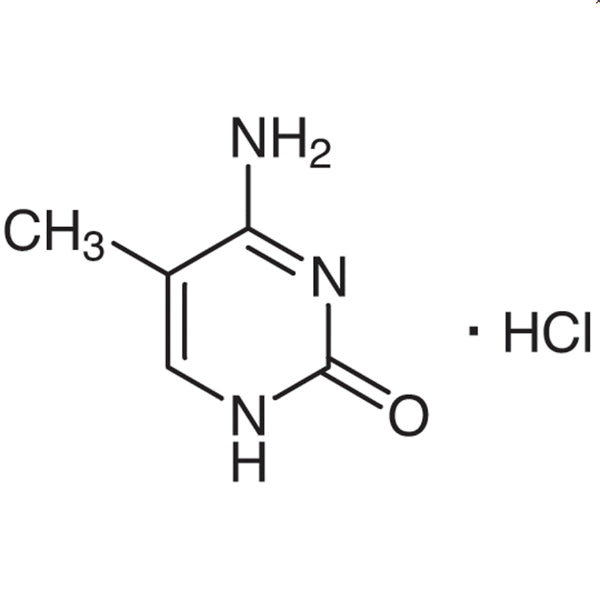
5-Methylcytosine Hydrochloride is a chemical compound widely used in biochemical and molecular biology experiments. As a derivative of cytosine, one of the essential nucleotides in DNA and RNA, it plays a crucial role in various laboratory applications. This compound is commonly utilized as a building block for the synthesis of complex molecules, enabling researchers to explore chemical reactivity and molecular interactions. Its presence in DNA modification studies makes it an indispensable tool for understanding epigenetic mechanisms and nucleotide modifications.
The compound’s chemical properties, including its stability and reactivity, make it a preferred choice for laboratory use. It exhibits high specificity in interacting with enzymes and proteins, which is vital for precise experimental outcomes. Its solubility in organic solvents further enhances its utility in separation and analytical procedures. These characteristics ensure that it is suitable for high-precision chemical reactions and molecular studies.
In Indonesian laboratories, 5-Methylcytosine Hydrochloride is extensively used in molecular biology research, particularly in DNA modification studies and gene expression analysis. Many research institutions and universities rely on this compound for advancing their studies in epigenetics and nucleotide chemistry. Its reliability and performance make it a standard component in biochemical and molecular biology laboratories across the country.
- DNA modification studies benefit from 5-Methylcytosine Hydrochloride as it is essential for investigating epigenetic mechanisms and methylation patterns in genetic material.
- Molecular biology experiments often use this compound for synthesizing complex nucleotide derivatives and studying their interactions with biological systems.
- Gene expression analysis relies on this reagent to understand how DNA modifications affect transcriptional activity and regulatory processes.
- Chemical reactivity testing utilizes its stable yet reactive nature to explore molecular interactions and reaction pathways in controlled environments.
- Nucleotide synthesis projects incorporate this compound as a key building block for creating modified nucleotides with specific functional properties.
| Brand | TCI |
|---|---|
| CAS number | 58366-64-6 |
| Molecular formula | — |
| Purity | — |
| Category | Life Science > Biochemicals and Reagents > Nucleosides, Nucleotides, Oligonucleotides |
| Pack sizes | Available in various quantities as per supplier specifications |
| Physical form | Solid powder |
| Storage | Store in a cool, dry place away from light and moisture |
5-Methylcytosine Hydrochloride should be stored in a cool, dry environment, away from direct light and moisture. It is recommended to keep the compound in a sealed container to prevent exposure to air and humidity. Due to its chemical reactivity, it should be handled with care, using appropriate personal protective equipment such as gloves and safety goggles. It is important to ensure that the storage area is well-ventilated to avoid any potential hazards. The compound should not be stored near incompatible materials, and all laboratory safety protocols should be followed to maintain a safe working environment.
—
Produk Terkait
-
N4-Benzoylcytosine TCI B3169
Regular price Rp 823.200,00Regular price -
N4-Acetylcytosine TCI A2089
Regular price From Rp 584.850,00Regular price -
6-Azauracil TCI A0558
Regular price From Rp 557.550,00Regular price -
AdenineSulfateDihydrate TCI A0151
Regular price From Rp 3.021.900,00Regular price -
AdenineHydrochlorideHemihydrate TCI A0150
Regular price From Rp 664.650,00Regular price -
Adenine TCI A0149
Regular price From Rp 1.696.800,00Regular price -
Xanthine TCI X0004
Regular price Rp 1.803.900,00Regular price -
Uracil TCI U0013
Regular price From Rp 689.850,00Regular price