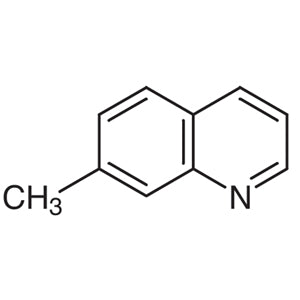
7-Methylquinoline is a chemical compound classified under the heterocyclic category, featuring a quinoline core with a methyl group at the 7-position. This compound plays a crucial role in laboratory settings, particularly in organic chemistry and pharmacology, where it serves as a fundamental building block for the synthesis of complex molecules. Its structural versatility makes it an essential component in the development of compounds with specific biological activities. Due to its chemical stability and controlled reactivity, 7-Methylquinoline is widely used in various synthetic reactions, including substitution and cyclization processes.
The compound's chemical properties allow it to react with a range of functional groups such as halogens, hydroxyls, and amines, making it highly adaptable in synthetic pathways. Its formulation contains up to 25% 5-form, which enhances its stability and safety during handling compared to purer forms. This controlled impurity level ensures consistent performance in laboratory applications without compromising the desired chemical outcomes. The availability in solid form and diverse packaging options facilitates its use across different experimental scales.
In Indonesian laboratories, 7-Methylquinoline is commonly utilized in organic chemistry research, drug development, and studies on the biological activities of heterocyclic compounds. Its presence in academic and industrial research settings underscores its importance in advancing chemical innovation and pharmaceutical discovery within the region.
Related TCI products
- TCI M3100 7470-38-4 4-(4-Morpholinyl)benzoic Acid (contains 05% N,N-Dimethylformamide at maximum)
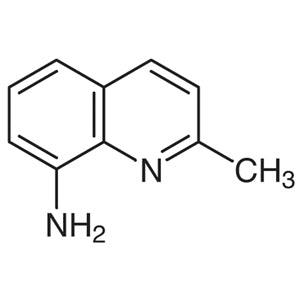
- TCI A0416 18978-78-4 8-Amino-2-methylquinoline
- TCI T1409 88565-88-2 4,6,8-Trimethylquinoline
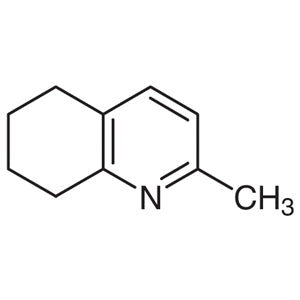
- TCI T1408 2617-98-3 5,6,7,8-Tetrahydro-2-methylquinoline
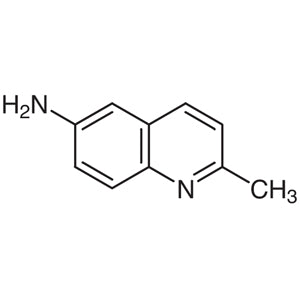
- TCI A1047 65079-19-8 6-Amino-2-methylquinoline
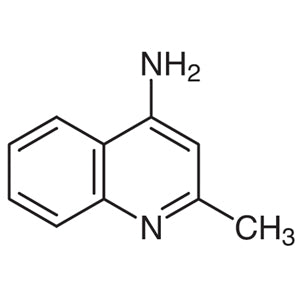
- TCI A0415 6628-04-2 4-Amino-2-methylquinoline
- Organic synthesis research utilizes 7-Methylquinoline as a key building block for creating complex molecular structures due to its reactivity and structural versatility.
- Pharmaceutical development benefits from this compound's ability to participate in various chemical reactions, aiding in the design of bioactive molecules with targeted therapeutic effects.
- Heterocyclic compound analysis involves the use of 7-Methylquinoline as a reference standard for identifying and characterizing similar chemical structures.
- Bioactive molecule synthesis leverages the compound's functional reactivity to create compounds with specific biological activities for drug discovery.
- Industrial chemical processes incorporate 7-Methylquinoline for its stability and controlled impurity levels, ensuring reliable outcomes in large-scale synthesis.
| Brand | TCI |
|---|---|
| CAS number | 612-60-2 |
| Molecular formula | — |
| Purity | — |
| Category | Chemistry > Building Blocks > Heterocyclic Building Blocks |
| Pack sizes | Available in various packaging options for different experimental scales |
| Physical form | Solid |
| Storage | Store in a cool, dry place away from light and incompatible materials |
7-Methylquinoline should be stored in a cool, dry environment, away from direct sunlight and sources of heat. It is recommended to keep the compound in a sealed container to prevent moisture absorption and maintain its chemical integrity. Storage should be in a well-ventilated area, away from incompatible substances such as strong oxidizers or acids. Proper personal protective equipment, including gloves and safety goggles, should be worn during handling to ensure safety. The compound's controlled impurity level contributes to its stability, but standard laboratory safety protocols should still be followed to minimize risk. Regular inspection of storage conditions is advised to ensure optimal preservation of the material.
—
Produk Terkait
-
4-(4-Morpholinyl)benzoicAcid(contains05%N,N-Dimethylformamideatmaximum) TCI M3100
Regular price From Rp 848.400,00Regular price -
8-Amino-2-methylquinoline TCI A0416
Regular price From Rp 1.273.650,00Regular price -
4,6,8-Trimethylquinoline TCI T1409
Regular price Rp 5.644.800,00Regular price -
5,6,7,8-Tetrahydro-2-methylquinoline TCI T1408
Regular price Rp 2.016.000,00Regular price -
6-Amino-2-methylquinoline TCI A1047
Regular price Rp 3.976.350,00Regular price -
4-Amino-2-methylquinoline TCI A0415
Regular price Rp 3.207.750,00Regular price -
2-Methylquinoline TCI Q0005
Regular price From Rp 452.550,00Regular price -
1-Methylquinolin-2(1H)-one TCI M3591
Regular price From Rp 3.127.950,00Regular price