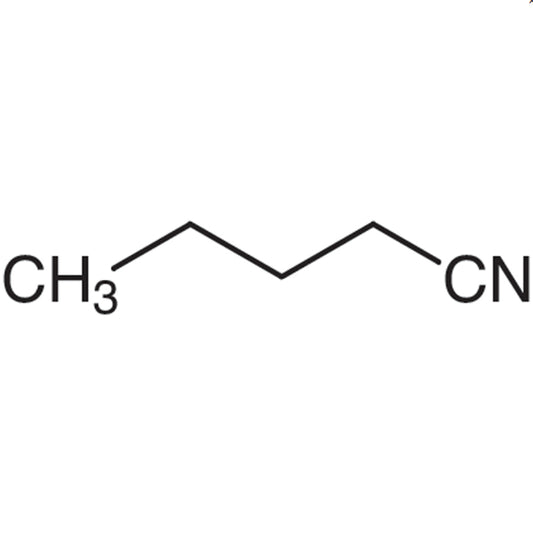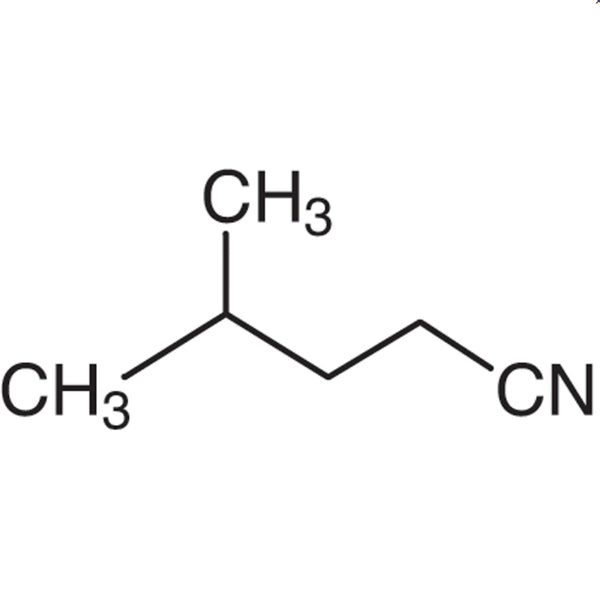
Isocapronitrile (TCI M0458), with CAS number 542-54-1, is a chemical compound widely used in laboratory settings as a building block for various chemical reactions and molecular synthesis. It belongs to the category of non-heterocyclic building blocks and is essential for creating complex organic molecules. Its nitrile functional group provides high reactivity, making it a versatile reagent in synthetic chemistry. This compound is commonly utilized in the development of esters, amides, and heterocyclic compounds, which are critical in pharmaceutical and material science research.
Isocapronitrile is valued for its chemical stability under controlled conditions and its reactivity towards water and other reagents. These properties make it ideal for reactions requiring precision and speed. Its high boiling point ensures it remains stable during high-temperature processes, which is essential for many synthetic procedures. Additionally, its predictable chemical behavior allows chemists to control reaction outcomes effectively. These characteristics make it a preferred choice for researchers working in both academic and industrial laboratories.
In Indonesian laboratories, Isocapronitrile is frequently used by researchers and students in organic chemistry experiments. It plays a key role in the synthesis of new compounds, reactivity testing, and the development of chemical processing techniques. Its reliability and effectiveness have made it a staple in laboratory workflows, supporting both educational and research activities. Its consistent performance ensures that experiments yield accurate and reproducible results.
- Organic synthesis is a key application where Isocapronitrile is used to build complex molecules due to its reactive nitrile group and versatility in chemical reactions.
- Pharmaceutical research benefits from Isocapronitrile as it is used to create esters and amides, which are essential components in drug development.
- Material science applications utilize Isocapronitrile for the production of polymers and other synthetic materials due to its chemical stability and reactivity.
- Chemical processing techniques rely on Isocapronitrile for its high boiling point, allowing it to be used in high-temperature reactions without degradation.
- Educational laboratories use Isocapronitrile for teaching and research purposes, providing students with hands-on experience in organic chemistry synthesis.
| Brand | TCI |
|---|---|
| CAS number | 542-54-1 |
| Molecular formula | — |
| Purity | — |
| Category | Chemistry > Building Blocks > Non-Heterocyclic Building Blocks |
| Pack sizes | — |
| Physical form | Liquid |
| Storage | Store in a cool, dry place away from moisture and incompatible materials |
Isocapronitrile should be stored in a cool, dry environment to maintain its chemical stability. It is recommended to use airtight containers to prevent exposure to moisture and air, which can affect its reactivity. Due to its high reactivity with water and other chemicals, it should be kept away from incompatible substances such as strong acids or bases. Proper labeling of storage containers is essential for safety and identification. Laboratory personnel should wear appropriate personal protective equipment when handling this compound. Regular monitoring of storage conditions ensures the material remains in optimal condition for use in chemical experiments.
—
Produk Terkait
-
Valeronitrile TCI V0008
Regular price From Rp 743.400,00Regular price -
2-Bromo-2-(bromomethyl)glutaronitrile TCI B5387
Regular price From Rp 875.700,00Regular price -
5-Bromovaleronitrile TCI B1453
Regular price From Rp 1.087.800,00Regular price -
3-Bromobutyronitrile TCI B1452
Regular price From Rp 1.961.400,00Regular price -
4-Bromo-2,2-diphenylbutyronitrile TCI B1331
Regular price From Rp 875.700,00Regular price -
Butyronitrile TCI B0768
Regular price From Rp 610.050,00Regular price -
4-Bromobutyronitrile TCI B0565
Regular price From Rp 1.060.500,00Regular price -
Suberonitrile TCI S0298
Regular price From Rp 980.700,00Regular price