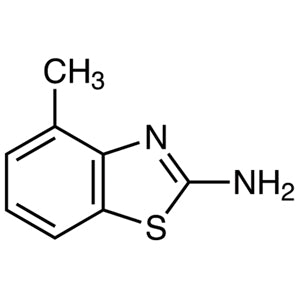
2-Methylbenzothiazole is a chemical compound widely used as a foundational material in various chemical reactions and the synthesis of complex molecules. Its heterocyclic structure makes it highly relevant in the field of organic chemistry. In the laboratory, this compound serves as a precursor for the creation of other compounds with applications in pharmaceuticals, materials science, and chemical industries. Due to its stable and reactive nature, 2-Methylbenzothiazole is a preferred choice for research requiring heterocyclic structures.
The chemical properties of 2-Methylbenzothiazole allow for substitution reactions and ring-opening reactions, making it versatile in synthetic processes. It exhibits good solubility in organic solvents, which facilitates its use in a wide range of synthesis procedures. These characteristics make it ideal for applications that demand high reactivity and chemical stability. Additionally, its resistance to degradation simplifies storage and repeated use, enhancing its value in laboratory settings.
In Indonesian laboratories, 2-Methylbenzothiazole is commonly used in organic chemistry research, particularly in the synthesis of pharmacological compounds and material-based substances. Its reliability and chemical versatility make it a staple in academic and industrial research environments. The compound’s consistent performance supports the development of new chemical products and scientific innovations.
Related TCI products
- Organic synthesis applications benefit from 2-Methylbenzothiazole due to its reactivity and ability to participate in substitution and ring-opening reactions.
- Pharmaceutical research utilizes this compound as a building block for the development of new drug molecules with targeted biological activities.
- Material science experiments leverage its heterocyclic structure to create advanced polymers and functional materials with specific properties.
- Analytical chemistry uses it as a standard reference for spectroscopic and chromatographic analyses due to its well-defined chemical properties.
- Industrial chemical processes incorporate it to produce intermediates used in the manufacturing of dyes, pesticides, and other specialty chemicals.
| Brand | TCI |
|---|---|
| CAS number | 120-75-2 |
| Molecular formula | — |
| Purity | — |
| Category | Chemistry > Building Blocks > Heterocyclic Building Blocks |
| Pack sizes | Available in various quantities as per supplier specifications |
| Physical form | Solid |
| Storage | Store in a cool, dry place away from light and moisture |
2-Methylbenzothiazole should be stored in a cool, dry place away from direct light and moisture to maintain its chemical integrity. It is recommended to use sealed containers made of glass or high-density polyethylene to prevent contamination and exposure to air. Laboratory personnel should handle the compound with appropriate personal protective equipment, including gloves and safety goggles, to ensure safety during handling. The compound is non-hazardous under normal conditions but should be kept out of reach of children and not mixed with incompatible substances. Proper ventilation is advised when working with this material to minimize inhalation risks. Regular inspection of storage conditions is essential to ensure the compound remains stable and suitable for use in research applications.
—
Produk Terkait
-
2-Amino-4-methylbenzothiazole TCI A1344
Regular price Rp 795.900,00Regular price -
2-Amino-6-methylbenzothiazole TCI A0714
Regular price Rp 1.326.150,00Regular price -
5-Methoxy-2-methylbenzothiazole TCI M1281
Regular price From Rp 3.419.850,00Regular price -
2,5,6-Trimethylbenzothiazole TCI T1738
Regular price Rp 4.479.300,00Regular price -
2-Amino-5,6-dimethylbenzothiazole TCI A1461
Regular price From Rp 5.432.700,00Regular price -
2-Phenylbenzothiazole TCI P1130
Regular price Rp 2.837.100,00Regular price -
3-Ethyl-2-methylbenzothiazoliumIodide TCI E0476
Regular price From Rp 1.405.950,00Regular price -
3-EthylbenzothiazoliumBromide TCI E0395
Regular price Rp 3.683.400,00Regular price