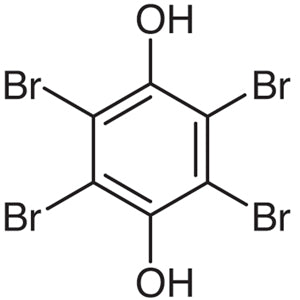
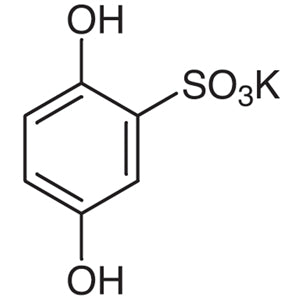
Methoxyhydroquinone is a chemical compound widely used in laboratory settings for the synthesis of complex organic molecules. As a building block in chemical reactions, it plays a crucial role in the development of compounds with specific structural characteristics. This compound is commonly found in chemical laboratories as a raw material for the production of organic substances with defined molecular structures. Its versatility makes it an essential component in various synthetic pathways, particularly in the creation of both heterocyclic and non-heterocyclic compounds.
The key properties of Methoxyhydroquinone include its ability to react with a variety of functional groups, enabling the formation of new compounds with diverse chemical properties. It exhibits good chemical stability under certain conditions, which facilitates its use in a wide range of chemical reactions. These characteristics make it a preferred choice for researchers seeking reliable and effective building blocks for synthetic processes. Additionally, its chemical inertness and reactivity contribute to its popularity in both academic and industrial research environments.
In Indonesian laboratories, Methoxyhydroquinone is extensively used in organic chemistry research, especially in the synthesis of complex compounds. It is also employed in the development of pharmaceutical products and industrial chemicals. Due to its broad applications, Methoxyhydroquinone remains a vital material for chemical research and innovation in the region.
- Organic synthesis applications benefit from Methoxyhydroquinone due to its ability to participate in diverse chemical reactions and form complex structures.
- Pharmaceutical research utilizes this compound for the development of new drug molecules, as it can be modified to create bioactive compounds.
- Industrial chemical production relies on Methoxyhydroquinone for the creation of specialty chemicals with specific functional properties.
- Analytical chemistry laboratories use it as a reference standard for quality control and compound identification purposes.
- Environmental studies incorporate Methoxyhydroquinone to investigate its behavior in chemical degradation processes and environmental impact.
| Brand | TCI |
|---|---|
| CAS number | 824-46-4 |
| Molecular formula | — |
| Purity | — |
| Category | Chemistry > Building Blocks > Non-Heterocyclic Building Blocks |
| Pack sizes | Available in various quantities as per supplier specifications |
| Physical form | Solid, crystalline appearance |
| Storage | Store in a cool, dry place away from light and moisture |
Methoxyhydroquinone should be stored in a cool, dry environment to maintain its chemical stability. It is recommended to keep the compound in airtight containers to prevent exposure to moisture and air. Proper labeling of storage containers is essential for safety and identification purposes. Handling should be done with appropriate personal protective equipment to ensure laboratory safety. The compound should be kept away from incompatible substances to avoid any potential chemical reactions. Regular inspection of storage conditions ensures the integrity and usability of the material in laboratory applications.
—
Produk Terkait
-
Bromohydroquinone TCI B1600
Regular price From Rp 3.949.050,00Regular price -
2,5-Di-tert-butylhydroquinone TCI D0940
Regular price From Rp 557.550,00Regular price -
Chlorohydroquinone TCI C0185
Regular price From Rp 1.167.600,00Regular price -
Tetrabromohydroquinone TCI T1790
Regular price From Rp 1.988.700,00Regular price -
Tetrachlorohydroquinone TCI T0067
Regular price From Rp 1.008.000,00Regular price -
2,5-Dibromohydroquinone TCI D4067
Regular price From Rp 1.829.100,00Regular price -
Hydroquinone TCI H0186
Regular price From Rp 477.750,00Regular price -
PotassiumHydroquinonesulfonate TCI H0593
Regular price From Rp 505.050,00Regular price