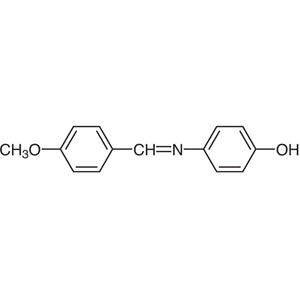
N-(4-Methoxybenzylidene)-4-hydroxyaniline is a chemical compound widely used as a foundational building block in the synthesis of complex molecules. It plays a crucial role in laboratory settings, particularly in the development of new compounds within the fields of pharmaceuticals and materials science. This compound is commonly employed in various chemical reactions, including the formation of aromatic and heterocyclic structures. Its versatility makes it an essential component for researchers aiming to explore new chemical pathways and functional groups.
The compound’s unique chemical properties, such as its reactivity and stability, make it a preferred choice for advanced chemical research. The presence of both an amino group and a methoxy group contributes to its ability to participate in a wide range of reactions, including Diels-Alder, condensation, and substitution reactions. These characteristics allow it to be a key player in the synthesis of complex organic molecules. Its solubility in organic solvents further enhances its utility in laboratory procedures, facilitating processing and isolation.
In Indonesian laboratories, N-(4-Methoxybenzylidene)-4-hydroxyaniline is extensively used in organic chemistry research. It is particularly valuable in the study of aromatic compounds and the development of new materials. Its role in creating complex molecular structures supports ongoing scientific investigations, making it an essential reagent for both academic and industrial research settings.
Related TCI products
- TCI B1455 772-59-8 3-Bromo-4-methoxybenzyl Cyanide
- TCI G0153 1149-16-2 Glyoxal Bis(2-hydroxyanil)
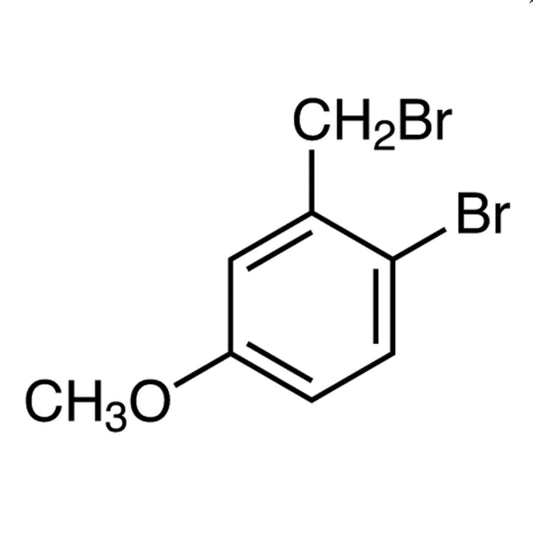
- TCI B4423 19614-12-1 2-Bromo-5-methoxybenzyl Bromide
- TCI B3369 80866-82-6 5-Bromo-2-methoxybenzyl Alcohol
- TCI B2164 2316-64-5 5-Bromo-2-hydroxybenzyl Alcohol
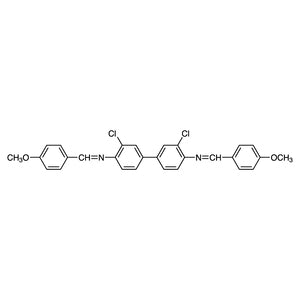
- TCI B0878 3540-78-1 3,3'-Dichloro-N,N'-bis(4-methoxybenzylidene)benzidine
- Organic synthesis of aromatic and heterocyclic compounds due to its reactive functional groups and structural versatility.
- Development of pharmaceutical compounds through its ability to participate in condensation and substitution reactions.
- Research in materials science for the creation of advanced polymers and functional materials.
- Chemical reaction studies involving Diels-Alder and other pericyclic reactions due to its aromatic structure.
- Analytical chemistry applications for the synthesis of reference compounds and standard reagents.
| Brand | TCI |
|---|---|
| CAS number | 3230-39-5 |
| Molecular formula | — |
| Purity | — |
| Category | Chemistry > Building Blocks > Non-Heterocyclic Building Blocks |
| Pack sizes | Available in various quantities as per standard laboratory supply formats |
| Physical form | Solid, typically in crystalline or powder form |
| Storage | Store in a cool, dry place away from light and moisture |
This compound should be stored in a cool, dry environment, away from direct light and moisture to maintain its chemical integrity. It is recommended to use airtight containers made of glass or high-density polyethylene to prevent contamination and degradation. Due to its reactivity, it should be handled in a well-ventilated area, ideally under a fume hood, to minimize exposure. Proper personal protective equipment, such as gloves and safety goggles, should be worn when handling the material. Avoid contact with incompatible substances, and ensure that storage conditions are consistent with standard laboratory safety protocols.
—
Produk Terkait
-
3-Bromo-4-methoxybenzylCyanide TCI B1455
Regular price From Rp 1.246.350,00Regular price -
GlyoxalBis(2-hydroxyanil) TCI G0153
Regular price From Rp 1.298.850,00Regular price -
2-Bromo-5-methoxybenzylBromide TCI B4423
Regular price From Rp 1.298.850,00Regular price -
5-Bromo-2-methoxybenzylAlcohol TCI B3369
Regular price From Rp 1.035.300,00Regular price -
5-Bromo-2-hydroxybenzylAlcohol TCI B2164
Regular price From Rp 557.550,00Regular price -
3,3'-Dichloro-N,N'-bis(4-methoxybenzylidene)benzidine TCI B0878
Regular price Rp 2.809.800,00Regular price -
(4-Methoxybenzyl)MethylEther TCI M2305
Regular price Rp 3.551.100,00Regular price -
3-MethoxybenzylAlcohol TCI M1101
Regular price Rp 1.273.650,00Regular price