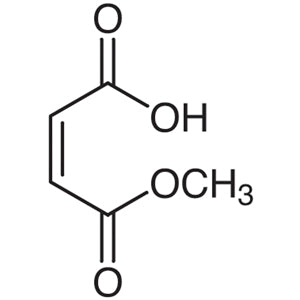
Monomethyl Maleate is a chemical compound widely used as a foundational building block in laboratory reactions. It serves as a versatile intermediate in the synthesis of various organic compounds, particularly in the development of esters, acids, and heterocyclic structures. Its role in chemical research is critical due to its ability to participate in multiple reaction pathways, making it an essential component for chemists working on complex molecular designs. This compound is commonly found in both academic and industrial research settings, where its reactivity and adaptability are highly valued.
One of the key properties that make Monomethyl Maleate a preferred choice is its chemical stability and reactivity. It dissolves well in common organic solvents such as ethyl acetate and acetone, which facilitates its use in a wide range of synthetic procedures. Its molecular structure allows for easy functionalization, enabling chemists to tailor its properties for specific applications. Additionally, its thermal stability ensures that it remains effective under various laboratory conditions, making it a reliable material for both routine and advanced chemical experiments.
In Indonesian laboratories, Monomethyl Maleate is extensively used in chemical research, especially in the synthesis of organic compounds and the development of new chemical materials. It is a staple in academic institutions and research centers, where it supports the creation of novel compounds and the advancement of chemical knowledge. Its availability and reliability make it a go-to reagent for chemists working on diverse projects, from basic synthesis to more complex molecular engineering.
- Organic synthesis is a primary application where Monomethyl Maleate is used to build complex molecules through esterification and other reactions due to its reactivity and structural flexibility.
- Heterocyclic compound development benefits from Monomethyl Maleate’s ability to participate in ring-forming reactions, making it ideal for creating diverse heterocyclic structures.
- Ester synthesis is a common use case where the compound serves as a key intermediate, enabling the formation of ester functional groups through condensation reactions.
- Acid derivative preparation relies on Monomethyl Maleate’s ability to undergo hydrolysis and other reactions, allowing for the synthesis of various acid derivatives.
- Chemical research in academic settings frequently employs Monomethyl Maleate as a fundamental building block for exploring new synthetic methodologies and molecular designs.
| Brand | TCI |
|---|---|
| CAS number | 3052-50-4 |
| Molecular formula | — |
| Purity | — |
| Category | Chemistry > Building Blocks > Non-Heterocyclic Building Blocks |
| Pack sizes | Available in various quantities as per standard laboratory supply |
| Physical form | Solid or liquid depending on the specific product variant |
| Storage | Store in a cool, dry place away from direct sunlight and moisture |
Monomethyl Maleate should be stored in a cool, dry environment to maintain its chemical stability and prevent degradation. It is recommended to keep the compound in a tightly sealed container to avoid exposure to moisture and air, which can affect its reactivity. Suitable containers for storage include glass or high-density polyethylene vessels that are resistant to chemical interactions. In laboratory settings, it is important to handle the compound with appropriate personal protective equipment, such as gloves and safety goggles, to ensure safe handling. Proper labeling of storage containers is also essential for identifying the material and ensuring safe access. Regular monitoring of storage conditions helps maintain the integrity of the compound and supports its consistent performance in chemical reactions.
—
Produk Terkait
-
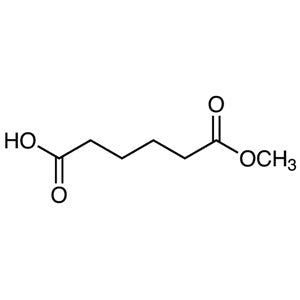
MonomethylAdipate TCI A1738
Regular price From Rp 1.485.750,00Regular price -
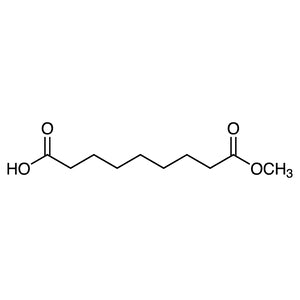
MonomethylAzelate TCI A1312
Regular price From Rp 1.115.100,00Regular price -
PotassiumMonomethylTerephthalate TCI T1083
Regular price From Rp 875.700,00Regular price -
MonomethylTerephthalate TCI T0244
Regular price From Rp 2.147.250,00Regular price -
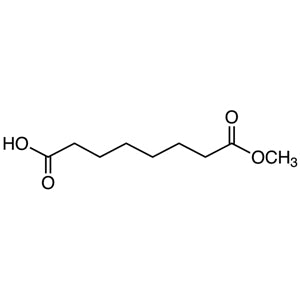
MonomethylSuberate TCI S0440
Regular price From Rp 2.068.500,00Regular price -
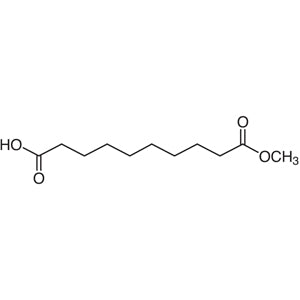
MonomethylSebacate TCI S0395
Regular price From Rp 3.551.100,00Regular price -
PropyleneGlycol1-MonomethylEther2-Acetate TCI P1171
Regular price Rp 610.050,00Regular price -
Monomethyl5-Nitroisophthalate TCI N0641
Regular price From Rp 1.008.000,00Regular price