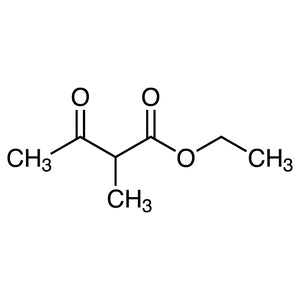
Ethyl 2-Methylacetoacetate is a chemical compound widely used in organic laboratory reactions. As a building block, it serves as a fundamental component in the synthesis of more complex molecules. This compound is particularly valued for its versatility in various synthetic pathways, making it a key reagent in both academic and industrial research settings. Its ability to participate in multiple reaction types enhances its utility in the development of new chemical structures and functional groups.
The compound is known for its stable molecular structure and favorable reactivity under different chemical conditions. It is a colorless liquid that dissolves easily in organic solvents such as ethyl acetate and ethanol. These physical properties make it a reliable and consistent choice for laboratory applications. Its non-toxic nature also contributes to its safety profile, ensuring a secure working environment for researchers.
In Indonesian laboratories, Ethyl 2-Methylacetoacetate is commonly used by researchers and students in higher education institutions and research organizations. It plays a vital role in organic synthesis, especially in the preparation of heterocyclic compounds and complex carbon-based structures. Its widespread use underscores its importance in both teaching and research activities within the scientific community.
- Organic synthesis applications benefit from Ethyl 2-Methylacetoacetate due to its reactivity in substitution and esterification reactions, making it ideal for creating complex molecular structures.
- It is well-suited for academic research where the synthesis of heterocyclic compounds is required, as it provides a stable and reliable starting material for such processes.
- In teaching laboratories, this compound is frequently used to demonstrate key organic reactions, offering students hands-on experience with fundamental chemical transformations.
- Its solubility in organic solvents makes it a preferred choice for reactions that require efficient mixing and dissolution of reactants.
- The compound’s non-toxic nature ensures safe handling, making it suitable for use in both educational and research environments with strict safety protocols.
| Brand | TCI |
|---|---|
| CAS number | 609-14-3 |
| Molecular formula | — |
| Purity | — |
| Category | Chemistry > Building Blocks > Non-Heterocyclic Building Blocks |
| Pack sizes | — |
| Physical form | Colorless liquid |
| Storage | Store in a cool, dry place away from direct sunlight |
Ethyl 2-Methylacetoacetate should be stored in a cool, dry place, away from direct sunlight and sources of heat. It is recommended to use airtight containers made of glass or polyethylene to prevent contamination and evaporation. Due to its liquid form, it should be kept in a secure location to avoid spills or accidental exposure. While it is considered non-toxic, proper laboratory precautions such as wearing gloves and safety goggles should be followed during handling. The compound is stable under normal storage conditions, making it suitable for long-term use in laboratory settings. Its physical and chemical properties ensure that it remains a reliable and safe material for various experimental applications.
—
Produk Terkait
-
Ethyl2-Ethyl-2-methylacetoacetate TCI E0437
Regular price From Rp 1.353.450,00Regular price -
IsopropylAcetoacetate TCI I0826
Regular price From Rp 980.700,00Regular price -
LithiumAcetoacetate TCI A1478
Regular price From Rp 3.180.450,00Regular price -
BenzylAcetoacetate TCI A1080
Regular price From Rp 1.167.600,00Regular price -
n-OctylAcetoacetate TCI A0915
Regular price Rp 3.367.350,00Regular price -
HexylAcetoacetate TCI A0913
Regular price Rp 2.041.200,00Regular price -
PropylAcetoacetate TCI A0817
Regular price Rp 2.041.200,00Regular price -
tert-ButylAcetoacetate TCI A0816
Regular price From Rp 557.550,00Regular price