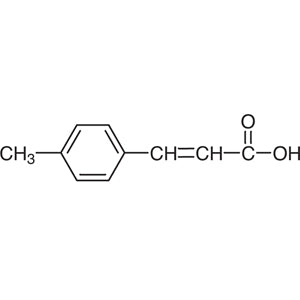
4-Methylcinnamic Acid is a chemical compound widely used in organic synthesis reactions within laboratory settings. It serves as a fundamental building block in the creation of complex molecules, playing a crucial role in the development of pharmaceuticals, industrial chemicals, and aromatic compounds. Its structural composition includes an aromatic ring system and a carboxylic acid group, making it versatile for various chemical transformations. Due to its stability and controlled reactivity, it is a reliable material for researchers and scientists across multiple fields of chemistry.
The compound’s physical and chemical properties make it a preferred choice in laboratory applications. It is a solid, white-colored substance that dissolves readily in organic solvents such as ethyl acetate and acetone. Its stability against temperature and humidity ensures long-term storage without degradation. Additionally, its ability to participate in substitution and hydrolysis reactions enhances its utility in diverse chemical processes. These characteristics make it an essential component in synthetic chemistry workflows.
In Indonesian laboratories, 4-Methylcinnamic Acid is extensively used in organic chemistry research and synthesis. It is commonly found in academic and industrial settings where the development of new compounds is required. Its availability and reliability make it a go-to material for chemists working on drug discovery, material science, and chemical synthesis projects. Its consistent performance supports the accuracy and reproducibility of experimental results.
- Organic synthesis is a key application where 4-Methylcinnamic Acid is used to build complex molecules through functional group transformations and carbon-carbon bond formation.
- Pharmaceutical research benefits from its role in the development of new drug compounds, as it can serve as a precursor in the synthesis of active pharmaceutical ingredients.
- Industrial chemical production utilizes this compound for the creation of various aromatic derivatives, which are essential in manufacturing processes.
- Material science applications leverage its chemical versatility to develop new polymers and functional materials with specific properties.
- Analytical chemistry uses it as a standard reference material for calibrating instruments and validating chemical reaction mechanisms.
| Brand | TCI |
|---|---|
| CAS number | 1866-39-3 |
| Molecular formula | — |
| Purity | — |
| Category | Chemistry > Building Blocks > Non-Heterocyclic Building Blocks |
| Pack sizes | Available in various quantities as per standard laboratory supply |
| Physical form | Solid, white-colored powder |
| Storage | Store in a cool, dry place away from direct sunlight and moisture |
4-Methylcinnamic Acid should be stored in a cool, dry environment to maintain its stability and prevent degradation. It is recommended to keep it in airtight containers to minimize exposure to moisture and air. While it is generally considered safe to handle, standard laboratory precautions should be followed, such as wearing protective gloves and goggles when working with it. The compound is not classified as hazardous under normal conditions, but proper handling ensures the safety of laboratory personnel. It is advisable to store it in a well-ventilated area to avoid any potential accumulation of airborne particles. Regular inspection of storage conditions helps maintain the integrity of the material for extended use in research applications.
—
Produk Terkait
-
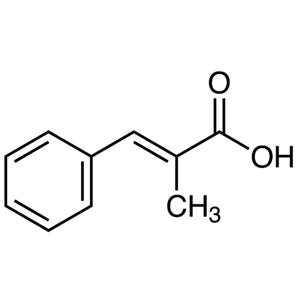
(E)-alpha-MethylcinnamicAcid TCI M1336
Regular price From Rp 795.900,00Regular price -
3-MethylcinnamicAcid TCI M1298
Regular price From Rp 2.016.000,00Regular price -
2-MethylcinnamicAcid TCI M1295
Regular price From Rp 1.246.350,00Regular price -
2,4-Dimethoxy-beta-methylcinnamicAcid TCI D5047
Regular price From Rp 1.431.150,00Regular price -
Methyl4-Methylcinnamate TCI M2825
Regular price From Rp 717.150,00Regular price -
alpha-Methylcinnamaldehyde TCI M0584
Regular price From Rp 1.060.500,00Regular price -
2,3,4-TrimethoxycinnamicAcid TCI T2016
Regular price From Rp 875.700,00Regular price -
2,4,5-TrimethoxycinnamicAcid TCI T1393
Regular price Rp 2.094.750,00Regular price