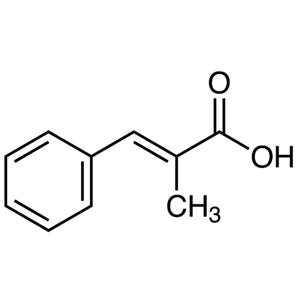
Methyl 4-Methylcinnamate is a chemical compound widely used in laboratory settings for the synthesis of complex organic molecules. As a member of the cinnamate family, it serves as a key building block in various chemical reactions, particularly in the development of aromatic compounds and their derivatives. Its molecular structure is stable yet reactive, making it an essential reagent in both academic and industrial research. In the context of chemical synthesis, it is often employed in substitution reactions and esterification processes, contributing to the creation of a wide range of functional compounds.
One of the primary reasons for its popularity is its favorable chemical properties. It exhibits good solubility in organic solvents, which facilitates its use in diverse reaction conditions. Additionally, its ability to participate in multiple reaction types enhances its versatility in the laboratory. The compound also possesses a distinct aroma, which is beneficial in applications requiring sensory properties, such as in the fragrance and cosmetic industries. These characteristics make it a reliable and efficient choice for researchers seeking high-quality reagents.
In Indonesian laboratories, Methyl 4-Methylcinnamate is commonly used in organic synthesis research. It plays a vital role in the development of new compounds and is frequently employed in academic and industrial settings. Its stability and reactivity make it a preferred choice for chemists working on projects involving aromatic compounds and ester-based reactions. The compound is also used in the production of pharmaceutical intermediates and cosmetic ingredients, highlighting its broad applicability in the chemical sciences.
- Organic synthesis is a primary application where Methyl 4-Methylcinnamate is used to create complex aromatic compounds through esterification and substitution reactions.
- Pharmaceutical research benefits from its use in the development of drug intermediates and fragrance compounds due to its reactivity and stability.
- Cosmetic formulation relies on this compound for its aromatic properties, making it suitable for fragrance and flavor development in personal care products.
- Analytical chemistry utilizes its distinct chemical profile for identification and structural analysis in various testing protocols.
- Industrial chemical production incorporates this compound as a building block for the synthesis of specialty chemicals and polymers.
| Brand | TCI |
|---|---|
| CAS number | 7560-43-2 |
| Molecular formula | — |
| Purity | — |
| Category | Chemistry > Building Blocks > Non-Heterocyclic Building Blocks |
| Pack sizes | Available in standard laboratory quantities as per supplier specifications |
| Physical form | Solid or liquid, depending on the specific product variant |
| Storage | Store in a cool, dry place away from direct sunlight and incompatible materials |
Methyl 4-Methylcinnamate should be stored in a cool, dry environment to maintain its chemical stability. It is recommended to keep it in a sealed container to prevent exposure to moisture and air. Suitable storage containers include glass or high-density polyethylene vessels that are resistant to chemical degradation. In laboratory settings, it should be handled with appropriate personal protective equipment, such as gloves and safety goggles, to ensure safe handling. Avoid contact with incompatible substances like strong acids or bases. Regular monitoring of storage conditions is essential to ensure the integrity of the compound remains unaffected over time. Proper labeling and storage practices help in maintaining a safe and efficient laboratory environment.
—
Product Categories
Produk Terkait
-
alpha-Methylcinnamaldehyde TCI M0584
Regular price From Rp 1.060.500,00Regular price -
(E)-alpha-MethylcinnamicAcid TCI M1336
Regular price From Rp 795.900,00Regular price -
3-MethylcinnamicAcid TCI M1298
Regular price From Rp 2.016.000,00Regular price -
2-MethylcinnamicAcid TCI M1295
Regular price From Rp 1.246.350,00Regular price -
4-MethylcinnamicAcid TCI M0715
Regular price Rp 1.829.100,00Regular price -
2,4-Dimethoxy-beta-methylcinnamicAcid TCI D5047
Regular price From Rp 1.431.150,00Regular price -
alpha-PhenylcinnamicAcid TCI P1300
Regular price Rp 5.962.950,00Regular price -
(E)-Ethyl4-Nitrocinnamate TCI N0598
Regular price From Rp 1.273.650,00Regular price