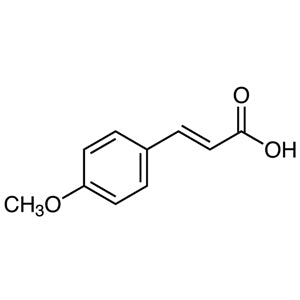
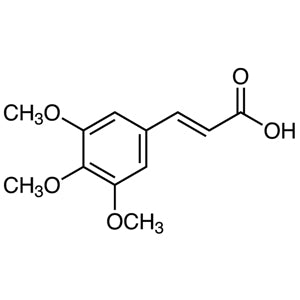
Cis-2-Methoxycinnamic Acid is a chemical compound widely used in laboratory settings for the synthesis of complex molecules. As a building block in organic chemistry, it plays a crucial role in constructing molecular structures through various chemical reactions. Its presence in research applications spans multiple disciplines, including organic chemistry and pharmacology, where it serves as a foundational element for developing new compounds. This compound is particularly valued for its versatility and stability, making it an essential tool for researchers aiming to explore chemical reactivity and molecular interactions.
The compound's chemical properties, such as its controlled reactivity and stability, make it a preferred choice for laboratory use. Its molecular structure, consisting of a methoxy group and a cinnamoyl group, allows it to participate in a range of reactions, including substitution, esterification, and other synthetic processes. These characteristics ensure that it remains a reliable and consistent material for chemical experimentation. The compound’s ability to maintain structural integrity during reactions enhances its utility in precision-driven research, where accuracy and reproducibility are paramount.
In Indonesian laboratories, cis-2-Methoxycinnamic Acid is commonly used by researchers in educational institutions and research organizations. Its relevance extends to pharmaceutical, organic chemistry, and biochemical studies, where it supports the development of new drugs and chemical compounds. Due to its availability and reliability, it is a frequently chosen material for experiments requiring high precision and controlled chemical behavior.
- Organic synthesis applications benefit from cis-2-Methoxycinnamic Acid due to its reactivity and structural versatility, enabling the creation of complex organic molecules.
- Pharmaceutical research utilizes this compound as a key building block for synthesizing drug candidates with specific functional groups and molecular structures.
- Biochemical studies employ it for its ability to interact with various functional groups, supporting the development of bioactive compounds and enzyme inhibitors.
- Educational laboratories use it to teach fundamental concepts of chemical reactivity and molecular synthesis in undergraduate and graduate courses.
- Analytical chemistry applications leverage its stability and purity for use in spectroscopic and chromatographic analyses of organic compounds.
| Brand | TCI |
|---|---|
| CAS number | 14737-91-8 |
| Molecular formula | — |
| Purity | — |
| Category | Chemistry > Building Blocks > Non-Heterocyclic Building Blocks |
| Pack sizes | Available in various quantities as per standard laboratory supply options |
| Physical form | Solid, crystalline powder |
| Storage | Store in a cool, dry place away from direct sunlight and moisture |
Cis-2-Methoxycinnamic Acid should be stored in a cool, dry environment to maintain its chemical integrity. It is recommended to keep it in a tightly sealed container to prevent moisture absorption and contamination. The compound is generally stable under normal laboratory conditions but should be protected from prolonged exposure to light and high humidity. When handling, researchers should wear appropriate personal protective equipment, such as gloves and safety goggles, to ensure safety. It is advisable to store the compound in a well-ventilated area to minimize any potential risks associated with its chemical properties. Proper storage and handling practices are essential to preserve the compound's quality and ensure safe laboratory operations.
—
Produk Terkait
-
trans-4-MethoxycinnamicAcid TCI M0576
Regular price Rp 1.724.100,00Regular price -
trans-2-MethoxycinnamicAcid TCI M0449
Regular price Rp 2.730.000,00Regular price -
3-MethoxycinnamicAcid TCI M0444
Regular price From Rp 2.809.800,00Regular price -
3-Hydroxy-4-methoxycinnamicAcid TCI H0524
Regular price From Rp 1.538.250,00Regular price -
2,3,4-TrimethoxycinnamicAcid TCI T2016
Regular price From Rp 875.700,00Regular price -
2,4,5-TrimethoxycinnamicAcid TCI T1393
Regular price Rp 2.094.750,00Regular price -
(E)-3,4,5-TrimethoxycinnamicAcid TCI T1104
Regular price Rp 2.597.700,00Regular price -
4-EthoxycinnamicAcid TCI E0856
Regular price Rp 1.298.850,00Regular price