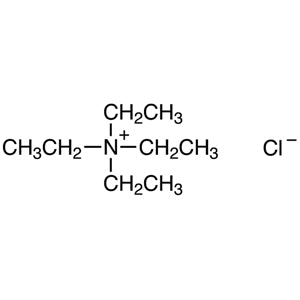
Triethylmethylammonium Chloride (TEMAC), with the CAS number 10052-47-8, is a chemical compound widely used as a phase transfer catalyst in laboratory settings. It plays a crucial role in facilitating reactions between immiscible phases, such as aqueous and organic solvents, by enabling the transfer of ions or molecules across these boundaries. This property makes it highly valuable in synthetic chemistry, particularly in reactions that require efficient interfacial interactions. TEMAC is commonly employed in the synthesis of complex compounds and in heterogeneous reactions where traditional catalysts may not perform optimally. Its effectiveness in promoting chemical reactions under various conditions contributes to its popularity among researchers.
One of the key attributes that make TEMAC a preferred choice is its excellent solubility in both water and organic solvents. This versatility allows it to be used in a wide range of experimental setups, enhancing its applicability across different research fields. Additionally, TEMAC exhibits high chemical stability, ensuring it remains effective even under varying reaction conditions. Its ability to accelerate reaction rates and improve product yields further solidifies its position as a reliable reagent in laboratory environments. These properties collectively make TEMAC a go-to material for chemists seeking efficiency and reliability in their experiments.
In Indonesian laboratories, TEMAC is frequently used by researchers and students in chemical synthesis, especially in the context of phase transfer catalysis. Its availability through suppliers like AMI Scientific ensures that it is accessible for academic and industrial applications. The compound's reliability and performance in various chemical processes make it a staple in both educational and research settings, supporting the advancement of chemical studies in Indonesia.
TCI brochures (PDF)
- Quaternary Ammonium Salts 2025-11-10 · p. 3
- Colloidal Quantum Dot (QD) Research Reagents 2026-05-21 · p. 10
Related TCI products
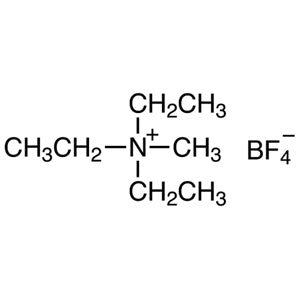
- TCI T2198 69444-47-9 Triethylmethylammonium Tetrafluoroborate
- TCI T2873 56375-79-2 Tributylmethylammonium Chloride (ca. 75% in water)
- TCI T2106 5810-42-4 Tetrapropylammonium Chloride
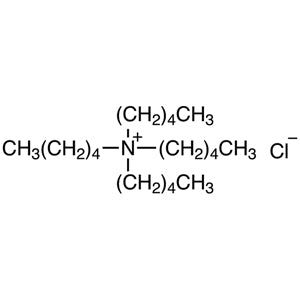
- TCI T1433 4965-17-7 Tetraamylammonium Chloride
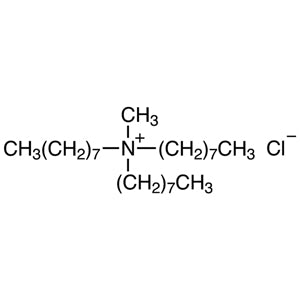
- TCI T1365 5137-55-3 Methyltri-n-octylammonium Chloride
- TCI T0926 4574-04-3 Trimethyltetradecylammonium Chloride
- Phase Transfer Catalysis in Organic Synthesis: TEMAC is ideal for promoting reactions between immiscible phases, enhancing reaction efficiency and yield in synthetic processes.
- Heterogeneous Reaction Optimization: Its ability to facilitate ion and molecule transfer across phases makes it suitable for improving reaction rates in complex chemical systems.
- Ion Transfer in Aqueous-Organic Systems: TEMAC is used to enable the movement of ions between water and organic solvents, supporting a wide range of chemical reactions.
- Laboratory-Scale Synthesis of Complex Compounds: Its stability and solubility make it a preferred catalyst for producing intricate chemical structures with high purity.
- Teaching and Research in Chemistry: TEMAC is widely used in academic settings to demonstrate phase transfer mechanisms and catalytic processes in chemical education.
| Brand | TCI |
|---|---|
| CAS number | 10052-47-8 |
| Molecular formula | — |
| Purity | — |
| Category | Chemistry > Synthetic Reagents > Phase Transfer Catalysts |
| Pack sizes | Available in various quantities as per supplier specifications |
| Physical form | Solid powder or crystalline |
| Storage | Store in a cool, dry place away from moisture and direct sunlight |
Temperatures should be maintained at room temperature, ideally between 15°C and 25°C, to ensure optimal stability. It should be stored in airtight containers to prevent moisture absorption, which may affect its performance. Avoid exposure to direct sunlight and high humidity to preserve its chemical integrity. When handling, use appropriate personal protective equipment such as gloves and safety goggles to minimize contact with skin or eyes. Ensure proper ventilation in the workspace to avoid inhalation of any airborne particles. TEMAC is generally non-hazardous under normal conditions but should be treated with the standard safety precautions associated with chemical reagents in a laboratory setting.
—
Produk Terkait
-
TriethylmethylammoniumTetrafluoroborate TCI T2198
Regular price Rp 6.493.200,00Regular priceRp 4.555.950,00Sale price Rp 6.493.200,00 -
TributylmethylammoniumChloride(ca.75%inwater) TCI T2873
Regular price From Rp 900.900,00Regular priceRp 645.750,00Sale price From Rp 900.900,00 -
TetrapropylammoniumChloride TCI T2106
Regular price Rp 1.908.900,00Regular priceRp 1.350.300,00Sale price Rp 1.908.900,00 -
TetraamylammoniumChloride TCI T1433
Regular price From Rp 3.551.100,00Regular priceRp 2.499.000,00Sale price From Rp 3.551.100,00 -
Methyltri-n-octylammoniumChloride TCI T1365
Regular price From Rp 1.483.650,00Regular priceRp 1.053.150,00Sale price From Rp 1.483.650,00 -
TrimethyltetradecylammoniumChloride TCI T0926
Regular price From Rp 1.008.000,00Regular priceRp 720.300,00Sale price From Rp 1.008.000,00 -
TetramethylammoniumChloride TCI T0136
Regular price From Rp 530.250,00Regular priceRp 386.400,00Sale price From Rp 530.250,00 -
TetraethylammoniumChloride TCI T0095
Regular price From Rp 1.167.600,00Regular priceRp 831.600,00Sale price From Rp 1.167.600,00