Tetraethylammonium Chloride (TEAC), with CAS number 56-34-8, is a chemical compound widely used in laboratory settings for its role as a phase transfer catalyst. This reagent facilitates reactions between immiscible phases, such as aqueous and organic solvents, by enabling the transfer of reactants across these boundaries. Its unique ability to enhance reaction efficiency makes it a valuable tool in synthetic chemistry. TEAC is particularly useful in reactions where traditional methods face challenges due to phase separation, allowing for more controlled and effective chemical processes.
TEAC is preferred for its stable cationic structure and non-volatile nature, which ensures consistent performance across a range of experimental conditions. Its chemical stability means it does not readily degrade under normal storage or reaction conditions, contributing to its long shelf life and reliability. Additionally, TEAC is non-toxic and easy to handle, making it a safe choice for laboratories seeking effective and environmentally friendly reagents. These properties make it a reliable and versatile option for both academic and industrial research environments.
In Indonesian laboratories, TEAC is commonly used in organic chemistry and catalytic research. It supports a wide range of synthetic applications, including the development of new compounds and the optimization of reaction pathways. Its availability and effectiveness make it a key component in educational institutions, research centers, and industries that require high-quality chemical reagents for their experiments and processes.
TCI brochures (PDF)
- Quaternary Ammonium Salts 2025-11-10 · p. 3
- Colloidal Quantum Dot (QD) Research Reagents 2026-05-21 · p. 10
Related TCI products
- TCI T0094 71-91-0 Tetraethylammonium Bromide
- TCI T2873 56375-79-2 Tributylmethylammonium Chloride (ca. 75% in water)
- TCI T2106 5810-42-4 Tetrapropylammonium Chloride
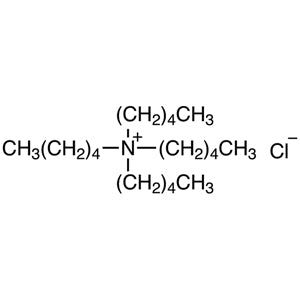
- TCI T1433 4965-17-7 Tetraamylammonium Chloride
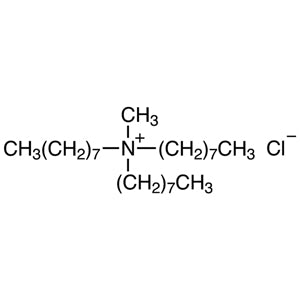
- TCI T1365 5137-55-3 Methyltri-n-octylammonium Chloride
- TCI T0926 4574-04-3 Trimethyltetradecylammonium Chloride
- Organic synthesis reactions where phase transfer catalysis is required for efficient mixing of immiscible reactants.
- Catalytic processes in which TEAC facilitates the transfer of ions or molecules between aqueous and organic phases.
- Research in polymer science, where TEAC helps in the formation of complex structures by enabling better reaction control.
- Environmental studies involving the breakdown of pollutants in heterogeneous systems, where TEAC aids in phase interactions.
- Industrial applications in chemical manufacturing where TEAC improves reaction yields and reduces energy consumption.
| Brand | TCI |
|---|---|
| CAS number | 56-34-8 |
| Molecular formula | — |
| Purity | — |
| Category | Chemistry > Synthetic Reagents > Phase Transfer Catalysts |
| Pack sizes | Available in various quantities as per standard laboratory supply |
| Physical form | White crystalline solid |
| Storage | Store in a cool, dry place away from moisture and direct sunlight |
TEAC should be stored in a cool, dry environment to maintain its chemical stability and prevent degradation. It is recommended to keep the material in airtight containers to minimize exposure to moisture and contaminants. Since TEAC is non-volatile and non-toxic, it does not require special handling beyond standard laboratory safety protocols. However, it is important to ensure that the storage area is well-ventilated to avoid any potential accumulation of airborne particles. Proper labeling of containers is essential for safe identification and use. Always follow general laboratory safety practices when working with chemical reagents to ensure a safe and efficient research environment.
—
Produk Terkait
-
TetraethylammoniumBromide TCI T0094
Regular price From Rp 530.250,00Regular priceRp 386.400,00Sale price From Rp 530.250,00 -
TributylmethylammoniumChloride(ca.75%inwater) TCI T2873
Regular price From Rp 900.900,00Regular priceRp 645.750,00Sale price From Rp 900.900,00 -
TetrapropylammoniumChloride TCI T2106
Regular price Rp 1.908.900,00Regular priceRp 1.350.300,00Sale price Rp 1.908.900,00 -
TetraamylammoniumChloride TCI T1433
Regular price From Rp 3.551.100,00Regular priceRp 2.499.000,00Sale price From Rp 3.551.100,00 -
Methyltri-n-octylammoniumChloride TCI T1365
Regular price From Rp 1.483.650,00Regular priceRp 1.053.150,00Sale price From Rp 1.483.650,00 -
TrimethyltetradecylammoniumChloride TCI T0926
Regular price From Rp 1.008.000,00Regular priceRp 720.300,00Sale price From Rp 1.008.000,00 -
TetramethylammoniumChloride TCI T0136
Regular price From Rp 530.250,00Regular priceRp 386.400,00Sale price From Rp 530.250,00 -
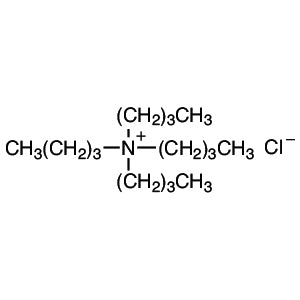
TetrabutylammoniumChloride TCI T0055
Regular price From Rp 928.200,00Regular priceRp 664.650,00Sale price From Rp 928.200,00