Methylaminoacetaldehyde Dimethyl Acetal (CAS 122-07-6) is a chemical compound widely used as a building block in organic synthesis. This versatile reagent plays a crucial role in laboratories by enabling the formation of complex carbon structures, particularly in reactions involving heterocyclic compounds or carbon-linked chains. Its significance lies in its ability to participate in various chemical transformations, making it an essential tool for researchers aiming to develop new compounds with tailored properties. In the context of Indonesian laboratories, this compound is frequently utilized in both academic and industrial research settings, contributing to advancements in chemical innovation.
One of the key attributes that make Methylaminoacetaldehyde Dimethyl Acetal a preferred choice is its stable chemical structure and high reactivity. These properties allow it to interact effectively with a range of reagents, including acids, bases, and functional group-containing compounds. Its reactivity is particularly valuable in substitution reactions and bond-forming processes, where precise control over chemical transformations is essential. Additionally, its compatibility with various reaction conditions enhances its utility in diverse synthetic pathways.
In Indonesian laboratories, Methylaminoacetaldehyde Dimethyl Acetal is commonly used in pharmaceutical and organic chemistry research. It supports the development of new drugs, materials, and chemical products by providing a reliable starting point for complex molecule synthesis. Its application spans across both academic institutions and research centers, where it is integral to the discovery and production of novel compounds with practical applications.
Related TCI products
- TCI B1901 36255-44-4 3-Bromopropionaldehyde Dimethyl Acetal
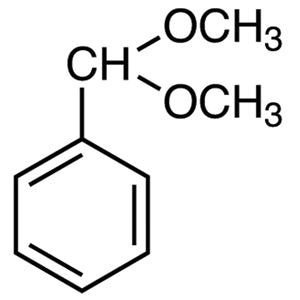
- TCI B1197 1125-88-8 Benzaldehyde Dimethyl Acetal
- TCI B1097 7252-83-7 Bromoacetaldehyde Dimethyl Acetal (stabilized with K2CO3)
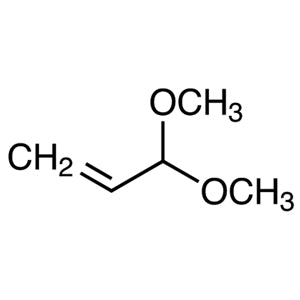
- TCI A2455 6044-68-4 Acrolein Dimethyl Acetal
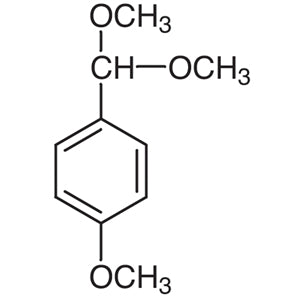
- TCI A1247 2186-92-7 p-Anisaldehyde Dimethyl Acetal
- TCI A0801 22483-09-6 Aminoacetaldehyde Dimethyl Acetal
- Organic synthesis is a primary application where this compound is used to build complex molecular structures through various reaction mechanisms.
- Pharmaceutical research benefits from its role in the development of new drug molecules, particularly in the synthesis of heterocyclic compounds.
- Material science applications rely on its ability to form stable carbon-based structures, which are essential for creating advanced chemical materials.
- Academic research in chemistry uses it as a fundamental building block for teaching and experimental purposes in undergraduate and graduate programs.
- Industrial chemical production incorporates it in the manufacturing of specialty chemicals and intermediates for various commercial applications.
| Brand | TCI |
|---|---|
| CAS number | 122-07-6 |
| Molecular formula | — |
| Purity | — |
| Category | Chemistry > Building Blocks > Non-Heterocyclic Building Blocks |
| Pack sizes | Available in various quantities as per standard laboratory supply formats |
| Physical form | Liquid |
| Storage | Store in a cool, dry place away from direct sunlight and incompatible materials |
This compound should be stored in a cool, dry environment, away from direct sunlight and sources of heat. It is recommended to use airtight containers made of glass or high-density polyethylene to prevent contamination and maintain stability. Due to its reactivity, it should be handled with care, using appropriate personal protective equipment such as gloves and safety goggles. It is important to ensure that the storage area is well-ventilated and free from incompatible substances. Regular monitoring of storage conditions is advised to maintain the integrity and effectiveness of the compound in laboratory applications.
—
Produk Terkait
-
3-BromopropionaldehydeDimethylAcetal TCI B1901
Regular price From Rp 2.359.350,00Regular price -
BenzaldehydeDimethylAcetal TCI B1197
Regular price From Rp 477.750,00Regular price -
BromoacetaldehydeDimethylAcetal(stabilizedwithK2CO3) TCI B1097
Regular price From Rp 1.298.850,00Regular price -
AcroleinDimethylAcetal TCI A2455
Regular price From Rp 2.757.300,00Regular price -
p-AnisaldehydeDimethylAcetal TCI A1247
Regular price From Rp 1.803.900,00Regular price -
AminoacetaldehydeDimethylAcetal TCI A0801
Regular price Rp 1.538.250,00Regular price -
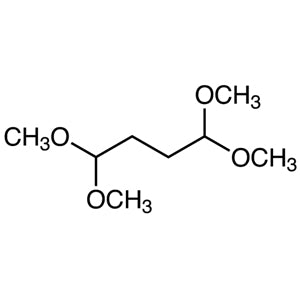
SuccinaldehydeBis(dimethylAcetal) TCI S0371
Regular price From Rp 2.439.150,00Regular price -
PyruvicAldehydeDimethylAcetal TCI P1264
Regular price From Rp 1.565.550,00Regular price