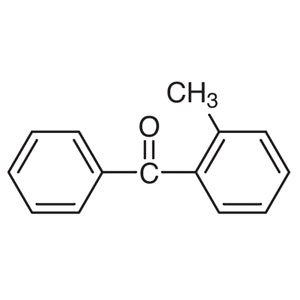
2-Methylbenzophenone is a versatile organic compound widely used in laboratory settings for its chemical reactivity and structural complexity. It belongs to the class of non-heterocyclic building blocks and is commonly employed in synthetic chemistry to construct more complex molecules. This compound plays a crucial role in various organic reactions, particularly those involving light activation, such as photoreactions. Its ability to absorb ultraviolet light makes it an essential reagent in photoinitiator systems and photochemical studies.
One of the key properties that make 2-Methylbenzophenone a preferred choice is its stability under controlled laboratory conditions. It exhibits good chemical resistance and can be stored for extended periods without significant degradation. Additionally, its molecular structure allows it to participate in a wide range of chemical transformations, making it suitable for both research and industrial applications. The compound’s predictable behavior in different reaction environments enhances its utility in synthetic pathways.
In Indonesian laboratories, 2-Methylbenzophenone is frequently used in research related to organic chemistry and pharmaceutical development. Its role in synthesizing complex organic molecules and its application in photoreactive systems make it a valuable tool for scientists working on drug discovery, material science, and chemical engineering. The compound’s reliability and effectiveness contribute to its widespread use in academic and industrial research settings.
- Organic synthesis applications benefit from 2-Methylbenzophenone due to its reactivity and ability to form complex molecular structures.
- Photoreaction experiments utilize this compound because of its UV light absorption properties, which enable light-induced chemical transformations.
- Pharmaceutical research incorporates 2-Methylbenzophenone as a building block for synthesizing potential drug candidates.
- Material science studies use this compound to develop new photoreactive materials with specific optical properties.
- Analytical chemistry applications rely on its stability and reactivity for characterizing chemical reactions and reaction mechanisms.
| Brand | TCI |
|---|---|
| CAS number | 131-58-8 |
| Molecular formula | — |
| Purity | — |
| Category | Chemistry > Building Blocks > Non-Heterocyclic Building Blocks |
| Pack sizes | Available in various quantities as per supplier specifications |
| Physical form | Solid |
| Storage | Store in a cool, dry place away from light and moisture |
2-Methylbenzophenone should be stored in a cool, dry environment to maintain its chemical integrity. It is recommended to keep the compound in a tightly sealed container to prevent exposure to moisture and air. Due to its potential reactivity, it should be handled in a well-ventilated laboratory setting. Avoid direct sunlight and heat sources to minimize degradation. Proper personal protective equipment, such as gloves and safety goggles, should be worn when handling this compound. Regular monitoring of storage conditions ensures the compound remains stable and suitable for use in laboratory applications.
—
Produk Terkait
-
TCI B5774 5,10-Bis(4,4,5,5-tetramethyl-1,3,2-dioxaborolan-2-yl)naphtho[1,2-c:5,6-c']bis([1,2,5]oxadiazole)
Regular price Rp 10.255.350,00Regular price -
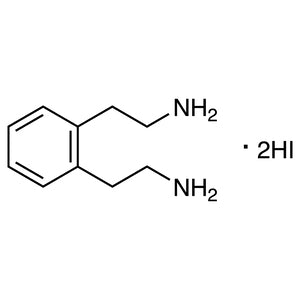
Dihydroiodide TCI B6569
Regular price From Rp 1.936.200,00Regular price -
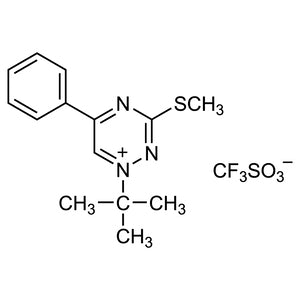
Trifluoromethanesulfonate TCI B7003
Regular price From Rp 1.936.200,00Regular price
![5,10-Bis(4,4,5,5-tetramethyl-1,3,2-dioxaborolan-2-yl)naphtho[1,2-c:5,6-c']bis([1,2,5]oxadiazole) - TCI B5774 - AMI Scientific](http://amiscientific.com/cdn/shop/files/TCI2510B5774.jpg?v=1769180228&width=533)