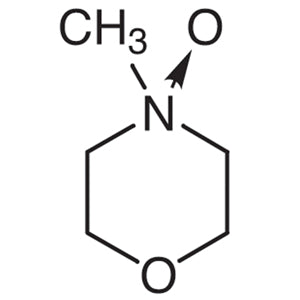
TCI M0981 4-Methylmorpholine N-Oxide is supplied as a 50% solution in water at approximately 4.8 mol/L, and it is one of the most widely recognised oxidation reagents in organic synthesis laboratories, where it is commonly abbreviated as NMO. The compound rarely acts as the principal oxidant itself. Instead, it functions as a co-oxidant whose task is to regenerate a metal catalyst so that the catalyst can turn over repeatedly throughout a reaction. This role makes NMO a key component in alkene dihydroxylation procedures and in metal-catalysed alcohol oxidations that rely on only very small quantities of the metal species.
The property that sets this reagent apart is its moderate and well-controlled oxidation potential. It is strong enough to return the catalyst to its active state, yet not aggressive enough to attack other functional groups present on the substrate. That balance is essential in the synthesis of complex molecules where high selectivity is demanded and where over-oxidation would destroy the target structure. Because the reagent is supplied as an aqueous solution at a concentration already fixed by the manufacturer, dosing can be carried out volumetrically. Users avoid weighing a hygroscopic solid whose mass changes readily as it absorbs moisture from the surrounding air, which is a meaningful practical advantage in routine work.
In Indonesian laboratories, this reagent is typically found in organic synthesis groups at universities and research institutes, in natural product chemistry work, and in pharmaceutical and fine chemical development laboratories where catalytic oxidation steps form part of a longer synthetic route. The ready-to-use solution format suits humid tropical working conditions particularly well, since the ambient moisture that complicates the handling of hygroscopic solids is no longer a factor in accurate measurement.
Related TCI products
- TCI M2192 7529-22-8 4-Methylmorpholine N-Oxide
- TCI P2735 55052-24-9 1H-Pyrrolo[2,3-b]pyridine 7-Oxide
- TCI G0557 2640657-49-2 Graphene Oxide (10mg/mL, Dispersion in Water)
- TCI M3564 27550-90-9 2-Methylmorpholine
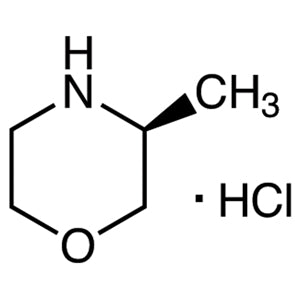
- TCI M2848 1022094-03-6 (S)-3-Methylmorpholine Hydrochloride
- TCI M2847 953780-78-4 (R)-3-Methylmorpholine Hydrochloride
- Alkene dihydroxylation: NMO serves as the stoichiometric co-oxidant that regenerates the metal catalyst, allowing diol formation to proceed while keeping the amount of expensive or toxic metal required to a minimum.
- Catalytic alcohol oxidation: the reagent returns the metal catalyst to its active oxidation state repeatedly, so alcohols can be converted with only catalytic loadings of the metal species rather than stoichiometric amounts.
- Complex molecule and natural product synthesis: its moderate oxidation potential permits selective transformation of the intended site without damaging other sensitive functional groups elsewhere on a multifunctional substrate.
- Method development in catalytic oxidation chemistry: the manufacturer-defined aqueous concentration allows researchers to vary co-oxidant equivalents precisely by volume when screening reaction conditions and catalyst systems.
- Routine synthetic steps within longer pharmaceutical or fine chemical routes: the ready-prepared solution removes the weighing step for a hygroscopic solid, improving reproducibility between operators and between batches of work.
| Brand | TCI |
|---|---|
| CAS number | 7529-22-8 |
| Molecular formula | — |
| Purity | — |
| Category | Chemistry > Synthetic Reagents > Oxidation [Synthetic Reagents] |
| Pack sizes | available in the manufacturer's standard packaging options; please confirm the size required when ordering |
| Physical form | solution, 50% in water, approximately 4.8 mol/L |
| Storage | keep in a tightly closed original container as directed by the manufacturer |
- Product code: M0981
Store the reagent in its original tightly closed container in a cool, well-ventilated area away from heat sources, direct sunlight, and incompatible materials, particularly reducing agents and combustible substances. Because the product is an aqueous solution of an oxidising reagent, containers should be kept sealed between uses to maintain the stated concentration and to prevent contamination. Handle in a fume hood using appropriate personal protective equipment, including safety glasses, chemically resistant gloves, and a laboratory coat. Dispense volumetrically with clean, dry glassware or pipettes to avoid introducing foreign material into the stock. Always consult the manufacturer's safety data sheet before use, and follow institutional procedures for the disposal of oxidising reagent waste.
—
Product Categories
Produk Terkait
-
4-MethylmorpholineN-Oxide TCI M2192
Regular price From Rp 1.035.300,00Regular price -
1H-Pyrrolo[2,3-b]pyridine7-Oxide TCI P2735
Regular price From Rp 1.035.300,00Regular price -
GrapheneOxide(10mg/mL,DispersioninWater) TCI G0557
Regular price From Rp 1.644.300,00Regular price -
2-Methylmorpholine TCI M3564
Regular price Rp 3.763.200,00Regular price -
(S)-3-MethylmorpholineHydrochloride TCI M2848
Regular price From Rp 1.246.350,00Regular price -
(R)-3-MethylmorpholineHydrochloride TCI M2847
Regular price From Rp 530.250,00Regular price -
4-Methylmorpholine TCI M0370
Regular price From Rp 477.750,00Regular price -
4-Ethyl-4-methylmorpholiniumBromide TCI E1166
Regular price From Rp 2.916.900,00Regular price
![55052-24-9 1H-Pyrrolo[2,3-b]pyridine 7-Oxide - AMI Scientific](http://amiscientific.com/cdn/shop/files/TCI2510P2735.jpg?v=1767136562&width=533)