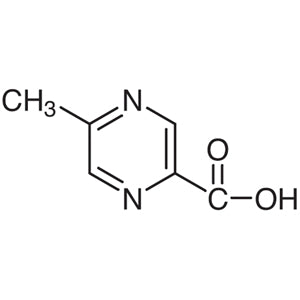
5-Methylpyrazine-2-carboxylic Acid with CAS number 5521-55-1 is a heterocyclic building block from TCI built around the pyrazine ring, a six-membered aromatic ring carrying two nitrogen atoms at opposite positions. This ring bears a methyl group and a carboxylic acid group at defined positions, producing a molecule that is simultaneously aromatic, nitrogen-containing, and equipped with a readily modified functional handle. In the laboratory, the compound serves as a practical starting material for constructing bioactive molecules as well as coordination ligands, giving synthetic chemists a compact scaffold that already contains the structural features they would otherwise have to install step by step.
The properties that make this compound a frequent choice rest on a combination of three things. First, the pyrazine ring is nitrogen-rich and therefore supplies lone electron pairs capable of coordinating to metal ions. Second, the carboxylic acid group provides a direct reaction point for the formation of amides, esters, acid chlorides, and salts. Third, the methyl group contributes stability while remaining available for oxidation into other functional groups when required. The pyrazine framework is also recognised as a motif that appears frequently in active pharmaceutical ingredients, which makes this compound an efficient entry point toward a wide range of derivatives.
Its solid physical form makes weighing, transfer, and stock preparation straightforward in routine laboratory practice. In Indonesian laboratories, materials of this type are typically used in university research groups, pharmaceutical and organic synthesis laboratories, and coordination chemistry work, where a well-defined heterocyclic starting material shortens a synthetic route. The solid is normally weighed out in small portions, dissolved in a suitable solvent for the reaction at hand, and the remainder returned to controlled storage for later use.
Related TCI products
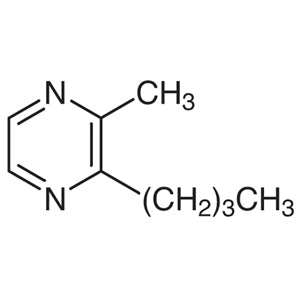
- TCI B1173 15987-00-5 2-Butyl-3-methylpyrazine
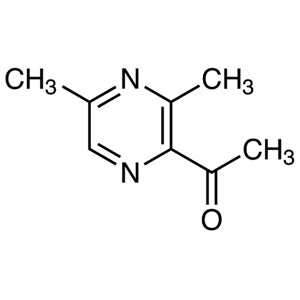
- TCI A3326 54300-08-2 2-Acetyl-3,5-dimethylpyrazine (contains 2-Acetyl-3,6-dimethylpyrazine)
- TCI A2992 5521-56-2 2-Amino-6-methylpyrazine
- TCI A2003 32974-92-8 2-Acetyl-3-ethylpyrazine
- TCI A1978 23787-80-6 2-Acetyl-3-methylpyrazine
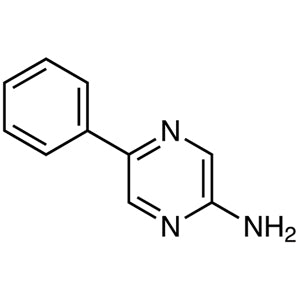
- TCI A1684 13535-13-2 2-Amino-5-phenylpyrazine
- Amide and ester synthesis: the carboxylic acid group offers a direct reaction point for coupling with amines or alcohols, allowing derivative libraries to be built from a single well-defined heterocyclic starting material.
- Coordination ligand preparation: the nitrogen-rich pyrazine ring supplies lone electron pairs that bind metal ions, while the acid group can act as an additional donor or anchoring site in complex formation.
- Pharmaceutical intermediate research: because the pyrazine framework recurs as a motif in active pharmaceutical ingredients, this compound serves as an efficient entry point toward medicinally relevant derivatives in discovery work.
- Bioactive molecule construction: the combination of an aromatic nitrogen heterocycle with a modifiable functional group lets researchers assemble candidate structures without first building the heterocyclic core themselves.
- Functional group transformation studies: the methyl substituent can be oxidised into other functional groups when needed, making the molecule useful for teaching and investigating selective transformations on heterocyclic systems.
| Brand | TCI |
|---|---|
| CAS number | 5521-55-1 |
| Molecular formula | — |
| Purity | — |
| Category | Chemistry > Building Blocks > Heterocyclic Building Blocks |
| Pack sizes | available in standard laboratory research pack sizes; please confirm the current options when ordering |
| Physical form | solid |
| Storage | keep in a cool, dry place in a tightly closed container, protected from moisture and light |
- Product code: M1003
Store the container tightly closed in a cool, dry, and well-ventilated area, away from moisture, direct sunlight, and incompatible chemicals. Original supplier packaging or a clean, chemically resistant, well-sealed glass or plastic container with a clear label is suitable for storage and for any repackaged portions. Handle the solid in a fume hood or a well-ventilated workspace to limit dust exposure, and wear a laboratory coat, safety goggles, and appropriate chemical-resistant gloves. Weigh carefully to avoid generating airborne particles, close the container immediately after use, and consult the supplier safety data sheet before first handling, spill response, or waste disposal.
—
Produk Terkait
-
2-Butyl-3-methylpyrazine TCI B1173
Regular price Rp 3.232.950,00Regular price -
2-Acetyl-3,5-dimethylpyrazine(contains2-Acetyl-3,6-dimethylpyrazine) TCI A3326
Regular price From Rp 1.326.150,00Regular price -
2-Amino-6-methylpyrazine TCI A2992
Regular price From Rp 903.000,00Regular price -
2-Acetyl-3-ethylpyrazine TCI A2003
Regular price From Rp 1.035.300,00Regular price -
2-Acetyl-3-methylpyrazine TCI A1978
Regular price Rp 1.035.300,00Regular price -
2-Amino-5-phenylpyrazine TCI A1684
Regular price From Rp 2.650.200,00Regular price -
2-(Aminomethyl)-5-methylpyrazine TCI A1154
Regular price Rp 6.413.400,00Regular price -
2-Acetylpyrazine TCI A0988
Regular price From Rp 1.035.300,00Regular price