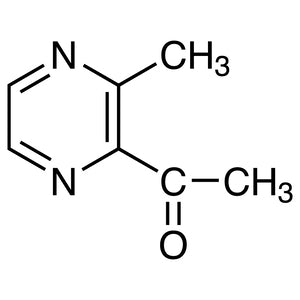
2-Acetyl-3-methylpyrazine is a chemical compound widely used in synthetic reactions to produce complex heterocyclic compounds. It serves as a fundamental building block in organic chemistry, enabling the synthesis of various bioactive and industrially relevant molecules. This compound is commonly found in aromatic compounds and has a pyrazine core that can be modified through functional group substitutions. Its versatility makes it an essential reagent in modern chemical research, particularly in the development of pharmaceuticals and advanced materials.
The compound is valued for its chemical stability under specific conditions and its reactivity with a range of reagents, including alcohols, acids, and bases. Its distinct spectroscopic properties, such as its recognizable IR and NMR spectra, make it ideal for molecular structure analysis. These characteristics contribute to its popularity in analytical chemistry, where accurate identification and characterization of compounds are crucial. Its broad applicability across multiple research areas further solidifies its role as a preferred material in laboratory settings.
In Indonesian laboratories, 2-Acetyl-3-methylpyrazine is extensively used in organic chemistry research, drug development, and the analysis of complex compounds. Local researchers frequently employ this compound to deepen their understanding of heterocyclic structures and their properties. Its presence in both academic and industrial research settings highlights its importance in advancing chemical innovation and scientific discovery in the region.
Related TCI products
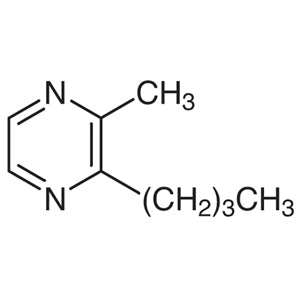
- TCI B1173 15987-00-5 2-Butyl-3-methylpyrazine
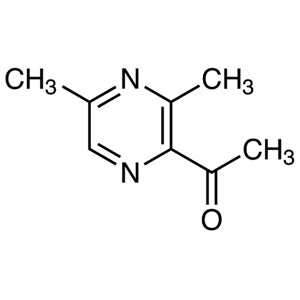
- TCI A3326 54300-08-2 2-Acetyl-3,5-dimethylpyrazine (contains 2-Acetyl-3,6-dimethylpyrazine)
- TCI A2992 5521-56-2 2-Amino-6-methylpyrazine
- TCI A2003 32974-92-8 2-Acetyl-3-ethylpyrazine
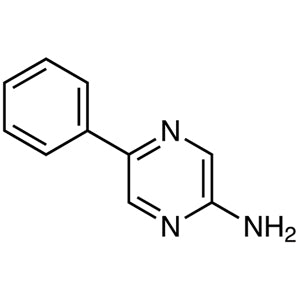
- TCI A1684 13535-13-2 2-Amino-5-phenylpyrazine
- TCI A1154 132664-85-8 2-(Aminomethyl)-5-methylpyrazine
- Synthesis of complex heterocyclic compounds for pharmaceutical research due to its reactivity and structural versatility.
- Molecular structure analysis using IR and NMR spectroscopy because of its distinct and identifiable spectral characteristics.
- Development of bioactive molecules in drug discovery due to its ability to form stable intermediates in synthetic pathways.
- Organic chemistry research for the creation of novel chemical entities with specific functional groups.
- Industrial applications in the production of aromatic compounds requiring precise chemical modifications.
| Brand | TCI |
|---|---|
| CAS number | 23787-80-6 |
| Molecular formula | — |
| Purity | — |
| Category | Chemistry > Building Blocks > Heterocyclic Building Blocks |
| Pack sizes | Available in various quantities as per standard chemical supply practices |
| Physical form | Solid (exact form may vary based on supplier specifications) |
| Storage | Store in a cool, dry place away from direct sunlight and moisture |
This compound should be stored in a cool, dry environment, away from direct sunlight and moisture to maintain its chemical stability. It is recommended to use airtight containers made of glass or high-density polyethylene to prevent contamination and degradation. Due to its reactivity, it should be handled with appropriate personal protective equipment, including gloves and safety goggles. Avoid exposure to strong acids or bases to prevent unwanted chemical reactions. Proper ventilation is essential when working with this material to ensure safe laboratory conditions. Always follow standard chemical handling protocols to minimize risks associated with its use.
—
Produk Terkait
-
2-Butyl-3-methylpyrazine TCI B1173
Regular price Rp 3.232.950,00Regular price -
2-Acetyl-3,5-dimethylpyrazine(contains2-Acetyl-3,6-dimethylpyrazine) TCI A3326
Regular price From Rp 1.326.150,00Regular price -
2-Amino-6-methylpyrazine TCI A2992
Regular price From Rp 903.000,00Regular price -
2-Acetyl-3-ethylpyrazine TCI A2003
Regular price From Rp 1.035.300,00Regular price -
2-Amino-5-phenylpyrazine TCI A1684
Regular price From Rp 2.650.200,00Regular price -
2-(Aminomethyl)-5-methylpyrazine TCI A1154
Regular price Rp 6.413.400,00Regular price -
2-Acetylpyrazine TCI A0988
Regular price From Rp 1.035.300,00Regular price -
2,3,5,6-Tetramethylpyrazine TCI T0972
Regular price Rp 1.618.050,00Regular price