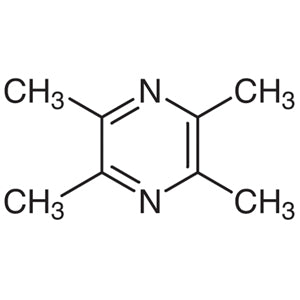
2,3,5,6-Tetramethylpyrazine is a chemical compound widely used in scientific and industrial applications. It belongs to the category of heterocyclic compounds, which are essential building blocks in organic chemistry. This compound features a pyrazine ring with methyl groups substituted at specific positions, making it a versatile intermediate in the synthesis of complex molecules. In laboratory settings, it plays a crucial role in the development of compounds with specific biological or pharmacological activities. Its chemical stability and controlled reactivity make it a valuable resource for researchers aiming to create novel compounds or modify existing ones.
The compound's molecular structure allows for flexibility in functionalization and modification, which is highly beneficial in synthetic chemistry. Its predictable chemical behavior and compatibility with various reaction conditions make it a preferred choice for chemists and pharmacologists. The ability to tailor its properties through chemical reactions further enhances its utility in research and development. This makes 2,3,5,6-Tetramethylpyrazine an essential component in laboratories focused on creating compounds with specific functional properties.
In Indonesian laboratories, 2,3,5,6-Tetramethylpyrazine is commonly used by researchers in chemistry, pharmacy, and biochemistry. It supports the development of new compounds or the modification of existing ones, particularly in the fields of pharmacology and biotechnology. Its relevance extends to studies involving the synthesis of bioactive molecules, making it a key material for scientific innovation in the region.
Related TCI products
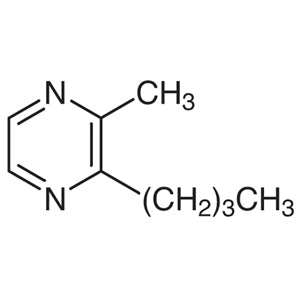
- TCI B1173 15987-00-5 2-Butyl-3-methylpyrazine
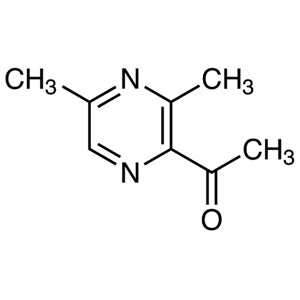
- TCI A3326 54300-08-2 2-Acetyl-3,5-dimethylpyrazine (contains 2-Acetyl-3,6-dimethylpyrazine)
- TCI A2992 5521-56-2 2-Amino-6-methylpyrazine
- TCI A2003 32974-92-8 2-Acetyl-3-ethylpyrazine
- TCI A1978 23787-80-6 2-Acetyl-3-methylpyrazine
- TCI T0942 14667-55-1 2,3,5-Trimethylpyrazine
- Organic synthesis applications benefit from this compound's structural versatility, allowing for the creation of complex molecules with tailored properties.
- Pharmaceutical research utilizes it as a building block for developing compounds with specific pharmacological activities and biological functions.
- Biochemical studies rely on its stability and reactivity to synthesize compounds that interact with biological systems and cellular processes.
- Industrial chemical processes incorporate it as a precursor for producing derivatives with enhanced functional properties and applications.
- Analytical chemistry applications use it as a standard or reference material for identifying and quantifying similar compounds in complex mixtures.
| Brand | TCI |
|---|---|
| CAS number | 1124-11-4 |
| Molecular formula | — |
| Purity | — |
| Category | Chemistry > Building Blocks > Heterocyclic Building Blocks |
| Pack sizes | Available in various quantities to meet research and production needs |
| Physical form | Solid or liquid, depending on the specific product variant |
| Storage | Store in a cool, dry place away from direct sunlight and moisture |
This compound should be stored in a cool, dry environment to maintain its chemical stability and prevent degradation. It is recommended to keep it in airtight containers to minimize exposure to moisture and air, which could affect its reactivity. Proper labeling of storage containers is essential for safety and traceability. In laboratory settings, it should be handled with care, using appropriate personal protective equipment such as gloves and safety goggles. Due to its chemical nature, it should be stored separately from incompatible substances to avoid any potential reactions. Regular monitoring of storage conditions ensures the compound remains suitable for use in research applications.
—
Produk Terkait
-
2-Butyl-3-methylpyrazine TCI B1173
Regular price Rp 3.285.450,00Regular priceRp 2.313.150,00Sale price Rp 3.285.450,00 -
2-Acetyl-3,5-dimethylpyrazine(contains2-Acetyl-3,6-dimethylpyrazine) TCI A3326
Regular price Rp 1.378.650,00Regular priceRp 979.650,00Sale price Rp 1.378.650,00 -
2-Amino-6-methylpyrazine TCI A2992
Regular price Rp 955.500,00Regular priceRp 683.550,00Sale price Rp 955.500,00 -
2-Acetyl-3-ethylpyrazine TCI A2003
Regular price Rp 1.087.800,00Regular priceRp 775.950,00Sale price Rp 1.087.800,00 -
2-Acetyl-3-methylpyrazine TCI A1978
Regular price Rp 1.087.800,00Regular priceRp 775.950,00Sale price Rp 1.087.800,00 -
2,3,5-Trimethylpyrazine TCI T0942
Regular price Rp 928.200,00Regular priceRp 664.650,00Sale price Rp 928.200,00 -
5-Methylpyrazin-2-amine TCI M3006
Regular price Rp 4.345.950,00Regular priceRp 3.054.450,00Sale price Rp 4.345.950,00 -
5-Methylpyrazine-2-carboxylicAcid TCI M1003
Regular price Rp 557.550,00Regular priceRp 405.300,00Sale price Rp 557.550,00