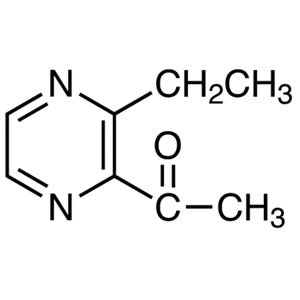
2-Acetyl-3-ethylpyrazine is a chemical compound classified under the heterocyclic category, commonly used in organic chemistry for the synthesis of complex molecules. As a building block, it serves as a foundational element in the development of compounds with intricate structures, offering versatility in chemical reactions. Its role in the laboratory is critical for researchers aiming to create molecules with specific functions and applications. This compound is particularly valuable for those working in synthetic chemistry, where the ability to modify and build upon heterocyclic frameworks is essential.
The compound is known for its stable chemical structure and high reactivity, making it a preferred choice for chemical synthesis. Its ability to react with various functional groups enables the creation of new compounds with unique properties. This reactivity, combined with its structural versatility, allows chemists to design and synthesize a wide range of products. The compound's compatibility with different reaction conditions and its capacity for substitution make it an essential tool in the laboratory.
In Indonesian laboratories, 2-Acetyl-3-ethylpyrazine is widely used in applied research across multiple disciplines. It plays a key role in pharmaceutical development, food modification, and material science. Researchers in Indonesia rely on this compound for its reliability and adaptability, ensuring accurate and flexible synthesis processes. Its broad applications make it a valuable resource for both academic and industrial research settings.
Related TCI products
- TCI E0334 13925-00-3 2-Ethylpyrazine
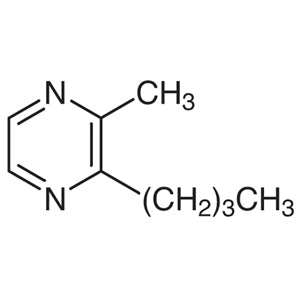
- TCI B1173 15987-00-5 2-Butyl-3-methylpyrazine
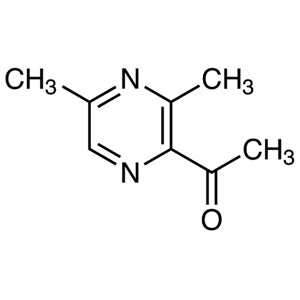
- TCI A3326 54300-08-2 2-Acetyl-3,5-dimethylpyrazine (contains 2-Acetyl-3,6-dimethylpyrazine)
- TCI A2992 5521-56-2 2-Amino-6-methylpyrazine
- TCI A1978 23787-80-6 2-Acetyl-3-methylpyrazine
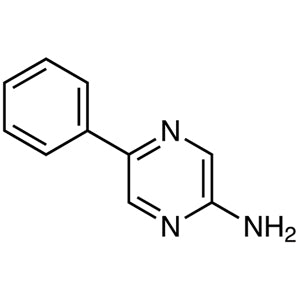
- TCI A1684 13535-13-2 2-Amino-5-phenylpyrazine
- Pharmaceutical development: This compound is used to synthesize active pharmaceutical ingredients due to its structural versatility and reactivity.
- Food modification: It contributes to the development of flavor compounds and food additives, enhancing taste and aroma in food products.
- Material science research: It is employed in the creation of advanced materials with specific functional properties, such as polymers and coatings.
- Organic synthesis projects: Its role as a building block allows for the construction of complex molecular structures in synthetic chemistry.
- Analytical chemistry applications: It serves as a reference standard for identifying and quantifying compounds in various analytical techniques.
| Brand | TCI |
|---|---|
| CAS number | 32974-92-8 |
| Molecular formula | — |
| Purity | — |
| Category | Chemistry > Building Blocks > Heterocyclic Building Blocks |
| Pack sizes | Available in various quantities as per supplier specifications |
| Physical form | Solid |
| Storage | Store in a cool, dry place away from light and moisture |
This compound should be stored in a cool, dry environment, away from direct light and moisture to maintain its stability. It is recommended to use airtight containers to prevent exposure to air and humidity. Due to its reactivity, it should be handled with care in a well-ventilated area, and appropriate personal protective equipment should be worn. Avoid contact with incompatible substances to ensure safe handling. Proper storage conditions are essential to preserve its chemical integrity and ensure its effectiveness in laboratory applications.
—
Produk Terkait
-
2-Ethylpyrazine TCI E0334
Regular price From Rp 980.700,00Regular price -
2-Butyl-3-methylpyrazine TCI B1173
Regular price Rp 3.232.950,00Regular price -
2-Acetyl-3,5-dimethylpyrazine(contains2-Acetyl-3,6-dimethylpyrazine) TCI A3326
Regular price From Rp 1.326.150,00Regular price -
2-Amino-6-methylpyrazine TCI A2992
Regular price From Rp 903.000,00Regular price -
2-Acetyl-3-methylpyrazine TCI A1978
Regular price Rp 1.035.300,00Regular price -
2-Amino-5-phenylpyrazine TCI A1684
Regular price From Rp 2.650.200,00Regular price -
2-(Aminomethyl)-5-methylpyrazine TCI A1154
Regular price Rp 6.413.400,00Regular price -
2-Acetylpyrazine TCI A0988
Regular price From Rp 1.035.300,00Regular price