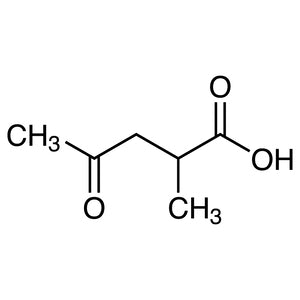
Alpha-Methyllevulinic Acid (AMLA), with the CAS number 6641-83-4, is a versatile chemical compound widely utilized in laboratory settings. It serves as a key building block in organic synthesis and pharmacological research, offering a foundation for the development of complex molecules. Its structural simplicity allows for efficient chemical modifications, making it an essential tool in the creation of bioactive compounds. In the laboratory, AMLA is valued for its ability to participate in various chemical reactions, contributing to the synthesis of pharmaceuticals and other specialized compounds.
The chemical properties of AMLA make it a preferred choice for researchers. It exhibits stability under specific conditions and can react with a variety of reagents, including strong bases, acids, and alkali metals. This reactivity enables it to be used in substitution, esterification, and redox reactions. Its solid form and ease of handling further enhance its practicality, making it a reliable and accessible material for laboratory applications. The combination of chemical versatility and ease of use positions AMLA as a valuable resource in both academic and industrial research environments.
In Indonesian laboratories, AMLA is commonly used in scientific research across universities and research institutions. It plays a crucial role in the development of new drugs and materials, supporting both fundamental and applied research. Its availability and ease of use make it a practical choice for researchers seeking to explore chemical synthesis and biological activity. AMLA is an essential component in the toolkit of Indonesian scientists working in the fields of chemistry and pharmacology.
Related TCI products
- TCI M1057 6628-79-1 beta-Methyllevulinic Acid
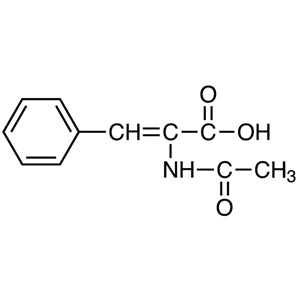
- TCI A0014 5469-45-4 alpha-Acetamidocinnamic Acid
- TCI T3420 819050-88-9 alpha,alpha,alpha',alpha'-Tetramethyl-1,3-benzenedipropionic Acid
- TCI T3122 90-17-5 alpha-(Trichloromethyl)benzyl Acetate
- TCI B2950 29270-30-2 alpha-Bromo-2-chlorophenylacetic Acid
- TCI B1253 5443-49-2 alpha-Bromocinnamaldehyde
- Organic synthesis is a primary application where AMLA is used as a building block for creating complex molecules due to its reactivity and structural versatility.
- Pharmacological research benefits from AMLA's ability to serve as a precursor for bioactive compounds, including antitumor and antiviral agents, supporting drug development efforts.
- Chemical modification studies rely on AMLA's capacity to undergo substitution and esterification reactions, enabling the synthesis of diverse functional derivatives.
- Redox reactions are facilitated by AMLA's chemical properties, making it suitable for applications in electrochemistry and oxidation-reduction processes.
- Analytical chemistry utilizes AMLA as a reference standard or reagent in qualitative and quantitative analysis due to its stability and well-defined chemical behavior.
| Brand | TCI |
|---|---|
| CAS number | 6641-83-4 |
| Molecular formula | — |
| Purity | — |
| Category | Chemistry > Building Blocks > Non-Heterocyclic Building Blocks |
| Pack sizes | Available in various quantities as per supplier specifications |
| Physical form | Solid |
| Storage | Store in a cool, dry place away from moisture and direct sunlight |
Alpha-Methyllevulinic Acid should be stored in a cool, dry environment to maintain its chemical stability and prevent degradation. It is recommended to use airtight containers to protect it from moisture and potential contaminants. Due to its reactivity with strong acids and bases, it should be handled with appropriate laboratory safety measures, including the use of personal protective equipment. Storage should be in a location that is inaccessible to children and away from incompatible materials. Regular inspection of storage conditions is advised to ensure the integrity of the compound remains unaffected. Proper labeling of containers is essential for safe handling and to prevent accidental exposure.
—
Produk Terkait
-
beta-MethyllevulinicAcid TCI M1057
Regular price From Rp 5.830.650,00Regular price -
alpha-AcetamidocinnamicAcid TCI A0014
Regular price Rp 1.087.800,00Regular price -
alpha,alpha,alpha',alpha'-Tetramethyl-1,3-benzenedipropionicAcid TCI T3420
Regular price Rp 3.472.350,00Regular price -
alpha-(Trichloromethyl)benzylAcetate TCI T3122
Regular price From Rp 795.900,00Regular price -
alpha-Bromo-2-chlorophenylaceticAcid TCI B2950
Regular price Rp 1.988.700,00Regular price -
alpha-Bromocinnamaldehyde TCI B1253
Regular price Rp 980.700,00Regular price -
alpha-BromophenylaceticAcid TCI B0984
Regular price From Rp 795.900,00Regular price -
DL-alpha-Amino-epsilon-caprolactamHydrochloride TCI A2331
Regular price Rp 3.446.100,00Regular price