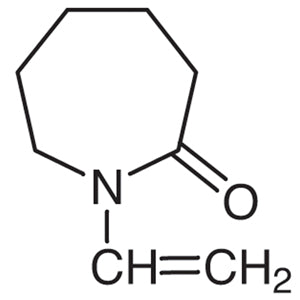
DL-alpha-Amino-epsilon-caprolactam Hydrochloride is a chemical compound widely used in laboratory settings for its versatility in chemical reactions and molecular synthesis. This compound plays a crucial role in the development of pharmaceuticals and industrial chemicals due to its unique cyclic amino acid structure. Its ability to undergo hydrolysis makes it an essential building block for creating complex molecules. In research environments, it is often employed as a starting material for the synthesis of bioactive compounds, including antibiotics and other therapeutic agents.
The compound is valued for its high purity and stability under controlled conditions, which ensures consistent results in experimental processes. It exhibits good solubility in organic solvents, facilitating efficient separation and reaction processes. Its reactive nature allows it to interact effectively with various reagents, making it ideal for substitution and peptidation reactions. These properties make it a reliable choice for chemists and researchers working on drug development and molecular structure studies.
In Indonesian laboratories, DL-alpha-Amino-epsilon-caprolactam Hydrochloride is commonly used by researchers in chemistry, pharmacy, and biotechnology. It is particularly relevant in studies involving the synthesis of bioactive compounds, drug development, and molecular structure analysis. Its availability supports ongoing research efforts in both academic and industrial settings, contributing to advancements in chemical sciences and pharmaceutical innovation.
Related TCI products
- Pharmaceutical research utilizes this compound for the synthesis of bioactive molecules due to its reactivity and structural versatility.
- Organic chemistry experiments benefit from its solubility in organic solvents, enabling efficient reaction processes and purification.
- Drug development projects rely on its role as a building block for creating complex pharmaceutical compounds with therapeutic potential.
- Structural analysis studies use it to investigate molecular interactions and reaction mechanisms in synthetic pathways.
- Biotecnology applications leverage its properties for the production of peptides and other biologically active substances.
| Brand | TCI |
|---|---|
| CAS number | 29426-64-0 |
| Molecular formula | — |
| Purity | — |
| Category | Chemistry > Building Blocks > Non-Heterocyclic Building Blocks |
| Pack sizes | Available in standard laboratory quantities |
| Physical form | Solid powder |
| Storage | Store in a cool, dry place away from moisture and light |
DL-alpha-Amino-epsilon-caprolactam Hydrochloride should be stored in a cool, dry place, away from moisture and direct light to maintain its stability and purity. It is recommended to use airtight containers to prevent exposure to humidity and contaminants. Due to its reactive nature, it should be handled in a well-ventilated area, and appropriate personal protective equipment should be worn. Avoid contact with incompatible substances to ensure safety during storage and use. Proper labeling of containers is essential for safe handling and to prevent accidental exposure in laboratory environments.
—
Produk Terkait
-
DL-alpha-Amino-epsilon-caprolactam TCI A1003
Regular price From Rp 1.856.400,00Regular priceRp 1.313.550,00Sale price From Rp 1.856.400,00 -
N-Acetyl-epsilon-caprolactam TCI A0081-500G
Regular price Rp 4.823.700,00Regular priceRp 3.388.350,00Sale price Rp 4.823.700,00 -
N-Methyl-epsilon-caprolactam TCI M0686
Regular price From Rp 980.700,00Regular priceRp 701.400,00Sale price From Rp 980.700,00 -
epsilon-Caprolactam TCI C0203
Regular price From Rp 477.750,00Regular priceRp 333.900,00Sale price From Rp 477.750,00 -
epsilon-Thiocaprolactam TCI T1297
Regular price Rp 4.213.650,00Regular priceRp 2.962.050,00Sale price Rp 4.213.650,00 -
N-Acetyl-epsilon-caprolactam TCI A0081
Regular price From Rp 742.350,00Regular priceRp 534.450,00Sale price From Rp 742.350,00 -
N-Vinyl-epsilon-caprolactam(stabilizedwithHO-TEMPO) TCI V0073
Regular price From Rp 900.900,00Regular priceRp 645.750,00Sale price From Rp 900.900,00 -
epsilon-CaprolactamZoneRefined(numberofpasses:24) TCI C0022
Regular price Rp 2.545.200,00Regular priceRp 1.779.750,00Sale price Rp 2.545.200,00