N-Vinyl-epsilon-caprolactam (stabilized with HO-TEMPO) from TCI, product code V0073, is a vinyl monomer made up of a seven-membered caprolactam ring with a vinyl group attached to the ring nitrogen. It is commonly abbreviated NVCL or NVCap and is the building block of poly(N-vinylcaprolactam), known as PNVCL. In the laboratory, researchers use this monomer to synthesize homopolymers, copolymers, and temperature-responsive hydrogels. The product contains the stabilizer HO-TEMPO, which prevents spontaneous polymerization during storage. This helps keep the monomer usable until it is needed for controlled polymerization work.
The main reason to choose NVCL is that its polymer is thermoresponsive. PNVCL dissolves in water at low temperatures, then phase-separates or aggregates when heated above its lower critical solution temperature (LCST), which lies close to body temperature. Unlike poly(N-isopropylacrylamide), PNVCL does not release small amine molecules when it hydrolyzes. For this reason it is widely studied as a more biocompatible alternative. The polar lactam group also lets the polymer form complexes and hydrogen bonds, which is useful in coatings, adhesives, and gas hydrate inhibitors. These features make NVCL a practical monomer for designing smart and functional polymer materials.
In Indonesia, this monomer is relevant to polymer chemistry, pharmacy, biomaterials, and chemical engineering laboratories that develop stimuli-responsive materials. University research groups can use it to prepare model thermoresponsive polymers for studying phase behavior around the LCST. Pharmaceutical and biomaterials teams can test PNVCL-based hydrogels and carriers as candidates for controlled release systems. Chemical engineering laboratories exploring coatings, adhesives, or gas hydrate inhibition can also use it as a starting monomer for functional copolymers in exploratory formulation work.
TCI brochures (PDF)
- Biomaterials Research Reagents 2025-02-19 · p. 15
- Monomers 2025-05-28 · p. 13
- Synthesis of PNVCL homopolymers: NVCL is the direct building block of poly(N-vinylcaprolactam), so researchers can prepare and study this thermoresponsive polymer from a single, well-defined monomer.
- Preparation of functional copolymers: The vinyl group lets NVCL copolymerize with other monomers, so laboratories can adjust thermoresponsive behavior and add properties suited to specific research targets.
- Temperature-responsive hydrogels: Because PNVCL changes solubility near body temperature, NVCL-based hydrogels are well suited to research on smart materials that swell or collapse when the temperature changes.
- Biocompatible material research: PNVCL does not release small amines on hydrolysis, which makes NVCL an attractive alternative to poly(N-isopropylacrylamide) in pharmaceutical and biomaterials studies.
- Coatings, adhesives, and gas hydrate inhibitors: The polar lactam group supports complex formation and hydrogen bonding, so NVCL-derived polymers suit studies of film formation, adhesion, and hydrate inhibition.
| Brand | TCI (product code V0073) |
|---|---|
| CAS number | 2235-00-9 |
| Molecular formula | — |
| Purity | — |
| Category | Materials Science > Polymer/Macromolecule Reagents > Monomers |
| Pack sizes | Available pack sizes listed on the product page or on request |
| Physical form | — |
| Storage | Follow the conditions on the TCI label and Safety Data Sheet |
- Stabilizer: Contains HO-TEMPO to prevent spontaneous polymerization
Store N-Vinyl-epsilon-caprolactam in its original, tightly closed TCI container, following the storage conditions on the label and Safety Data Sheet. Keep it in a cool, dry, well-ventilated area away from heat, direct sunlight, ignition sources, and polymerization initiators. The HO-TEMPO stabilizer guards against spontaneous polymerization, but long storage under unsuitable conditions can still reduce quality. Close the container right after each use to limit exposure to air and moisture. Wear appropriate laboratory protective equipment, including gloves, safety glasses, and a lab coat, and handle the material in a fume hood or well-ventilated area. Avoid contact with skin and eyes and avoid breathing vapors. Read the Safety Data Sheet before use and dispose of waste according to local regulations.
—
Produk Terkait
-
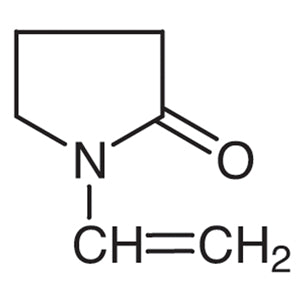
1-Vinyl-2-pyrrolidone(stabilizedwithN,N'-Di-sec-butyl-p-phenylenediamine) TCI V0026
Regular price From Rp 530.250,00Regular priceRp 386.400,00Sale price From Rp 530.250,00 -
Vinyl10-Undecenoate(stabilizedwithMEHQ) TCI U0057
Regular price Rp 2.041.200,00Regular priceRp 1.442.700,00Sale price Rp 2.041.200,00 -
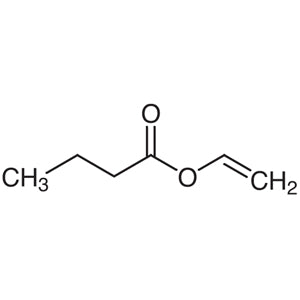
VinylButyrate(stabilizedwithMEHQ) TCI B0765
Regular price From Rp 505.050,00Regular priceRp 352.800,00Sale price From Rp 505.050,00 -
VinylPropionate(stabilizedwithMEHQ) TCI P0613
Regular price From Rp 557.550,00Regular priceRp 405.300,00Sale price From Rp 557.550,00