

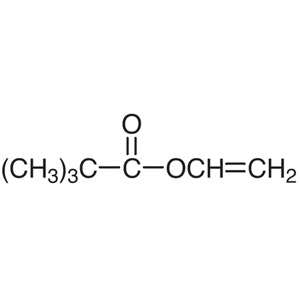
Vinyl Pivalate (stabilized with HQ), with CAS number 3377-92-2, is a chemical compound widely used in polymerization reactions to produce polymers with specific structural properties. As a monomer, it serves as a foundational component in the synthesis of materials exhibiting desired characteristics such as elasticity and mechanical strength. This compound is particularly valuable in materials science research, where precise control over polymer structure is essential. Its versatility makes it a key reagent in both academic and industrial laboratory settings.
The chemical stability of Vinyl Pivalate is enhanced through stabilization with HQ (hydroquinone), which significantly reduces the risk of degradation during storage and use. This stabilization ensures consistent performance and minimizes the occurrence of side reactions. Additionally, its high density and good reactivity make it an ideal choice for targeted polymerization processes. The combination of these properties ensures that Vinyl Pivalate remains a reliable and effective reagent in various chemical applications.
In Indonesian laboratories, Vinyl Pivalate is commonly utilized by researchers and educational institutions for polymer synthesis and material development. It plays a crucial role in advancing polymer science and supporting innovation in the field of materials. Its presence in laboratory workflows highlights its importance in both fundamental research and applied development projects.
TCI brochures (PDF)
- Biomaterials Research Reagents 2025-02-19 · p. 14
- Monomers 2025-05-28 · p. 13
Related TCI products
- TCI A0045 108-05-4 Vinyl Acetate Monomer (stabilized with HQ)
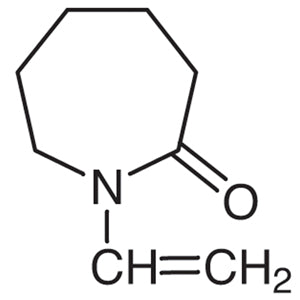
- TCI V0073 2235-00-9 N-Vinyl-epsilon-caprolactam (stabilized with HO-TEMPO)
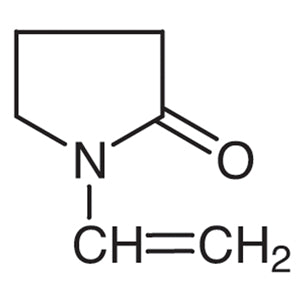
- TCI V0026 88-12-0 1-Vinyl-2-pyrrolidone (stabilized with N,N'-Di-sec-butyl-p-phenylenediamine)
- TCI U0057 5299-57-0 Vinyl 10-Undecenoate (stabilized with MEHQ)
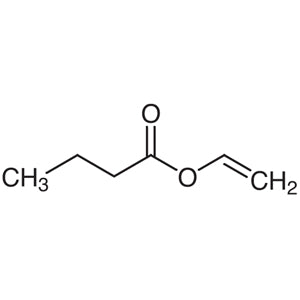
- TCI B0765 123-20-6 Vinyl Butyrate (stabilized with MEHQ)
- TCI P0613 105-38-4 Vinyl Propionate (stabilized with MEHQ)
- Polymer synthesis for creating materials with controlled mechanical and thermal properties.
- Research in polymerization mechanisms to understand reaction kinetics and chain growth.
- Development of new polymer-based products for industrial and commercial applications.
- Educational experiments in materials science to teach polymer chemistry fundamentals.
- Testing of stabilizers and additives in polymer formulations to enhance material performance.
| Brand | TCI |
|---|---|
| CAS number | 3377-92-2 |
| Molecular formula | — |
| Purity | — |
| Category | Materials Science > Polymer/Macromolecule Reagents > Monomers |
| Pack sizes | Available in various quantities as per standard laboratory supply |
| Physical form | Liquid |
| Storage | Store in a cool, dark place away from heat and direct sunlight |
Vinyl Pivalate should be stored in a cool, dry environment, away from direct sunlight and sources of heat. It is recommended to use airtight containers made of glass or high-density polyethylene to prevent contamination and maintain chemical integrity. Due to its chemical nature, it should be handled with appropriate personal protective equipment, including gloves and safety goggles. Avoid exposure to incompatible substances such as strong oxidizing agents. Ensure proper ventilation in the laboratory to minimize inhalation risks. Regular monitoring of storage conditions is essential to maintain the stability and effectiveness of the compound.
—
Produk Terkait
-
VinylAcetateMonomer(stabilizedwithHQ) TCI A0045
Regular price Rp 468.000,00Regular priceRp 318.000,00Sale price Rp 468.000,00 -
N-Vinyl-epsilon-caprolactam(stabilizedwithHO-TEMPO) TCI V0073
Regular price From Rp 881.000,00Regular priceRp 615.000,00Sale price From Rp 881.000,00 -
1-Vinyl-2-pyrrolidone(stabilizedwithN,N'-Di-sec-butyl-p-phenylenediamine) TCI V0026
Regular price From Rp 518.000,00Regular priceRp 368.000,00Sale price From Rp 518.000,00 -
Vinyl10-Undecenoate(stabilizedwithMEHQ) TCI U0057
Regular price Rp 1.997.000,00Regular priceRp 1.374.000,00Sale price Rp 1.997.000,00 -
VinylButyrate(stabilizedwithMEHQ) TCI B0765
Regular price From Rp 494.000,00Regular priceRp 336.000,00Sale price From Rp 494.000,00 -
VinylPropionate(stabilizedwithMEHQ) TCI P0613
Regular price From Rp 544.000,00Regular priceRp 386.000,00Sale price From Rp 544.000,00 -
Vinyl2-Ethylhexanoate(stabilizedwithMEHQ) TCI E0404
Regular price Rp 1.193.000,00Regular priceRp 827.000,00Sale price Rp 1.193.000,00 -
VinylHexanoate(stabilizedwithMEHQ) TCI C0898
Regular price From Rp 1.245.000,00Regular priceRp 862.000,00Sale price From Rp 1.245.000,00