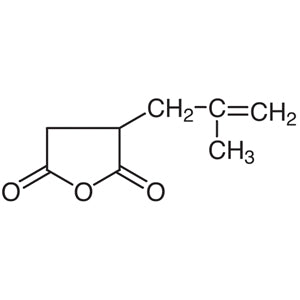
TCI M1123 (2-Methyl-2-propenyl)succinic Anhydride is a succinic anhydride carrying an unsaturated methallyl side chain on its four-carbon backbone. The structure combines two reactive centres of very different character within a single molecule: a strongly electrophilic cyclic anhydride ring and a terminal double bond that can participate in radical and addition chemistry. In the laboratory, a compound of this kind acts as a bridge between two worlds, conventional organic chemistry and polymer chemistry, because one end can be attached to an amine or an alcohol while the other end remains available for network formation.
The property that makes this material a preferred choice is the high reactivity of the anhydride ring toward nucleophiles. Reaction with primary amines gives an amic acid that can be closed to the corresponding imide, while reaction with alcohols gives a half ester that leaves a free carboxyl group available for further functionalisation. The remaining methallyl group is a substituted alkene and can therefore be carried into radical polymerisation, thiol-ene reactions, or hydrosilylation. This combination gives the researcher stepwise control: one group is reacted first without disturbing the other.
In Indonesian laboratories, this building block is typically used in university and institutional research groups working on organic synthesis, polymer modification, and materials development, where a bifunctional monomer is needed to introduce both an anchoring point and a polymerisable handle. It is generally ordered as a catalogue-scale research chemical for bench work rather than for production, and is handled within standard synthetic workflows that already include controlled dispensing, moisture exclusion, and fume hood operation.
- Imide and amic acid synthesis: the anhydride ring opens cleanly with primary amines, giving an amic acid intermediate that can then be cyclised to an imide under standard dehydrating conditions.
- Half ester preparation: reaction with alcohols opens the ring to a monoester bearing a free carboxylic acid, providing a convenient handle for subsequent coupling or salt formation chemistry.
- Radical copolymerisation: the terminal methallyl double bond allows the molecule to be incorporated as a comonomer, introducing pendant anhydride functionality directly into a growing polymer chain.
- Thiol-ene functionalisation: the unsaturated side chain participates in thiol-ene addition, letting researchers attach thiol-bearing fragments while the anhydride ring is preserved for later modification.
- Hydrosilylation and silicone modification: the alkene terminus serves as the addition site for silicon hydride reagents, supporting preparation of anhydride-functional silicone or hybrid organic-inorganic materials.
| Brand | TCI |
|---|---|
| CAS number | 18908-20-8 |
| Molecular formula | — |
| Purity | — |
| Category | Chemistry > Building Blocks > Non-Heterocyclic Building Blocks |
| Pack sizes | available in standard TCI catalogue research pack sizes |
| Physical form | organic cyclic anhydride, supplied as a research-grade reagent |
| Storage | keep in a tightly closed container, protected from moisture |
Store the container tightly closed in a cool, dry, well-ventilated place away from moisture, since cyclic anhydrides are readily hydrolysed by atmospheric water to the corresponding diacid, which reduces reactivity. Keep it separated from amines, alcohols, strong bases, and oxidising agents. Use the original supplier container or an equivalent tightly sealed glass vessel with a chemically compatible closure, and where practical work under an inert atmosphere when weighing and transferring. All handling should be carried out in a fume hood with safety glasses, gloves, and a laboratory coat, and spills should be cleaned up promptly following the supplier safety data sheet.
—
Produk Terkait
-
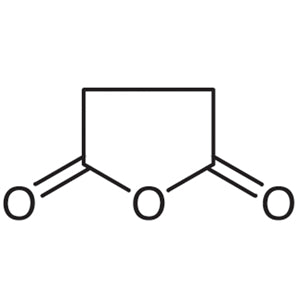
SuccinicAnhydride TCI S0107
Regular price From Rp 477.750,00Regular price -
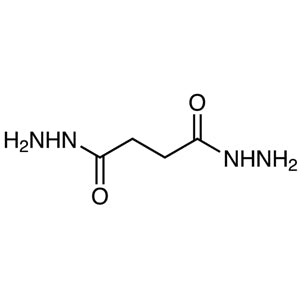
SuccinicDihydrazide TCI S0482
Regular price From Rp 743.400,00Regular price -
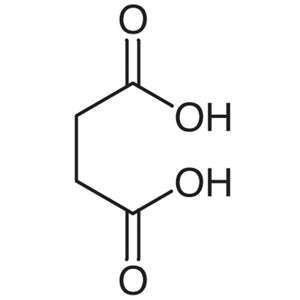
SuccinicAcid TCI S0100
Regular price From Rp 477.750,00Regular price -
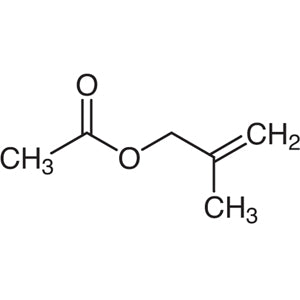
2-Methyl-2-propenylAcetate TCI A1605
Regular price Rp 3.605.700,00Regular price -
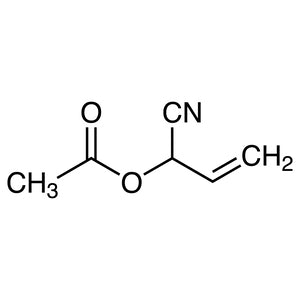
1-Cyano-2-propenylAcetate TCI A1196
Regular price Rp 7.023.450,00Regular price -
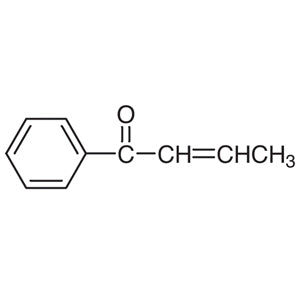
Phenyl1-PropenylKetone TCI P0216
Regular price From Rp 6.228.600,00Regular price -
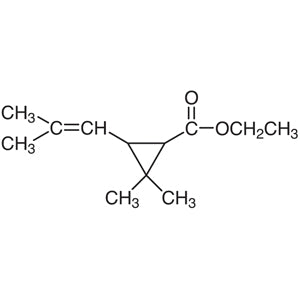
Ethyl2,2-Dimethyl-3-(2-methyl-1-propenyl)cyclopropane-1-carboxylate TCI D2112
Regular price From Rp 1.298.850,00Regular price -
ValericAnhydride TCI V0006
Regular price From Rp 875.700,00Regular price