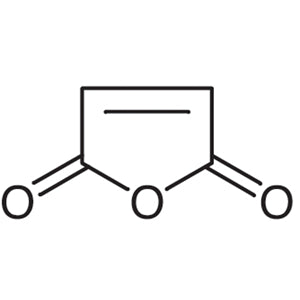
Succinic Anhydride from TCI is the cyclic anhydride of succinic acid. It belongs to the non-heterocyclic building blocks used widely in organic synthesis. In the laboratory it serves as an efficient acylating reagent. It reacts with alcohols, amines, and other nucleophilic groups to introduce a four-carbon succinyl chain that ends in a free carboxylic acid group. Because of this, succinic anhydride is an important starting material in synthetic chemistry, polymer modification, bioorganic chemistry, and the preparation of intermediates for pharmaceutical and materials research.
Chemists choose this material because its reactivity is controlled and easy to direct. The five-membered anhydride ring is reactive enough to open under mild conditions, but it is less reactive than an acid chloride, so reactions are easier to manage. When a nucleophile opens the ring, it directly produces a free carboxyl group. This group can then act as a further attachment point, for example for conjugation, to add a negative charge, or to improve water solubility. By-products are relatively simple, so purifying the product is usually straightforward.
In Indonesian laboratories, succinic anhydride is commonly used in university organic chemistry research groups, pharmaceutical research and development units, and polymer and materials science laboratories. Researchers use it to prepare succinylated derivatives, to add carboxylic acid handles to molecules and surfaces, and to build intermediates for multi-step synthesis. Because it comes from TCI, a recognised reagent brand, it suits teaching laboratories as well as research settings where reliable, consistent building blocks are needed for reproducible work.
TCI brochures (PDF)
- Bioconjugation Reagents 2026-07-07 · p. 12
- Acylation of alcohols and amines: the anhydride ring opens readily under mild conditions, giving succinylated esters or amides with a free carboxylic acid end for further work.
- Introducing carboxyl linkers for conjugation: ring opening leaves a free carboxyl group, which can serve as an attachment point when linking molecules, labels, or other functional groups.
- Polymer and surface modification: grafting succinyl groups onto polymers or materials adds carboxylic acid functionality, which can introduce negative charge or improve water solubility.
- Bioorganic chemistry studies: its controlled, milder reactivity compared with acid chlorides makes it useful for modifying nucleophilic groups in biomolecule-related research under gentle conditions.
- Synthesis of pharmaceutical and materials intermediates: as a non-heterocyclic building block, it provides a simple four-carbon unit, and its simple by-products make purification easier in multi-step routes.
| Brand | TCI (product code S0107) |
|---|---|
| CAS number | 108-30-5 |
| Molecular formula | — |
| Purity | — |
| Category | Chemistry > Building Blocks > Non-Heterocyclic Building Blocks |
| Pack sizes | available in TCI's standard pack sizes; please contact AMI Scientific to confirm the options available |
| Physical form | solid cyclic anhydride; see the TCI product label and Certificate of Analysis for exact details |
| Storage | moisture-sensitive; keep tightly closed in a cool, dry place |
Succinic anhydride is sensitive to moisture, because water slowly opens the anhydride ring and turns it back into succinic acid. Store it in its original, tightly sealed container in a cool, dry, well-ventilated place, away from heat, water, strong bases, alcohols, and amines. For longer storage, a desiccator or a dry, inert atmosphere helps protect reagent quality. Close the container promptly after each use to limit exposure to humid air, which is especially important in Indonesia's tropical climate. When handling, wear safety glasses, chemical-resistant gloves, and a lab coat. Weigh and transfer the material in a fume hood or a well-ventilated area to avoid breathing in dust, and avoid contact with skin and eyes. Always check the TCI Safety Data Sheet for full hazard, first-aid, and disposal information, and follow your institution's chemical safety procedures.
—
Product Categories
Produk Terkait
-
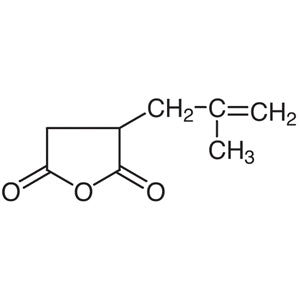
(2-Methyl-2-propenyl)succinicAnhydride TCI M1123
Regular price Rp 7.154.700,00Regular priceRp 5.019.000,00Sale price Rp 7.154.700,00 -
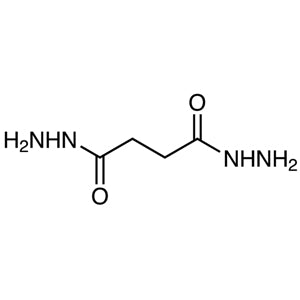
SuccinicDihydrazide TCI S0482
Regular price From Rp 795.900,00Regular priceRp 572.250,00Sale price From Rp 795.900,00 -
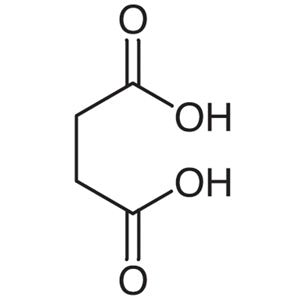
SuccinicAcid TCI S0100
Regular price From Rp 530.250,00Regular priceRp 386.400,00Sale price From Rp 530.250,00 -
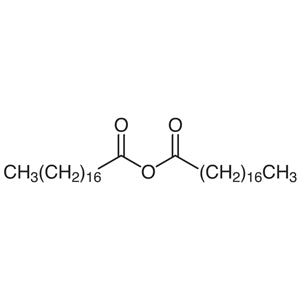
StearicAnhydride TCI S0083
Regular price From Rp 2.518.950,00Regular priceRp 1.776.600,00Sale price From Rp 2.518.950,00 -
PalmiticAnhydride TCI P0008
Regular price From Rp 2.623.950,00Regular priceRp 1.850.100,00Sale price From Rp 2.623.950,00 -
MyristicAnhydride TCI M0484
Regular price From Rp 3.790.500,00Regular priceRp 2.665.950,00Sale price From Rp 3.790.500,00 -
CitraconicAnhydride TCI M0365
Regular price From Rp 530.250,00Regular priceRp 386.400,00Sale price From Rp 530.250,00 -
MaleicAnhydride TCI M0005
Regular price From Rp 505.050,00Regular priceRp 368.550,00Sale price From Rp 505.050,00