


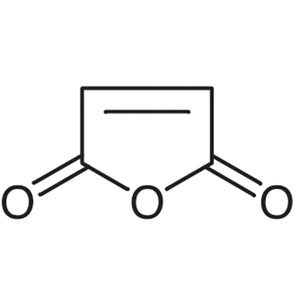
Maleic Anhydride (MA) is an organic compound widely used in various chemical reactions within laboratory settings. As a fundamental building block in chemistry, it plays a crucial role in the synthesis of heterocyclic compounds and polymers. Its versatility makes it an essential reagent for chemists working on a wide range of synthetic pathways. MA is commonly used to produce derivatives such as maleic acid and itaconic acid, which have significant applications in pharmaceuticals, plastics, and other chemical industries. Due to its reactivity, it is frequently employed in esterification, amidation, and substitution reactions.
The physical and chemical properties of Maleic Anhydride make it a preferred choice for many laboratory applications. It has a stable molecular structure but is highly reactive towards water and polar compounds. Its hydrophobic nature and relatively low melting point mean it can easily change form when exposed to high temperatures. These characteristics require careful handling to prevent unwanted reactions. MA is available in solid form and can react with a variety of functional groups, making it a versatile reagent in organic synthesis.
In Indonesian laboratories, Maleic Anhydride is extensively used in chemical research, particularly in the synthesis of organic compounds and the development of new chemical products. Its availability and reactivity make it a key component in many experimental processes. Researchers rely on MA for its ability to participate in a wide range of chemical transformations, supporting both academic and industrial applications in the chemical sciences.
TCI brochures (PDF)
- Monomers 2025-05-28 · p. 19
- Organic synthesis is a primary application where Maleic Anhydride is used to produce a variety of derivatives, including maleic acid and itaconic acid, due to its reactivity and versatility in chemical reactions.
- Polymer production benefits from MA’s ability to participate in polymerization reactions, making it essential for the development of synthetic polymers and materials.
- Pharmaceutical research utilizes MA as a building block for the synthesis of various drug compounds, leveraging its role in creating complex molecular structures.
- Industrial chemical development relies on MA for the creation of new chemical products, as it is a key reagent in the synthesis of functional compounds with wide-ranging applications.
- Analytical chemistry uses MA in the preparation of reagents and standards, allowing for accurate and reproducible chemical analysis in laboratory settings.
| Brand | TCI |
|---|---|
| CAS number | 108-31-6 |
| Molecular formula | — |
| Purity | — |
| Category | Chemistry > Building Blocks > Non-Heterocyclic Building Blocks |
| Pack sizes | Available in various quantities as per supplier specifications |
| Physical form | Solid |
| Storage | Store in a cool, dry place away from moisture and incompatible materials |
Maleic Anhydride should be stored in a cool, dry environment to maintain its stability and prevent unwanted reactions. It is recommended to use airtight containers to protect it from moisture and air exposure. Due to its reactivity with water and polar substances, it should be kept away from incompatible materials such as strong bases or moisture-sensitive compounds. Proper ventilation is essential when handling this material to minimize inhalation risks. Laboratory personnel should wear appropriate personal protective equipment, including gloves and safety goggles, to ensure safe handling. Regular monitoring of storage conditions is necessary to maintain the integrity and safety of the compound in the laboratory setting.
—
Product Categories
Produk Terkait
-
5-Norbornene-2,3-dicarboxylicAnhydride TCI N0331
Regular price From Rp 477.750,00Regular priceRp 333.900,00Sale price From Rp 477.750,00 -
CitraconicAnhydride TCI M0365
Regular price From Rp 530.250,00Regular priceRp 386.400,00Sale price From Rp 530.250,00 -
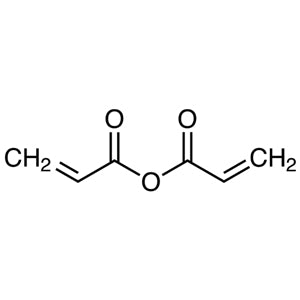
AcrylicAnhydride(stabilizedwithMEHQ) TCI A3243
Regular price From Rp 1.192.800,00Regular priceRp 849.450,00Sale price From Rp 1.192.800,00 -
AllylsuccinicAnhydride TCI A1283
Regular price From Rp 610.050,00Regular priceRp 442.050,00Sale price From Rp 610.050,00 -
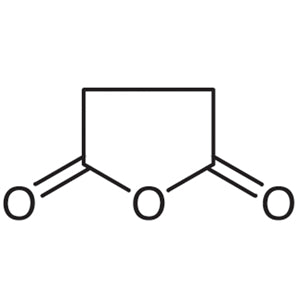
SuccinicAnhydride TCI S0107
Regular price From Rp 530.250,00Regular priceRp 386.400,00Sale price From Rp 530.250,00 -
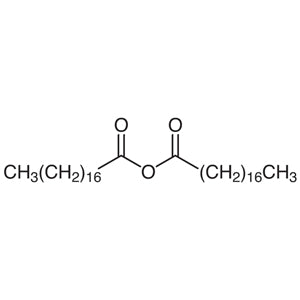
StearicAnhydride TCI S0083
Regular price From Rp 2.518.950,00Regular priceRp 1.776.600,00Sale price From Rp 2.518.950,00 -
PalmiticAnhydride TCI P0008
Regular price From Rp 2.623.950,00Regular priceRp 1.850.100,00Sale price From Rp 2.623.950,00 -
MethacrylicAnhydride[stabilizedwith1,1,3-Tris(3-tert-butyl-4-hydroxy-6-methylphenyl)butane] TCI M3139
Regular price From Rp 1.246.350,00Regular priceRp 887.250,00Sale price From Rp 1.246.350,00







![TCI M3139 760-93-0 Methacrylic Anhydride [stabilized with 1,1,3-Tris(3-tert-butyl-4-hydroxy-6-methylphenyl)butane]](http://amiscientific.com/cdn/shop/files/TCI2510M3139_c4513c9a-8829-4343-b900-0af77e289583.jpg?v=1792649508&width=533)
![760-93-0 Methacrylic Anhydride [stabilized with 1,1,3-Tris(3-tert-butyl-4-hydroxy-6-methylphenyl)butane] - AMI Scientific](http://amiscientific.com/cdn/shop/files/TCI2510M3139.jpg?v=1767127793&width=533)