

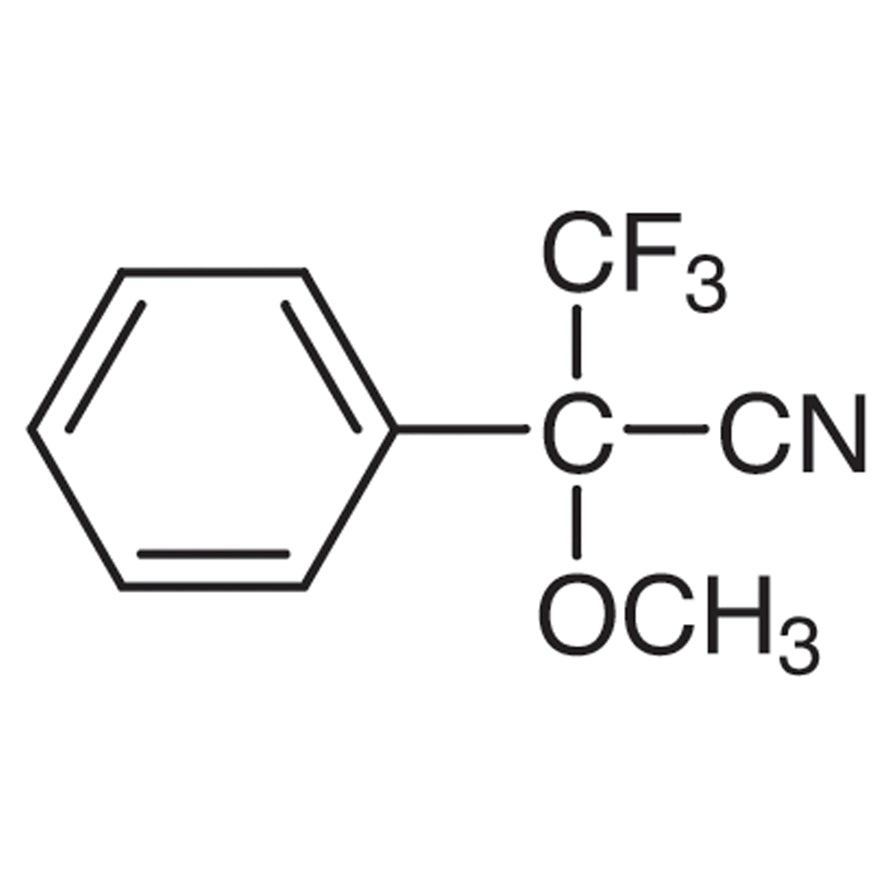
2-Methoxy-2-phenyl-3,3,3-trifluoropropionitrile is a specialized chemical compound used in organic laboratory reactions. It is a fluorinated building block, essential for the synthesis of complex organic molecules. This compound is widely utilized in research settings where precise chemical substitutions are required. Due to its unique fluorine content, it plays a critical role in creating compounds with specific reactivity and stability. Its presence in the molecular structure allows for controlled chemical transformations, making it a valuable reagent in synthetic chemistry.
The compound's fluorine atoms contribute to its high polarity and chemical stability, which are key factors in its effectiveness. These properties make it a preferred choice for applications requiring controlled reactivity and selectivity. The presence of both methoxy and phenyl groups further enhances its versatility in organic synthesis. Its ability to participate in various reaction conditions ensures its relevance in both academic and industrial research. The compound's structural complexity also supports its use in advanced chemical processes.
In Indonesian laboratories, this compound is commonly used in organic chemistry research, particularly in the development of fluorinated compounds. It is a key reagent in the synthesis of pharmaceutical and agrochemical intermediates. Its application is also found in academic institutions, where it supports teaching and research in chemistry and pharmaceutical sciences. The compound's reliability and chemical properties make it a standard in laboratory workflows requiring precision and stability.
- Fluorinated Compound Synthesis: This compound is ideal for creating fluorinated derivatives due to its stable fluorine atoms and reactive structure.
- Organic Chemistry Research: Its unique molecular composition makes it a valuable tool for studying reactivity and synthetic pathways in organic systems.
- Pharmaceutical Intermediates Development: The compound is used in the synthesis of drug-related compounds, supporting medicinal chemistry research.
- Academic Teaching and Research: It is commonly used in university laboratories to demonstrate fluorinated building block applications in organic synthesis.
- Agrochemical Compound Synthesis: Its chemical properties make it suitable for the development of pesticide and herbicide intermediates.
| Brand | TCI |
|---|---|
| CAS number | 80866-87-1 |
| Molecular formula | — |
| Purity | — |
| Category | Chemistry > Building Blocks > Fluorinated Building Blocks |
| Pack sizes | Available in various quantities as per supplier specifications |
| Physical form | Liquid |
| Storage | Store in a cool, dry place away from light and incompatible materials |
This compound should be stored in a cool, dry environment, away from direct sunlight and sources of heat. It is recommended to keep it in a sealed container to prevent exposure to moisture and air. Due to its chemical nature, it should be stored separately from incompatible substances such as strong bases or oxidizing agents. Proper ventilation is essential when handling the compound to minimize inhalation risks. Laboratory personnel should wear appropriate personal protective equipment, including gloves and safety goggles, when working with this material. Regular monitoring of storage conditions ensures the compound remains stable and safe for use in research settings.
—
Produk Terkait
-
2,3,6-Trifluorophenol TCI T3129
Regular price From Rp 955.500,00Regular price -
2,4,5-TrifluorophenylaceticAcid TCI T2407
Regular price Rp 1.193.850,00Regular price -
3,4,5-Trifluorophenol TCI T2299
Regular price From Rp 1.220.100,00Regular price -
2,3,4-Trifluorophenol TCI T1616
Regular price From Rp 875.700,00Regular price -
5-Bromo-2,3-difluorophenol TCI B4490
Regular price From Rp 769.650,00Regular price -
2-Bromo-4,5-difluorophenol TCI B3845
Regular price From Rp 584.850,00Regular price -
2-Bromo-4,6-difluorophenol TCI B3004
Regular price From Rp 795.900,00Regular price -
Methyl3,3,3-Trifluoropropionate TCI M2783
Regular price From Rp 2.227.050,00Regular price


