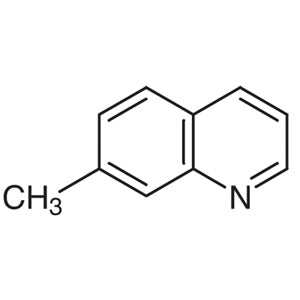
7-Methylquinoline is a chemical compound belonging to the heterocyclic category, featuring a quinoline core with a methyl group substituted at the 7th position. This compound plays a vital role in laboratory settings, particularly in organic chemistry and pharmacology, where it serves as a key building block for the synthesis of complex molecules. Its structural versatility makes it an essential reagent for researchers aiming to develop new drugs, bioactive compounds, and industrial chemicals. Due to its stability and controlled reactivity, 7-Methylquinoline is widely utilized in various synthetic pathways, contributing to the advancement of chemical research and innovation.
The chemical properties of 7-Methylquinoline make it a preferred choice in laboratory applications. It is hydrophobic and soluble in organic solvents such as ethyl acetate and chloroform, which facilitates its use in a range of chemical reactions. Its ability to undergo substitution and aromatic reactions enhances its utility in synthetic chemistry. The compound’s controlled reactivity ensures predictable outcomes in experimental processes, making it a reliable material for both academic and industrial research. These characteristics position 7-Methylquinoline as a versatile and essential component in modern chemical laboratories.
In Indonesian laboratories, 7-Methylquinoline is commonly used in organic chemistry, pharmacology, and biochemical research. It is frequently found in university laboratories, research institutions, and industrial laboratories where the synthesis of complex compounds is required. Its role in the development of new pharmaceuticals and bioactive materials underscores its significance in the scientific community. The compound’s availability and reliability make it a staple in the chemical supply chain for Indonesian research facilities.
- Organic synthesis applications benefit from 7-Methylquinoline’s structural versatility, allowing for the creation of complex molecules with precise functional groups.
- Pharmacological research utilizes this compound to develop new drugs and bioactive compounds due to its reactivity and stability in synthetic pathways.
- Biochemical studies incorporate 7-Methylquinoline to explore its interactions with biological systems and its potential in drug discovery processes.
- Industrial chemical production relies on this compound for the synthesis of various chemical intermediates used in manufacturing processes.
- Research institutions use 7-Methylquinoline as a key reagent in the development of novel materials and compounds for scientific innovation.
| Brand | TCI |
|---|---|
| CAS number | 612-60-2 |
| Molecular formula | — |
| Purity | — |
| Category | Chemistry > Building Blocks > Heterocyclic Building Blocks |
| Pack sizes | Available in standard laboratory quantities as per supplier specifications |
| Physical form | Liquid |
| Storage | Store in a cool, dry place away from direct sunlight and incompatible materials |
7-Methylquinoline should be stored in a cool, dry environment, away from direct sunlight and sources of heat. It is recommended to use airtight containers made of glass or high-density polyethylene to prevent contamination and evaporation. Due to its hydrophobic nature, it should be kept separate from water and incompatible substances to avoid chemical reactions. Laboratory personnel should handle the compound with appropriate personal protective equipment, including gloves and safety goggles, to ensure safety during use and storage. Proper labeling of containers is essential to prevent accidental exposure and ensure safe handling in all laboratory settings.
—
Produk Terkait
-
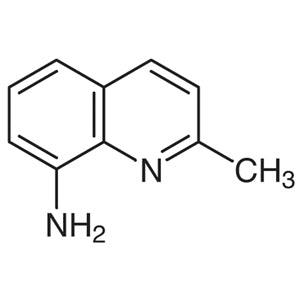
8-Amino-2-methylquinoline TCI A0416
Regular price From Rp 1.273.650,00Regular price -
4,6,8-Trimethylquinoline TCI T1409
Regular price Rp 5.644.800,00Regular price -
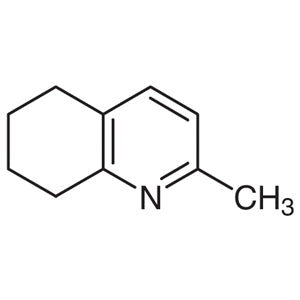
5,6,7,8-Tetrahydro-2-methylquinoline TCI T1408
Regular price Rp 2.016.000,00Regular price -
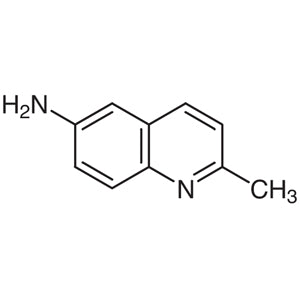
6-Amino-2-methylquinoline TCI A1047
Regular price Rp 3.976.350,00Regular price -
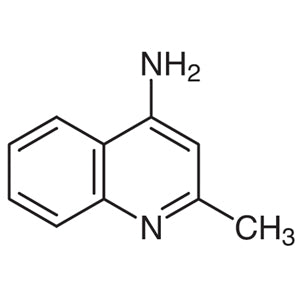
4-Amino-2-methylquinoline TCI A0415
Regular price Rp 3.207.750,00Regular price -
2-Methylquinoline TCI Q0005
Regular price From Rp 452.550,00Regular price -
1-Methylquinolin-2(1H)-one TCI M3591
Regular price From Rp 3.127.950,00Regular price -
2-MethylquinolineN-Oxide TCI M3000
Regular price From Rp 1.485.750,00Regular price